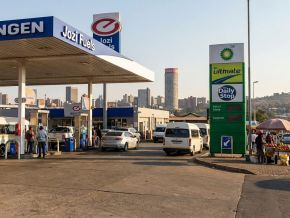
Petrol and diesel prices fell sharply from 7 January 2026, with diesel down by up to R1.50 per litre, reflecting lower global oil prices and a firmer rand.
The adjustment underscores South Africa’s continued exposure to international crude and refined product markets, as the country remains a net importer of fuel.
Authorities kept the Slate Levy at zero, signalling reduced short-term pressure on the fuel pricing system despite long-term volatility.
South Africa opened 2026 with a broad-based fuel price reduction, driven by a combination of declining global oil prices, ample international fuel inventories and a stronger rand against the US dollar. The adjustment, announced by the Minister of Mineral and Petroleum Resources, took effect on today 7 January and marked one of the most significant month-on-month diesel price cuts in recent years.
According to the Department of Mineral and Petroleum Resources, the average Brent crude oil price fell from USD 63.55 to USD 61.47 during the review period, reflecting oversupply conditions linked to increased production by OPEC+ and non-OPEC producers. This easing in crude prices filtered through to international petroleum product markets, where petrol prices declined and middle distillates such as diesel and illuminating paraffin fell even more sharply due to high winter inventories in the Northern Hemisphere.
As a result, international product prices reduced the Basic Fuel Price by 45.03 cents per liter for petrol, 126.97 cents for diesel, and 87.96 cents for illuminating paraffin. These external factors were reinforced by currency movements, as the rand appreciated on average from R17.22 to R16.85 per US dollar, further lowering the cost of imported fuel. The stronger exchange rate alone reduced fuel price contributions by more than 20 cents per liter across petrol, diesel and paraffin.
The January adjustment translated into concrete relief at the pump. Petrol 93 fell by 62 cents per litre, while Petrol 95 declined by 66 cents. Diesel recorded the steepest reductions, dropping by R1.37 per liter for 0.05% Sulphur diesel and R1.50 per liter for 0.005% Sulphur diesel. Illuminating paraffin prices were cut by R1.10 per litre at wholesale level. In contrast, the maximum retail price of LPG rose modestly, reflecting tighter global supply of propane and butane.
The government also confirmed that the Slate Levy remains at zero cents per liter, as the cumulative slate balance stood at a positive R3.3 billion at the end of November 2025. This indicates that recent fuel price movements have not destabilised the self-adjusting fuel price mechanism, reducing the need for corrective levies in the short term.
Beyond the January cut, the adjustment fits into a longer pattern of fuel price volatility shaped by structural factors. Over the past three decades, South Africa’s petrol price has climbed from below R2 per litre in the mid-1990s to above R21 per litre in 2025, reflecting inflation, global oil price cycles, and persistent currency weakness. Monthly price changes have increasingly mirrored global supply shocks, geopolitical tensions, and exchange rate swings rather than domestic policy shifts.
The figures shows that the January 2026 reduction reinforces the economy’s vulnerability to external shocks, given South Africa’s reliance on imported crude and refined products amid declining domestic refining capacity. As global oil markets remain sensitive to production decisions and geopolitical risks, fuel prices are expected to stay volatile, even as short-term relief provides some breathing space for households, transport operators and businesses at the start of the year.
By Cynthia Ebot Takang