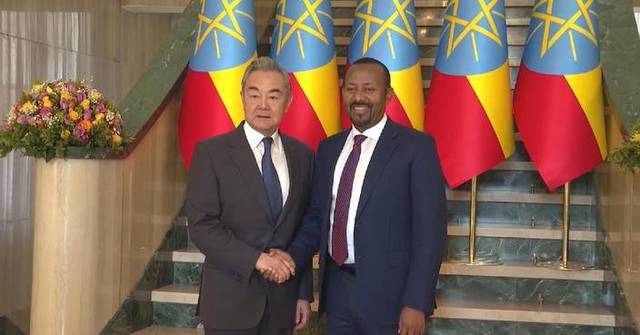
Ethiopian Prime Minister Abiy Ahmed met with Chinese Foreign Minister Wang Yi on Thursday in Addis Ababa, the capital of Ethiopia, with both sides pledging to strengthen mutual support and the alignment of development strategies.
Abiy asked Wang, also a member of the Political Bureau of the Communist Party of China Central Committee, to convey his New Year greetings and sincere regards to Chinese President Xi Jinping and Premier Li Qiang. Ethiopia regards China as a trustworthy, close brother and strategic partner, Abiy said, noting that the two countries have long supported each other and that their bilateral relations are developing with strong momentum.
Ethiopia appreciates China’s long-standing support for its economic and social development and speaks highly of China’s efforts in implementing the outcomes of the Beijing Summit of the Forum on China-Africa Cooperation (FOCAC), he said.
Reaffirming Ethiopia’s adherence to the one-China principle, Abiy said Ethiopia is willing to maintain close high-level exchanges with China, deepen practical cooperation in infrastructure, new energy, artificial intelligence, marine affairs, and other fields, strengthen mutual support in regional and international affairs, and promote sustained growth of bilateral relations.
Wang conveyed the cordial greetings of Chinese leaders to Abiy, saying that the Ethiopian prime minister is an old friend of the Chinese people. Under Abiy’s leadership, Wang said, the Ethiopian people have remained united, and the country has made rapid progress in national development.
Addis Ababa is changing with each passing day, and China extends its congratulations, Wang said.
China stands ready to work with Ethiopia to implement the important consensus reached by the two countries’ leaders, firmly support each other, strengthen the alignment of development strategies, deepen exchanges of governance experience, and continuously elevate the all-weather strategic partnership between China and Ethiopia, he said.
Ethiopia is leading the way in China-Africa cooperation, and both sides should work together to implement the outcomes of the FOCAC Beijing Summit, Wang said. He called for making full use of China’s zero-tariff policy for all African countries with which it has diplomatic relations, accelerating the upgrading of trade and economic cooperation, strengthening cooperation in infrastructure, green industries, and the digital economy, and advancing high-quality Belt and Road cooperation between China and Africa.
He expressed hope that Ethiopia will provide a sound environment for Chinese enterprises to invest and conduct business, and said China looks forward to Ethiopia, as a major African country, playing an important role in regional and international affairs.
China is willing to continue promoting the implementation of the Outlook on Peace and Development in the Horn of Africa, and to play a constructive role in advancing regional peace, stability, and win-win cooperation.
On the same day, Wang also held talks with Ethiopian Minister of Foreign Affairs Gedion Timothewos.
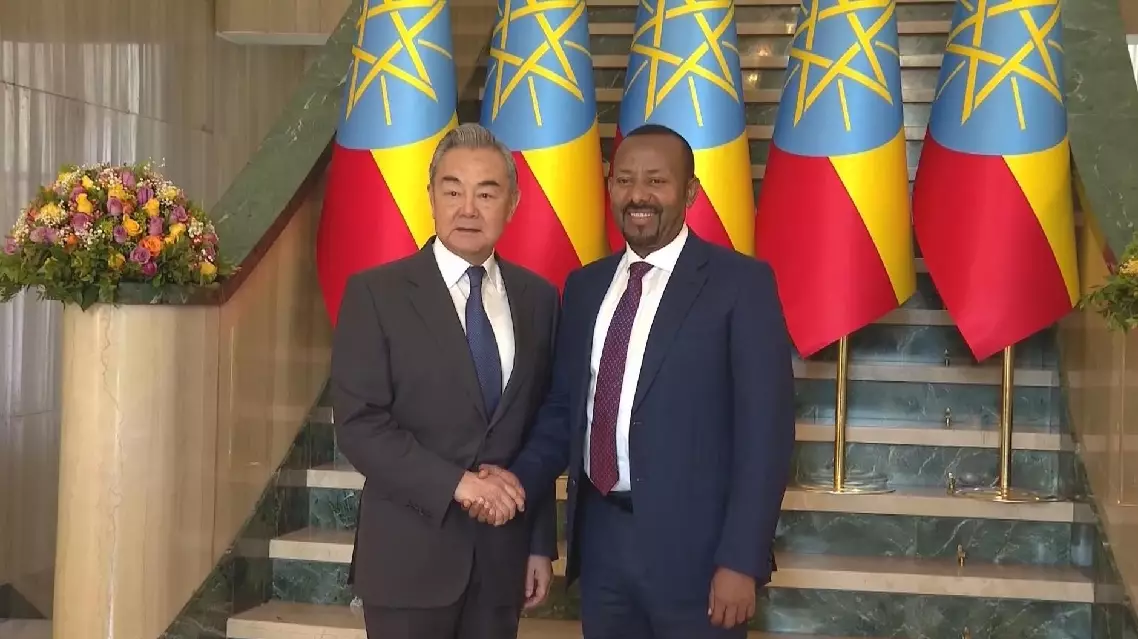
China, Ethiopia pledge to strengthen all-weather strategic partnership
Taoiseach of Ireland Micheal Martin, who wrapped up his five-day official visit to China, has praised China’s progress in areas such as digital economy and green energy, saying Ireland is willing to deepen economic and trade cooperation with China in emerging sectors while enhancing cooperation on multilateral affairs.
It is Martin’s first visit to China since taking office and the first by an Irish prime minister in 14 years.
Speaking during a joint interview with Chinese media outlets in Beijing, Martin spoke positively of the steady development of bilateral relations in recent years, highlighting closer people-to-people exchanges and growing ties in higher education.
“We now have a direct flight between Dublin and China and that’s very important in terms of people to people. Our education links are very strong and we have many partnerships between Irish higher education institutions and Chinese higher education institutions and that’s important,” he said.
Martin said economic and trade ties remain a key pillar underpinning the sound development of bilateral relations.
He recalled that bilateral trade has seen exponential growth since his first visit to China 20 years ago, when he served as minister for enterprise, trade and employment.
Looking ahead, he expressed expectations for expanded cooperation with China in such emerging fields as digital economy and green transition.
“We will be embarking on a major investment in offshore renewables over the next decade. We already are in the planning process. It’s a windy island, so we have a lot of wind to harness for energy. So we do see opportunities in AI as well. Ireland is a very strong location for investment, as a member of the European Union, the only English-speaking country now in the Eurozone and in the European Union. And it’s a good access point to the European consumer market. We believe there’s a greater opportunity for Chinese companies to locate in Ireland,” he said.
As Ireland is set to assume the rotating presidency of the European Union (EU) in the second half of 2026, Martin said Ireland adopts a pragmatic policy towards China within the EU and stays committed to promoting a EU-China relationship framework that effectively manages differences while expanding mutually beneficial cooperation.
“What is important is that we continue to dialogue and see can we develop frameworks of agreement on the big picture. The WTO is also very important forum for resolving trade issues. Both Europe and China would acknowledge that industrial resilience, economic security issues are important issues, but that has to be balanced with an open free trade environment. So we are against tariffs. We think tariffs are ultimately damaging to the world economy,” he said.
At the invitation of Chinese Premier Li Qiang, Martin paid an official visit to China from Jan 4 to 8. In addition to Beijing, he also visited Shanghai.
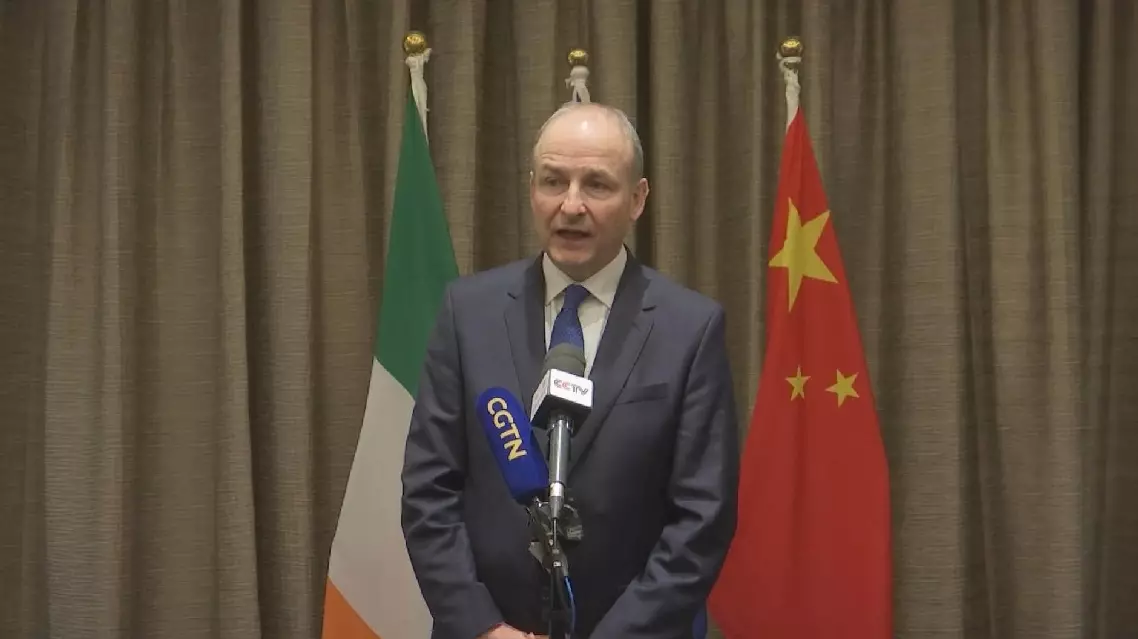
Irish Taoiseach sees broader cooperation with China in emerging sectors