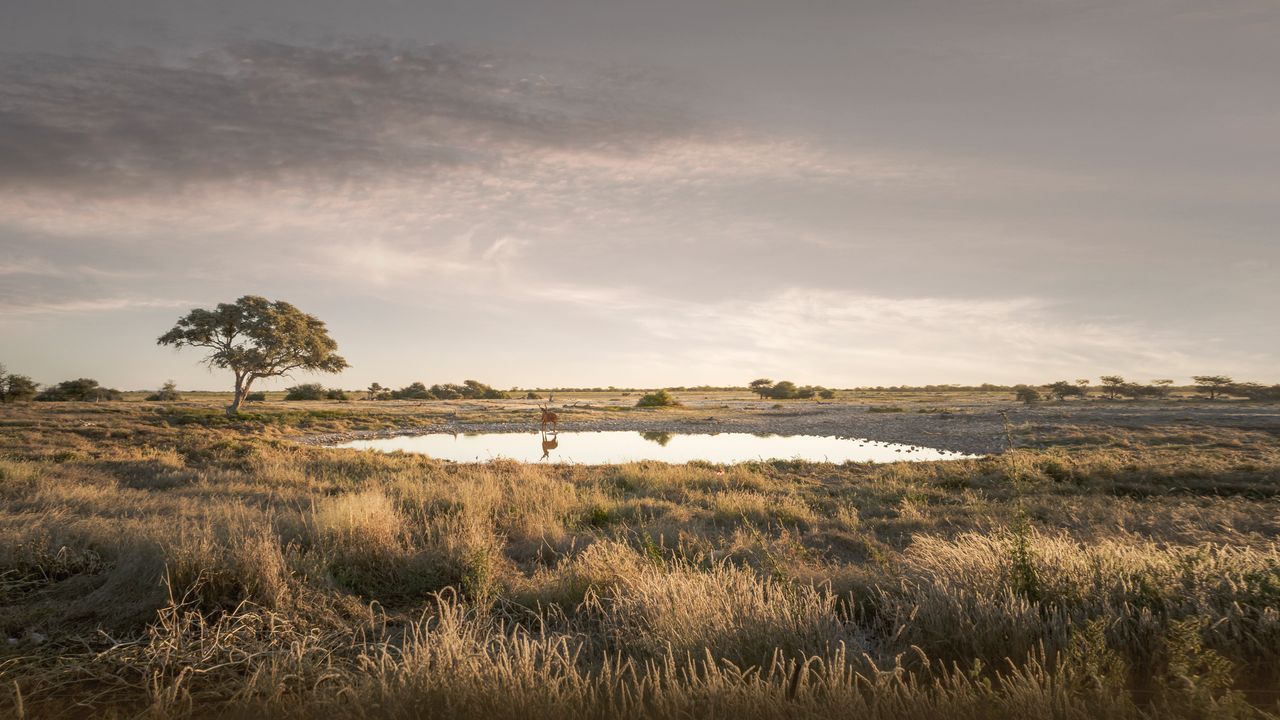
On the evening of Monday, September 22, the western plains of Namibia’s Etosha National Park stood thick and healthy in the fading light. The rainy season had been substantial this year, and as a result, vegetation had grown lush. But in Namibia, a land of salt pans and deserts, where arid-adapted elephants and rare black rhino roam, a turn of events like this can have adverse consequences. “Namibia is naturally fire-prone, with dry savanna and strong winds,” explains Julian Carter-Manning, the founder of Yellow Zebra safari operator. “After a good rainy season, abundant grasses can create the perfect fuel.”
That evening, a wildfire broke out, followed by another two days later. All told, the flames inside Etosha National Park raged until September 30, scorching some 2.1 million acres or just under 40% of the park’s land mass.
Thankfully, no human casualties have been reported, and because the flames burned in the less-habituated, western reaches of the park, which is as big as half the size of Switzerland, no lodges have been impacted. It’s important to remember that while these fires were likely human-induced—investigations are ongoing—wildfires are a natural part of a savanna ecosystem. Still, when and how these fires burn matter, and full vegetation regrowth will take years.
“Wildfire can have a positive impact, and is indeed an essential disturbance process in savanna ecosystems,” says Andrew Parker, a conservationist and the founder of Conserve Global. “However, if fires are caused by reckless human behavior, then they can rapidly spread in an uncontrolled way and threaten infrastructure, wildlife, and even human lives.”
Etosha is one of the most popular safari destinations in Southern Africa. According to Shaun Stanley, the founder of Stanley Safaris, there’s no reason for travelers to cancel upcoming trips—and visitor fees and tourism revenue from safaris can help fund conservation efforts. “Etosha is a huge wildlife reserve, and the fire has affected a portion of the park, so there are still areas to explore,” he says. “Don’t cancel your trips if you have a safari booked to Namibia.”
Here’s everything visitors to the park need to know.
While the park is safe, communities have been affected
As of late last week, the wildfires within the national park have been doused. However, smaller, fully contained fires did spread beyond Etosha’s borders into the Omusati region. This means some herding communities adjacent to Etosha have been impacted. “There are no Indigenous tribes in Etosha National Park—and many farms worked together very hard to stop the fires from entering their areas, with good success,” says Andries Liebenberg, a Namibian citizen based in Windhoek, the capital city, who works for Abercrombie & Kent’s Namibia division. “However, there are reports of some farms that have lost a lot of grazing land due to the fires.”
Dr. Laurie Marker, a celebrated big cat expert and the founder of the Cheetah Conservation Fund, which is based in Namibia, says the impact of the fires on local communities is especially tragic. “While there’s a low density of people in the area, fires put them in danger, along with their livestock,” she says. “And when the grazing lands for livestock burn, this affects people’s livelihoods.”
One silver lining, Parker says, is that grassland in these areas is generally low due to grazing by livestock, meaning there’s less fuel for the flames. The main road on the western border of the park also acted as a barrier, preventing the fire from jumping further.
If you’re traveling to Namibia, be sure to talk to safari specialists and trusted advisors who have deep connections in the area, urges Embark Safaris’ Managing Partner Justin Huff. Community-minded operators will direct you to ways to explore the region while having a positive impact on the local economy. Liebenberg adds, “assistance through donations to NGOs and conservation groups is always welcome in Namibia.”