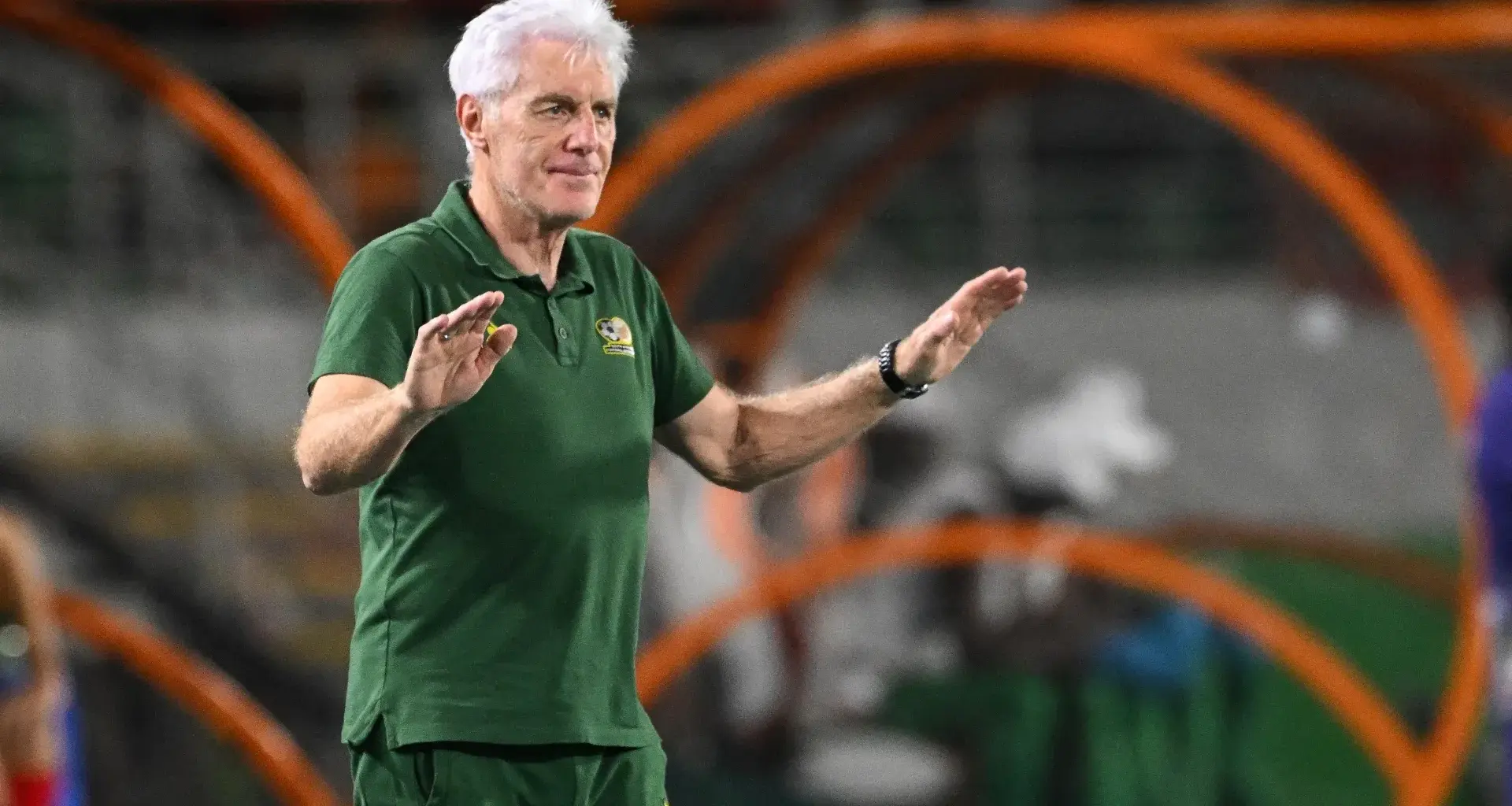
Rabat – South Africa’s coach, Hugo Broos, has once again stirred Controversy during the 2025 Africa Cup of Nations in Morocco. Ahead of his team’s round of 16 match with Cameroon, the Belgian manager criticized the organization of the tournament, focusing on the long travel times his squad faces.
Broos explained that the team spends around 45 minutes traveling from their hotel to the training ground, something he believes harms player focus. “In a competition of this level, travel should not exceed 15 or 20 minutes,” he said, adding that such issues are frustrating, especially with the possibility of facing Morocco in the next round.
This is not the first time Broos has voiced concerns. After South Africa’s group stage match against Egypt in Agadir, he strongly criticized the way fans were allowed into the stadium.
He described chaotic scenes outside, saying even people with official tickets were blocked, while others without tickets managed to enter. His family was present that day, and he recalled how his wife and grandchildren felt unsafe in the confusion.
Broos also compared the atmosphere in Morocco to past tournaments. He noted that in countries like Côte d’Ivoire or Gabon, there was a clear sense of celebration, with fans waving flags and welcoming teams on their way to training. In Morocco, he said, that spirit feels absent.
Despite his complaints, Broos acknowledged the quality of Morocco’s infrastructure. He stressed that the stadiums and facilities are excellent, but the lack of smooth fan access and visible enthusiasm weakens the overall experience.
“If supporters are not allowed to enter freely, they will not come,” he concluded, pointing out that the issue is less about facilities and more about genuine public engagement with the tournament.
Record Attendance Counters Broos’s Complaints
While Broos continues pointing to negatives, his remarks appear disconnected from the broader reality of AFCON 2025 in Morocco. The group stage alone recorded over 729,000 fans in attendance, the highest figure in the tournament’s opening rounds, surpassing even the 2023 edition in Côte d’Ivoire.
Reports also confirm that Morocco has delivered exceptional organization, modern stadiums, and high-quality broadcasts, ensuring matches were played under favorable conditions despite challenging weather.
These facts show that the atmosphere and fan engagement are thriving, contradicting Broos’s claims of weak public interaction.
His repeated complaints risk sounding more like personal frustration than an accurate reflection of Morocco’s hosting, which has been widely praised for setting new standards in African football.