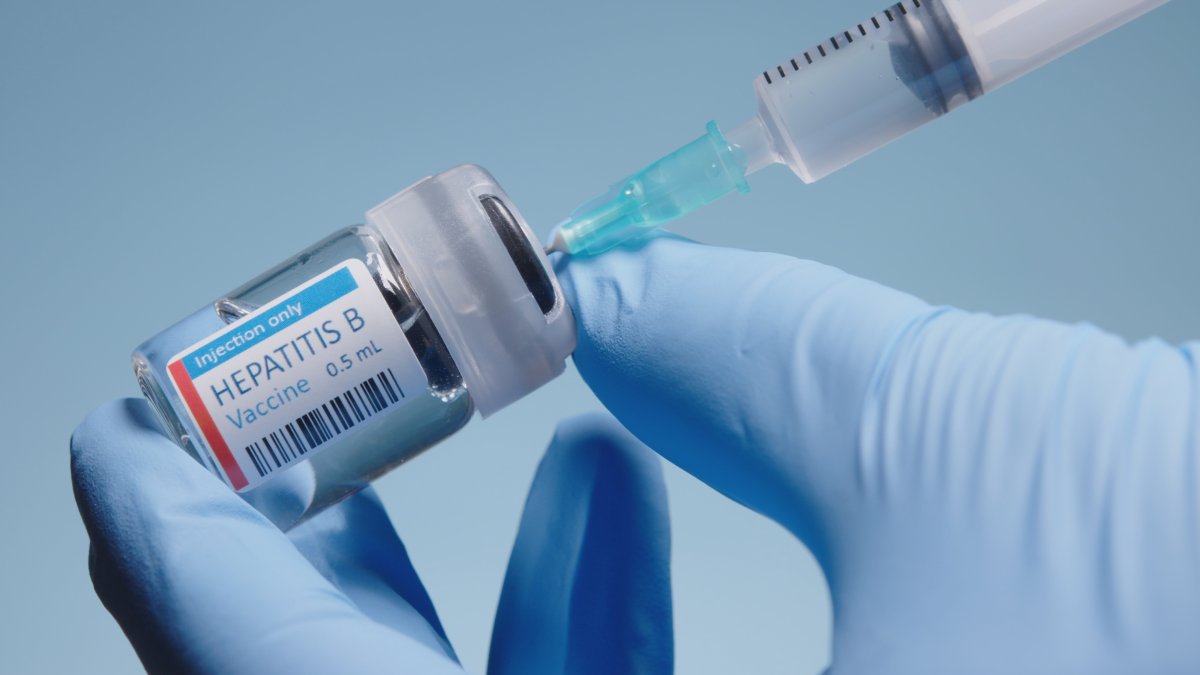
Many doctors say a study of the hepatitis B vaccine in newborns, which the Centers for Disease Control and Prevention funded, goes against medical ethics by delaying a proven vaccine for babies, especially when the virus can cause severe health issues and death.
Hepatitis B largely has been wiped out among kids in the U.S. thanks to vaccines, according to data from the CDC.
But under the Trump administration and Health Secretary Robert F. Kennedy Jr., the CDC said it’s giving $1.6 million to fund a study on hep B vaccines in Guinea-Bissau. Some babies will get the vaccine right away, but others will get it at 6 weeks old.
“It is a wholly unethical experiment, and I think it reveals the dishonesty and cruelty of this man,” said Children’s Hospital of Philadelphia Vaccine Education Center Director Dr. Paul Offit.
The study called the Bandim Health Project is being conducted by researchers at the University of Southern Denmark. It will track the “overall health effects” on children, including hospitalizations and deaths, even as researchers acknowledge on their website the vaccine prevents hep B.
“It’s disappointing that the CDC went forward with this,” Yale School of Medicine professor Dr. Robert Steinbrook said.
“A study like this wouldn’t be ethical to conduct in the United States, where the recommendation has been for a long time that the universal birth dose,” he said.
Guinea-Bissau is one of the world’s poorest and most fragile countries, according to the World Bank. Just 37% of people have access to electricity, and more than 18% of adults are estimated to have hepatitis B.
News4 asked the CDC and researchers in Denmark for more details about the study as well as a response to medical experts’ concerns. News4 has not received a response.
In the U.S., the CDC’s vaccine advisory panel voted last month to end a decades-long recommendation for giving American babies the hepatitis B vaccine right after birth, even though doctors begged the panel to reconsider.
“When I was a medical student, I rotated through a hepatitis ward, and those were the sickest patients I’ve ever seen in my life,” said Dr. Sandra Fryhofer of the American Medical Association Board of Trustees.
As for the study in West Africa, the CDC said it believes it has merit and the results could influence vaccine policy throughout the world.
Guinea-Bissau’s current policy is that babies get the hepatitis B vaccine at 6 weeks old. Starting in 2027, the country will change that to right after birth.
The Danish researchers say that gives them a unique window to do the study in the year before that new policy takes effect.
Sign up for our free deep-dive newsletter, The 4Front, to get standout News4 stories sent right to your inbox. Subscribe here.