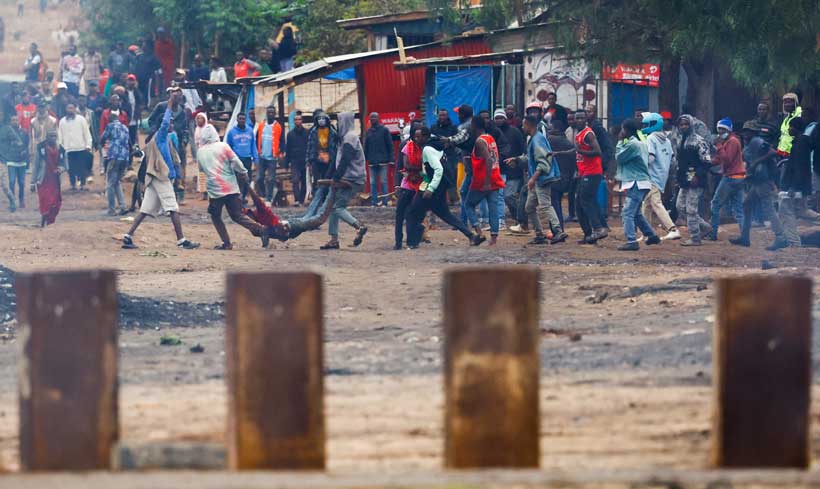
At around 8:30 p.m. on October 31, life in Mjimwema, a hillside neighbourhood overlooking Lake Victoria in the Tanzanian city of Mwanza, appeared ordinary. Residents were running errands, watching football and drinking coffee in roadside cafes when police officers suddenly arrived and opened fire without warning. Witnesses told Reuters that officers shot in multiple directions, triggering panic, before ordering men sheltering inside a cafe to lie face-down on the ground. Moments later, they shot at them at close range. By the time the gunfire subsided, more than a dozen people lay dead, transforming a quiet evening into one of the bloodiest episodes of Tanzania’s election unrest.
Not an Isolated Incident
The massacre in Mjimwema was among the deadliest known incidents during days of violence surrounding Tanzania’s October 29 elections, but it was far from isolated. Reuters interviewed nine witnesses to eight other incidents across Mwanza, Dar es Salaam and Arusha who described police shooting at civilians who were not participating in protests and were sometimes located kilometres away from demonstrations. In several cases, witnesses said officers fired indiscriminately, raising serious questions about whether the violence was aimed at restoring order or sending a broader message of intimidation.
From Political Crackdown to the Deadliest Unrest Since Independence
The unrest was driven by the exclusion of leading opposition candidates from the elections, mass arrests and alleged abductions of government critics. What began as youth-led demonstrations demanding more accountable governance escalated into the worst political violence Tanzania has seen since independence. According to the United Nations human rights office, hundreds were killed, while U.S. officials said they were reviewing relations with Tanzania partly due to the violence. The protests echoed similar Gen-Z-driven movements in Kenya, Madagascar and Nepal, where youth activism has forced reforms or toppled governments.
“Intended Killings,” Say Church Leaders
Prominent religious leaders accused the security forces of deliberately targeting civilians. Charles Kitima, secretary-general of the Tanzania Episcopal Conference, said church officials had witnessed people being killed inside their homes, leading them to conclude the violence was intentional. While acknowledging that some looting and vandalism occurred, Kitima stressed that most demonstrators were not criminals but citizens expressing legitimate grievances. His remarks added moral weight to allegations that the killings went beyond crowd control.
Government Denials and a Commission of Inquiry
The government has strongly rejected accusations of systematic brutality. Palamagamba Kabudi, Minister of State in the President’s Office, said authorities take concerns about the use of force seriously and have established a commission of inquiry into election violence. However, he argued that many allegations were based on unverified or misleading information and denied the existence of any policy authorising intentional violence against civilians. Security operations, he said, were conducted for lawful purposes and under legal safeguards.
Information Blackout and Fear
As protests spread on election day, authorities cut internet access nationwide for more than five days, severely restricting the flow of information and independent reporting. Shortly before connectivity was restored, police warned that anyone sharing images that could “cause panic” or harm reputations could face legal action. In December, independent experts appointed by the U.N. Human Rights Council cited disturbing reports suggesting security personnel may have been given lethal orders during curfews, though the government categorically rejected those claims.
Witnesses Describe Killings Far From Protests
Witnesses across Tanzania’s three largest cities described widespread vandalism during protests, including arson attacks on government buildings and property linked to the ruling party. However, they also said police shot civilians who were not protesting and fired into crowds without apparent provocation. In several instances, officers appeared to target people who failed to comply with orders to go home, though Reuters was unable to determine the legal basis for such instructions, particularly in cities where no official curfews were publicly announced.
Inside the Mjimwema Massacre
Residents of Mjimwema said there was no unrest in their neighbourhood on the night of the killings, despite demonstrations elsewhere in Mwanza. Police officers reportedly passed through the area earlier in the evening, ordering people to go home, an instruction many ignored. Around two hours later, officers returned on foot and began firing. Cafe patrons who tried to hide by switching off lights were forced outside, ordered to lie on the ground and subjected to verbal abuse before the shooting began. Witnesses said officers continued firing if they sensed movement, leaving behind a scene of carnage before departing.
Bodies Taken, Families Searching
After the shooting, witnesses said police collected bodies in a large vehicle and drove away, leaving families scrambling for answers. Hospital staff told Reuters that police later delivered around 15 young men to Sekou Toure Hospital, nearly all dead from gunshot wounds. Some families were able to identify loved ones, including a tailor, his nephew and a 20-year-old domestic worker with no known political ties. Others have searched hospitals and mortuaries in vain. The U.N. Human Rights Office cited reports that bodies were taken to undisclosed locations to conceal evidence, allegations the government denies.
Personal Analysis: What Mjimwema Reveals About Power and Fear in Tanzania
The events in Mjimwema point to more than a breakdown of law and order; they reflect a deeper transformation in the relationship between the Tanzanian state and its citizens. The recurring pattern of civilians being shot far from protests, bodies swiftly removed and information tightly controlled suggests a security response driven less by crowd management and more by deterrence through fear. Even in the absence of documented “shoot-to-kill” orders, the behaviour described by witnesses indicates a permissive environment for lethal force.
Tanzania’s long-standing reputation for political stability now appears increasingly fragile. Stability enforced through violence may suppress dissent in the short term, but it erodes public trust and risks radicalising a younger generation already disillusioned by political exclusion. Across Africa, youth-led protests have shown that demands for dignity, accountability and opportunity cannot be extinguished by force alone. If Tanzania’s promised inquiry fails to deliver transparency and accountability, the legacy of the election violence will extend beyond the death toll, leaving behind a lasting crisis of legitimacy and trust.
With information from Reuters.