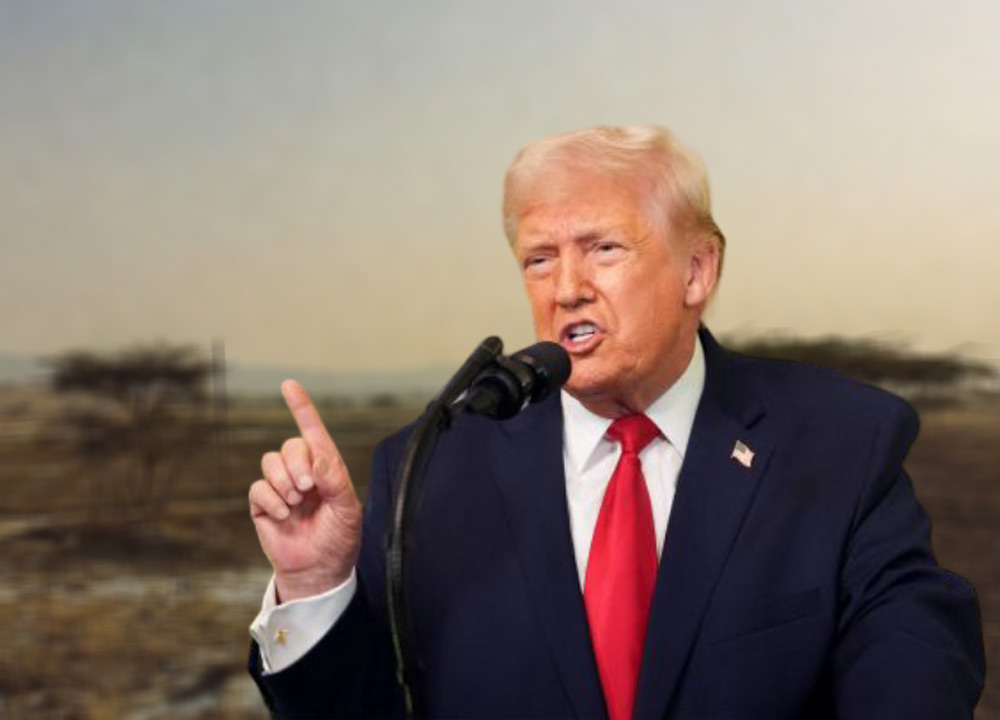
Kenya, 9 January 2026 – U.S. President Donald Trump is a leader of many surprises to the World.
He is a man who can wake up and make earth shuttering public pronouncements to everyone amusement.
Today, Trump’s latest decision to withdraw the U.S. from 66 international organisations, many of them linked to climate change, has sent shockwaves through global diplomacy, reopening old fault lines between the world’s largest historical emitters and regions bearing the heaviest climate burden despite contributing the least to the crisis.
Announcing the move, Trump framed it as a restoration of national sovereignty and economic common sense.
“The United States will no longer participate in international arrangements that are unfair, costly, and hostile to American interests,” he said, arguing that climate-focused institutions had become vehicles for “globalist agendas” that penalise U.S. industry while letting others off the hook.
He insisted that Washington would pursue environmental protection “on our own terms, in ways that grow the economy and protect American workers.”
The withdrawals include key climate and environmental bodies that shape global science, financing and negotiations.
For critics, the decision represents a deliberate dismantling of multilateral climate governance.
For Trump and his allies, it is a long-overdue correction.
“We are not going to keep paying billions of dollars into organisations that tell us how to run our country,” Trump said, adding that America had been treated as “a cash cow” while emerging economies continued to expand emissions.
That argument has particular resonance — and controversy — in Africa.
While some voices in U.S. political discourse increasingly portray Africa as a future emissions threat due to population growth and industrialisation, the continent currently accounts for a tiny fraction of global greenhouse gas output.
Kenya, often cited as a climate leader because of its heavy reliance on renewable energy, contributes a negligible share to global emissions yet faces severe droughts, floods and food insecurity.
For Nairobi, Trump’s pullback raises immediate and long-term concerns.
Kenya’s climate strategy relies heavily on multilateral frameworks to access climate finance, technology transfer and scientific support.
Reduced U.S. engagement weakens these platforms at a time when African states are pushing for faster delivery of adaptation funding and loss-and-damage mechanisms.
Climate negotiators fear that without Washington at the table, pressure on wealthy nations to honour financing commitments could soften.
The economic implications are equally significant.
Kenya hosts a major UN presence and has built a diplomatic and services ecosystem around multilateral institutions.
A contraction in U.S. support for international agencies risks shrinking programme budgets, reducing project pipelines and dampening the city’s status as a global diplomatic hub.