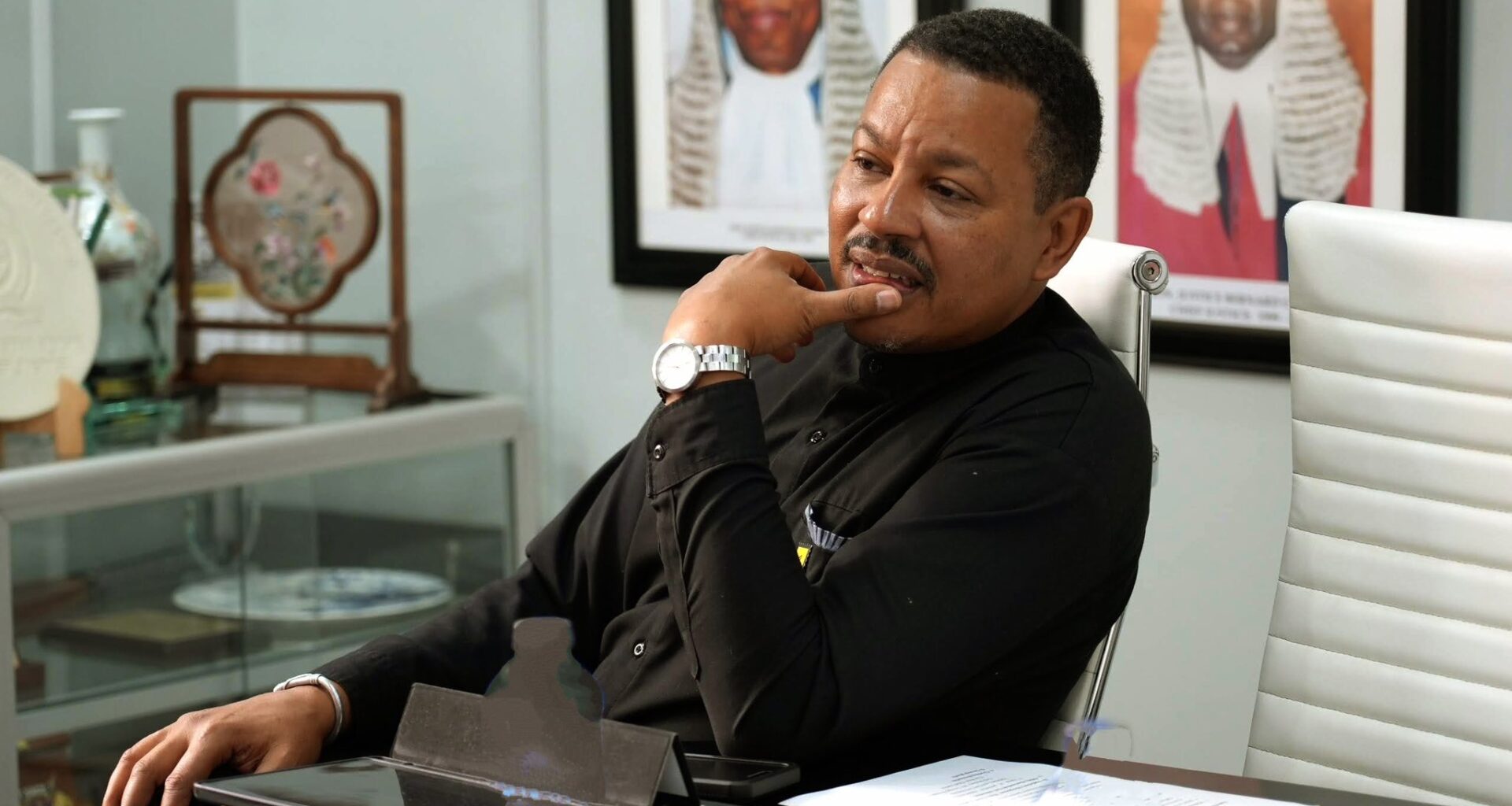
 Amnesty director Irungu Houghton/X
Amnesty International Kenya Executive Director Irungu Houghton has resigned from the Panel of Experts on Compensation of Victims of Demonstrations and Public Protests.
His departure comes months after Law Society of Kenya (LSK) President Faith Odhiambo also stepped down from the panel.
In his decision, the human rights defender cited constitutional concerns and respect for a recent High Court ruling that faulted the panel’s legal foundation.
In a resignation letter dated January 9, 2026, Houghton said his decision takes immediate effect and follows the Kerugoya High Court judgment delivered on December 4, 2025, which declared the panel unconstitutional.
The court held that the statutory and constitutional mandate to address compensation for victims of human rights violations rests with the Kenya National Commission on Human Rights (KNCHR), not a task force established by the Executive.
“I have resigned from the Panel of Experts with immediate effect. My decision follows the President’s Jan 5, 2026 extension of the Panel’s mandate for a further 180 days despite the Dec 4, 2025 Kerugoya High Court ruling mandating the KNCHR,” he said.
Houghton noted that the ruling “materially alters the legal basis and institutional legitimacy” of the panel’s continued existence.
As a constitutionalist, he said, he was obligated to respect judicial determinations and safeguard the integrity and independence of constitutional institutions.
“Continuing to serve on the Panel under these circumstances risks normalising an arrangement that the Court has expressly found to be unconstitutional and undermines the central role assigned to KNCHR by law,” he stated.
The panel was appointed by President William Ruto to oversee reparations for victims of demonstrations and public protests.
The panel’s mandate was extended by 180 days on January 5, 2026, a move that Houghton said directly triggered his decision to step aside.
In the letter, Houghton also distanced himself from a December 15 application filed by the panel seeking a stay of the High Court ruling.
He claimed the inclusion of his name as an appellant was “erroneous.”
The rights defender disclosed that he had suspended his involvement in the panel on September 1, 2025, pending the court’s decision, and claimed he was neither consulted nor informed before the application was filed.
“I did not enter appearance when listed as an interested party, trusting that the High Court would offer a way forward,” he said, adding that he only became aware of the stay application on January 8, 2026.
Houghton further pointed out that the application contradicted his publicly stated position, including views expressed in a December 6 opinion article, where he argued that the panel should comply with the High Court’s determination and allow KNCHR to lead the compensation process.
While reaffirming his long-standing commitment to justice, accountability and reparations for victims of state violence, Houghton stressed that constitutional order, the rule of law and institutional accountability must take precedence over expediency.
“Though KNCHR, the High Court has offered the Presidency a legal and pragmatic way to compensate the affected and restore its integrity before the nation,” he said, warning that persistent pre-emptive litigation could further delay justice for victims and their families.
Houghton clarified that his resignation should not be interpreted as acceptance of the High Court judgment by the panel, but rather as a principled act grounded in constitutional fidelity.
He concluded by urging stakeholders to remain unwavering in the pursuit of truth, justice and reparations, in line with the Constitution and the court’s decision.