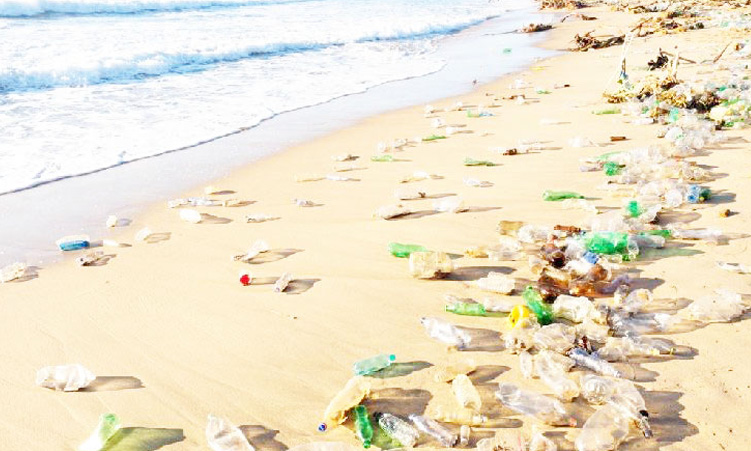
Illegal dumping along the Erongo coastline could result in fines of up to N$500 000 or a prison sentence of up to 25 years, Erongo governor Natalia /Goagoses says.
This comes after a beach cleanup exercise at Long Beach earlier this month during wildlife sanctuary N/a’an ku sê Foundation’s annual cleanup removed 2.1 tonnes of waste.
Penalties vary depending on the seriousness of the offence and the law that applies.
The governor says common offences in the Dorob National Park, such as throwing rubbish outside bins, breaking bottles, or discarding fish, bait or refuse, can attract fines of N$3 600.
More serious offences carry much harsher penalties.
“Non-compliance with a compliance order can result in a fine of up to N$500 000 or imprisonment for up to 25 years,” /Goagoses says.
Additional fines under the Solid and Hazardous Waste Management Regulations range from N$300 for littering to N$2 000 for hazardous waste offences.
According to /Goagoses, the enforcement of dumping laws is already in effect under existing legislation, including the Local Authorities Act of 1992 and the Solid and Hazardous Waste Management Regulations of 2011.
“Enforcement is already in effect under existing legislation,” she says, adding that “park officials issue fines when transgressions are observed”.
She says dumping often occurs when officials are not present, “which makes enforcement difficult”.
/Goagoses says several authorities are responsible for enforcing dumping laws along the coast.
These include the Ministry of Environment and Tourism through environmental officers appointed under the Environmental Management Act, Dorob National Park staff enforcing the Nature Conservation Ordinance, and local authorities enforcing municipal by-laws.
“Enforcement is a joint responsibility. Local authorities, environmental officers and park officials all have a role to play,” /Goagoses says.
She urges members of the public to report illegal dumping incidents to the relevant authorities to allow action to be taken.
Addressing why dumping laws were not actively enforced in the past, the governor cites resource constraints.
“Enforcement has been limited due to shortages of staff, vehicles, off-road monitoring equipment and waste disposal infrastructure,” she says.
To address these challenges, /Goagoses says several measures are under consideration, including the installation of surveillance cameras, 24-hour patrols in affected areas, and the seasonal employment of youth as temporary cleaners during peak periods.
She says municipalities such as those of Walvis Bay and Swakopmund may receive additional resources where necessary, but stresses that consistent enforcement of existing by-laws remains critical.
“Illegal dumping will not be tolerated, and offenders will face the full force of the law,” /Goagoses says.
She calls on residents, visitors and businesses to act responsibly and support efforts to protect the Erongo coastline.
In an age of information overload, Sunrise is The Namibian’s morning briefing, delivered at 6h00 from Monday to Friday. It offers a curated rundown of the most important stories from the past 24 hours – occasionally with a light, witty touch.
It’s an essential way to stay informed. Subscribe and join our newsletter community.

The Namibian uses AI tools to assist with improved quality, accuracy and efficiency,
while
maintaining editorial oversight and journalistic integrity.
Stay informed with The Namibian – your source for credible journalism. Get in-depth reporting and opinions for
only N$85 a month. Invest in journalism, invest in democracy –
Subscribe Now!