Kenya, 9 January 2026 – Matatus are among the oldest and most popular forms of transport in Kenya’s major cities.
Beyond transportation, they represent a distinct culture with its own rhythm and way of life.
The daily stories that unfold within this space inspired Kinyanjui Mungai, Creative Director at Hadithi Motion Pictures, to begin a project aimed at telling these often-overlooked narratives. This led to the creation of Mwatana Culture, which, he says, grew from a simple realization: the matatu is one of the most democratic spaces in Kenya.
“It’s where people from all walks of life intersect. I wanted to tell stories from that space, stories that play out every day but often go unnoticed. The vision was to frame the matatu as a vibrant urban community. Over time, Mwatana Culture became our signature way of telling local, resonant stories that audiences can immediately step into,” he adds.
Beyond this, the details of matatu culture, often described as the heartbeat of Kenyan urban life, continue to evolve and diversify. It is expressive, edgy, noisy, and full of life.
“I see matatus as a canvas,” he says. “In the seats, the music, the graffiti, the banter, the arguments over fare,everything speaks to identity, survival, and ambition. For me, it represents movement and community.”
The matatu sector resonates with a large percentage of Kenyans, and at Hadithi, authenticity remains central to the work. “We invest in the language, the gestures, even the silences we observe,” he explains.
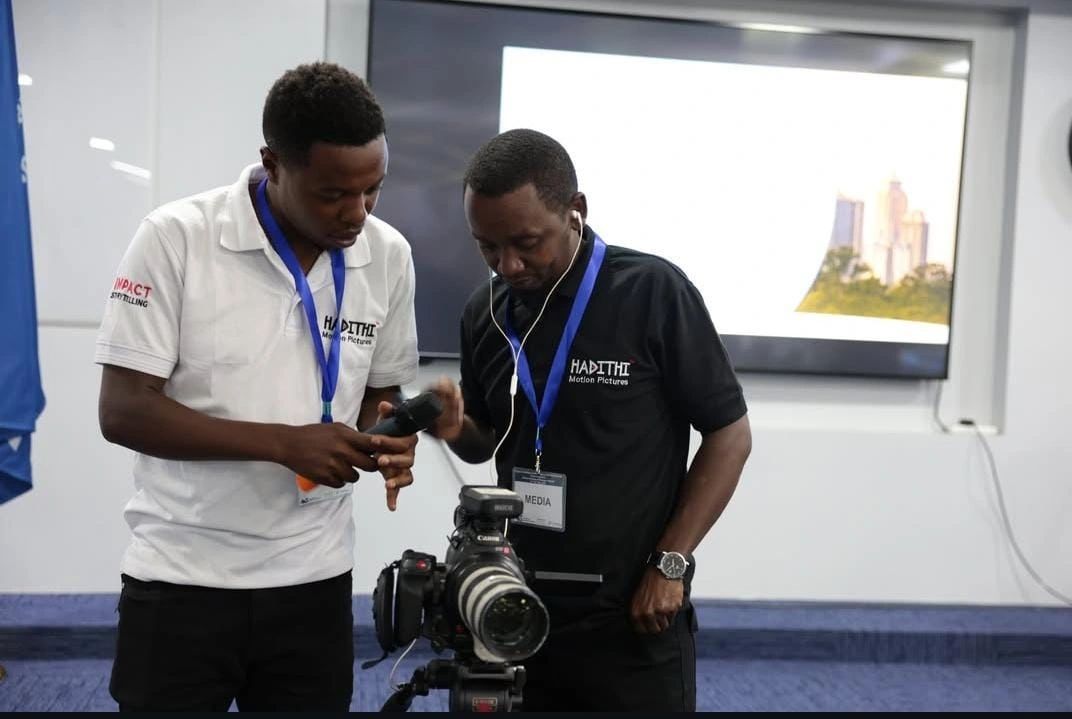
The team at Hadithi Motion Pictures is driven by a passion for narrative development, using immersive storytelling techniques to inspire reflection and behavior change.
“When audiences see themselves, their routes, their daily lives, their small triumphs, they feel seen. That resonance is powerful.”