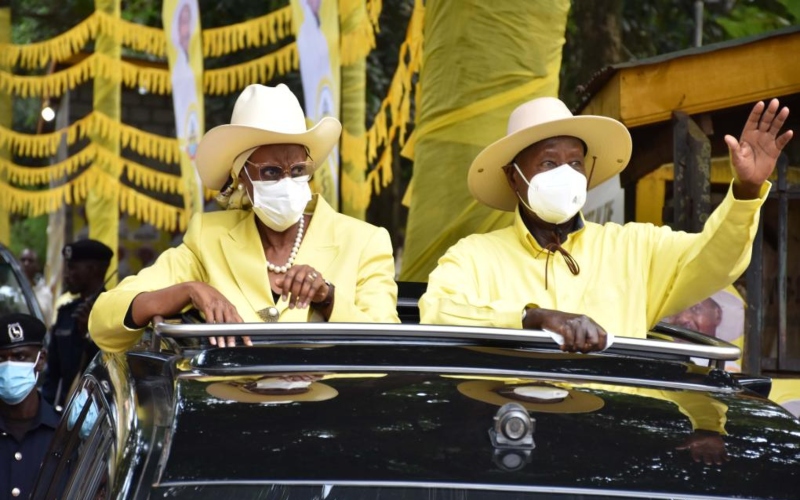
On January 15, Uganda faces a crucial election that could determine whether the nation continues under the long-standing rule of a veteran president or embraces a younger candidate promising reform.
President Yoweri Museveni, 81, who has led the country since 1986, is contesting a seventh term. His main challenger, Bobi Wine, 43, a former pop star turned politician, campaigns on transforming governance and tackling entrenched problems.
The election period has been tense, with opposition activities repeatedly disrupted. Activists have been detained, and security forces have broken up rallies. With most Ugandans under 30, the economy and rising youth unemployment have become central to campaign discussions.
Election schedule
Voting is scheduled for Thursday, January 15. Polls open at 7:00 am local time (04:00 GMT) and close at 4:00 pm. Anyone still waiting in line at the closing time will be allowed to cast their vote.
What positions are being contested?
Uganda’s 21.6 million registered voters will participate in three separate elections: presidential, parliamentary, with 353 constituency MPs, and 146 district-level women representatives.
Key contenders in the presidential race
The contest is dominated by Museveni and Bobi Wine, who face off for the second time. Museveni secured 58 per cent of the vote in 2021, while Bobi Wine received 35 per cent, in an election criticised for alleged rigging and repression.
Yoweri Museveni – National Resistance Movement (NRM)
Museveni rose to power 40 years ago as a guerrilla leader promising to restore democracy after years of dictatorship and civil conflict under Idi Amin, Milton Obote and Tito Okello.
Initially seen as a progressive force in African leadership, his rule has been marked by allegations of human rights violations and targeting of political opponents.
He has benefited from constitutional amendments that removed age and term limits, allowing him to maintain power. Museveni argues he remains “the country’s sole guarantor of stability and progress.”
Bobi Wine – National Unity Platform (NUP)
Robert Kyagulanyi, known as Bobi Wine, has emerged as the strongest opposition candidate. Once dubbed the “ghetto president”, he symbolises the aspirations of young and urban voters.
In 2021, he secured the largest opposition vote share in Uganda’s recent history and established NUP as the main opposition party.
Despite ongoing harassment by security forces, he continues to campaign, joined by other candidates Frank Bulira, Robert Kasibante, Joseph Mabirizi, Nandala Mafabi, Mugisha Muntu, and Mubarak Munyagwa.
Veteran opposition leader Kizza Besigye is barred from running, jailed on treason charges in 2024, which he denies.
Voter priorities
The economy, especially unemployment, is a pressing concern. Average incomes have increased modestly since the pandemic, but job growth has not kept pace with the youth population.
Infrastructure, healthcare, education, and corruption remain important issues.
Uganda ranks 140th out of 180 countries on Transparency International’s Corruption Perceptions Index, with bribery and nepotism widespread.
Election integrity concerns
Uganda’s elections have faced scrutiny in the past. Authorities claim the vote will be free and fair, yet UN experts warn of a “pervasive climate of fear”.
Opposition rallies, particularly Bobi Wine’s, have been disrupted, with Amnesty International calling the actions “a brutal campaign of repression.”
The government maintains these measures prevent unrest.
Bobi Wine has called on citizens to “stay at polling stations and safeguard their ballots to help prevent vote rigging”.
Election officials encourage peaceful voting, assuring that results will be transparent and observed by party agents, media, and monitors.
Fears remain of potential internet shutdowns to obstruct result verification, though NUP has a Bluetooth-based monitoring app to mitigate this risk.
When will the results be released?
If voting and counting proceed as planned, results should be announced by 16:00 local time (13:00 GMT) on Saturday, 17 January. The electoral commission must declare the presidential outcome within 48 hours.
Presidential voting process
Votes are counted at polling stations and sent to a central tallying centre.
A candidate must receive over 50 per cent of the votes to win outright; otherwise, a runoff is held within 30 days between the top two contenders. Museveni has always crossed the 50% threshold in previous elections.