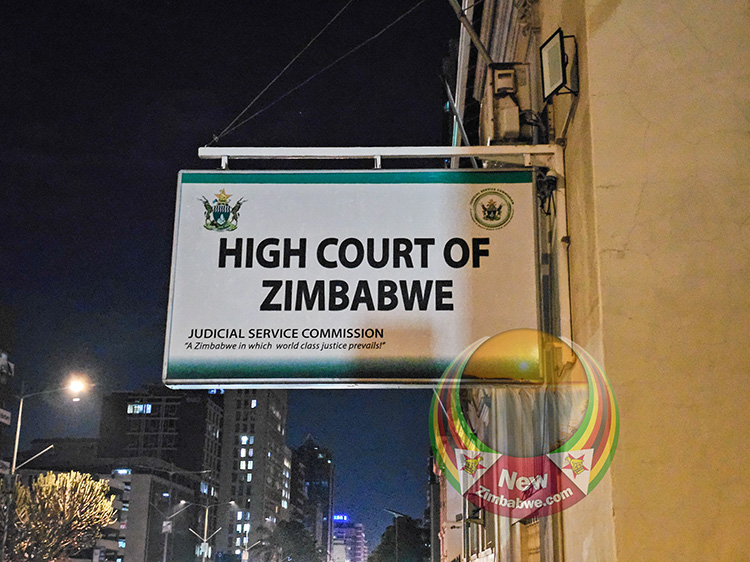
THE High Court has ordered the removal of several investors from the share register of DGL Investments Number Five (Pvt) Ltd, ruling that shares were unlawfully issued in breach of a 2017 mining investment agreement and without meeting strict conditions tied to a US$4.3 million debt and capital injection.
The application was brought by Gwampa Mining (Private) Limited against DGL Investments Number Five (Pvt) Ltd as the first respondent, with Eagle Italian Shoes (Pvt) Ltd, Ming Chang Sino Africa Mining Investment (Pvt) Ltd, a China-linked mining investor popularly known in Zimbabwe’s mining sector as Sino, Fuel Africa (Pvt) Ltd, businessman Wang Ke, and the Chief Registrar of Companies and Other Business Entities cited as respondents.
Justice Bongani Ndlovu found that shares were allotted “without sufficient cause” and in clear violation of the Companies and Other Business Entities Act, describing the allotments as legally indefensible.

“The evidence presented clearly demonstrates that the 3rd, 4th and 5th respondents were unlawfully allotted shares without fulfilling the conditions precedent set out in the 2017 Memorandum of Agreement,” the judge ruled.
The dispute pitted Gwampa Mining (Private) Limited against several entities, including Ming Chang Sino Africa Mining Investment (Pvt) Ltd, Eagle Italian Shoes (Pvt) Ltd, Fuel Africa (Pvt) Ltd and businessman Wang Ke, over control of a mining venture whose ownership structure dramatically changed despite contractual safeguards.
At the centre of the storm was a 2017 Memorandum of Investment Agreement, under which new investors were to receive shares only after meeting strict conditions, including assuming a US$4.3 million liability, injecting working capital, settling creditors, and signing a shareholders’ agreement.
However, the court found that the conditions were never fulfilled.
“The shares were allotted despite the absence of a shareholders’ agreement and the required capital not having been paid,” Ndlovu said.

According to court documents Ming Chang Sino Africa was required to contribute 56.25 percent of the capital obligations but failed to do so. The court rejected claims that payments were made through the late businessman John Muir, allegedly acting as the applicant’s “alter ego”.
“The onus of proof lay with the third respondent to demonstrate that it fulfilled its obligation. However, it has not provided any supporting documentation,” the judge said.
Ndlovu was scathing about what he described as bare denials unsupported by evidence.
“The third respondent has failed to present evidence showing that it fulfilled its contribution obligations… relying instead on bare denials,” he ruled, adding that courts cannot be persuaded by “bald, unsubstantiated averments”.
The court also took issue with the allotment of shares to Wang Ke, who was not even a party to the original agreement, noting that the contract expressly prohibited the transfer of rights without unanimous written consent.
“There is no evidence before the court to substantiate the assertion that shares were lawfully sold or transferred,” the judge said.
As a result, the High Court ordered that the names of Ming Chang Sino Africa Mining Investment, Fuel Africa and Wang Ke be deleted from the company’s register of shareholders, cancelled their share certificates, and directed the Chief Registrar of Companies to effect the changes.
The affected parties were also ordered to pay costs on the punitive legal practitioner-and-client scale, underscoring the court’s displeasure with their conduct.
The ruling restores Gwampa Mining’s control over the company and sends a strong warning to investors that shareholding rights cannot be acquired through shortcuts or informal arrangements in
capital-intensive mining ventures.
