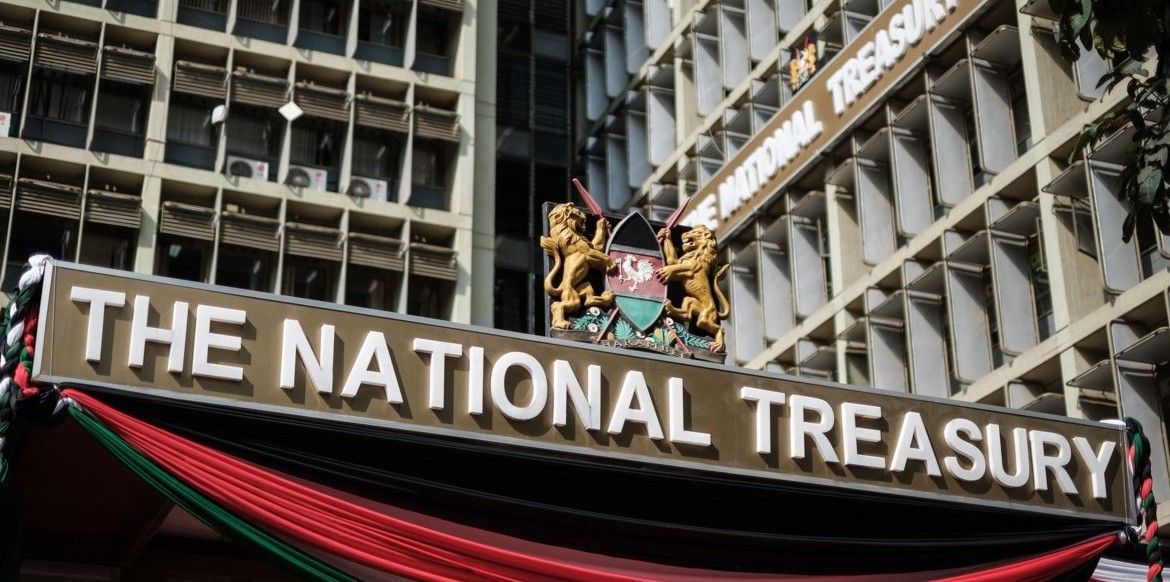
Kenya’s plan to fund major infrastructure through public–private partnerships (PPPs) took a major hit after the cancellation of Adani Energy Solutions Limited’s transmission lines project, leaving the Treasury with a Sh32.3 billion funding gap.
The move has disrupted government efforts to leverage private investment to finance development while keeping public debt under control.
According to Treasury records, PPP inflows for the 2024/25 financial year reached only Sh17.7 billion, falling far short of the Sh50 billion target set at the start of the year.
The PPP directorate at the Treasury attributed the shortfall to the cancellation of the Adani project, stating in budget documents, “The target [for 2024/25] was not achieved. Shortfall was a result of the termination of Adani Energy Solutions Limited (AESL) power transmission lines project.”
The project was scrapped on November 21, 2024, after Gautam Adani, founder of the Adani Group, faced allegations in the United States of paying about $265 million (Sh34.45 billion) in bribes to Indian officials, claims he denies.
President William Ruto ordered the termination, halting AESL’s high-voltage electricity transmission initiatives in Kenya, which were expected to cost about $907 million (Sh117.91 billion) upon completion.
The cancelled works included a 197-kilometre 400KV line along the Gilgil–Thika–Mala–Konza corridor, a 101-kilometre 220KV connection between Rongai, Keringut, and Chemosit, and a 90-kilometre 132KV line linking Menengai, Ol Kalou, and Rumuruti. Planned substations at Lessos, Rongai, and Thurdibuoro were also affected.
These lines were designed to strengthen the national electricity grid and improve the transfer of power from generation points to demand centres.
The cancellation has highlighted weaknesses in the Treasury’s reliance on a few large PPP projects to meet funding targets, particularly as public debt costs rise.
Treasury data shows that while PPP inflows topped Sh80.6 billion in 2021/22, they fell to Sh45.7 billion in 2022/23 and plunged to Sh4.3 billion in 2023/24.
The modest recovery in 2024/25, supported by just two projects, was insufficient to meet the Sh50 billion goal.
The Galana–Kulalu Food Security Project contributed Sh6 billion, in addition to an earlier Sh6.5 billion, while the Orpower 22 Menengai Geothermal Power Plant Project accounted for Sh11.7 billion.
Looking ahead, the Treasury anticipates stronger PPP inflows this financial year ending June 2026, targeting Sh65 billion, above the Sh50 billion annual goal.
Projects expected to attract private funding include the recently opened Rironi–Nakuru–Mau Summit Road Project (Sh150 billion), Africa50 transmission lines (Sh41 billion), and the National Transport and Safety Authority’s new generation driving licence and traffic monitoring system (Sh45 billion).