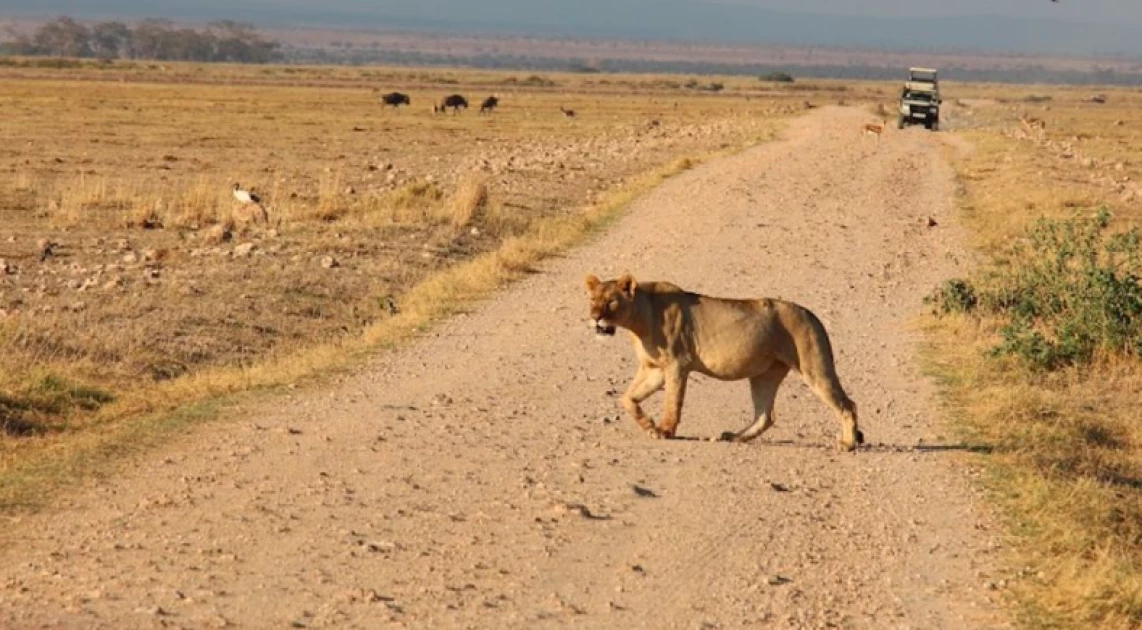
A cross-border investigation is underway following a devastating wildlife poisoning incident near Amboseli National Park that has left at least six lions and 34 vultures dead.
The animals are believed to have died after feeding on a cow carcass deliberately laced with poison in the Kitenden area along the Kenya–Tanzania border.
The incident, which occurred two days ago, has shocked conservationists and authorities, who describe it as one of the most serious poisoning cases ever recorded in the Amboseli ecosystem.
Wildlife officials from both Kenya and Tanzania have launched joint investigations, with reports indicating that two suspects from Tanzania are under close surveillance as inquiries intensify.
In response, the leadership of Kitenden Conservancy and the Orgulului/Olalarashi Group Ranch has imposed an immediate ban on livestock grazing by herders from Kitenden village in Tanzania.
The restriction will remain in place until the suspects are arrested and legal processes concluded.
Orgulului/Olalarashi Group Ranch chairman Daniel ole Leturesh said the ban is aimed at compelling cooperation with investigators and restoring accountability.
Leturesh said no livestock from Kitenden village will be allowed into the conservancy until the culprits are identified and handed over to authorities. Accountability must come first for harmony to prevail,” he said.
The move has received support from leaders on both sides of the border. Olmolo Ward councillor in Tanzania’s Longido District, Loomoni Olesiate Mole, said the temporary restriction is necessary to prevent community conflict and protect wildlife.
He said this measure is meant to stop conflict between communities and to ensure justice for the wildlife.
Tanzanian authorities have also pledged firm action. John Magembe, Chief Officer for Wildlife Management at the Enduimet Wildlife Management Area, assured that all those involved would be brought to justice.
He said the government of Tanzania will ensure that the perpetrators are arrested and that the law takes its course.
Kitenden Conservancy chairman Sayialel Ole Noombaek echoed the hardline stance, insisting grazing will not resume until all suspects are arraigned in court.
He said wildlife protection is non-negotiable.
Conservationists say the loss of 34 vultures is particularly alarming, noting that the birds are among the most endangered species in the region. Vultures play a critical role in disease control and maintaining ecological balance, and their continued poisoning poses a serious threat to the health of the Amboseli ecosystem.
The Kitenden incident now stands as a major test of cross-border cooperation, with conservation groups warning that failure to act decisively could reverse decades of conservation gains in the Amboseli landscape.