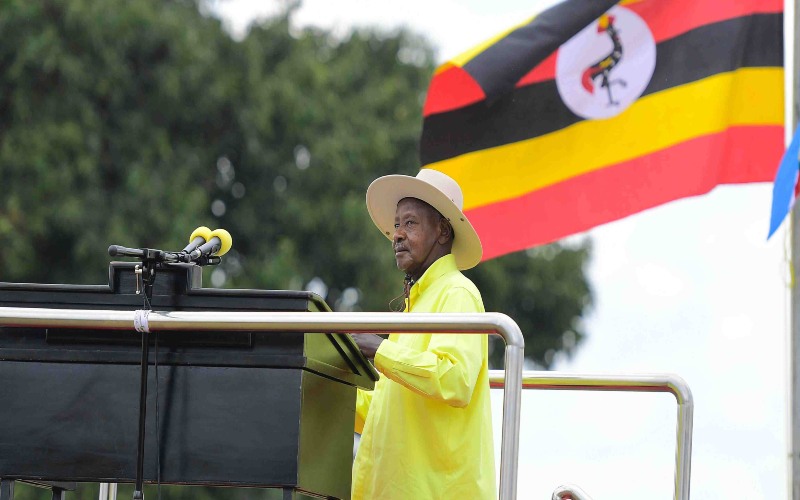
Ugandan President Yoweri Museveni has declared January 15 and 16, 2026, as national holidays to allow voters time to participate in the country’s presidential and parliamentary elections.
The announcement comes after weeks of intense campaigning and comes at a time when the nation is closely watching the electoral process.
The decision was formalised through a Legal Notice under the Public Holidays Act, Cap. 174, which was gazetted by the government to ensure that citizens have uninterrupted time to vote.
“In exercise of the powers conferred upon the President by Section 2 (2) of the Public Holidays Act, I declare 15th and 16th January, 2026, to be observed as public holidays throughout Uganda for the purpose of enabling citizens to participate in the Presidential and Parliamentary elections,” the notice read.
Officials said the break is designed to make it easier for voters across the country to travel, join polling queues, and cast their ballots without conflicts from work or school.
The holidays will affect both government and private offices, signalling the seriousness with which the government is preparing for the vote.
President Museveni, who has held power since 1986, is seeking another term in office. The elections will also determine the country’s parliamentary makeup, with 21.6 million registered voters casting ballots in three separate races: the presidential election, the selection of 353 constituency Members of Parliament, and the election of 146 district women representatives.
The presidential contest is set to be a repeat of the 2021 race, with Museveni facing opposition leader Bobi Wine once again.
In the previous election, Museveni, 81, won with 58 per cent of the vote while Bobi Wine received 35 per cent, a result overshadowed by accusations of electoral manipulation and suppression of opposition activities.
Ugandan law requires a candidate to win more than 50 per cent of the votes to avoid a runoff under the two-round system. Despite these rules, many citizens remain concerned about the transparency and fairness of the process.
These elections follow a tense vote in neighbouring Tanzania, where President Samia Suluhu won with 97.66 per cent of votes, a result heavily criticised by opposition parties and international observers.
The Tanzanian poll faced accusations of pre-election disqualifications and detentions of key opposition figures.