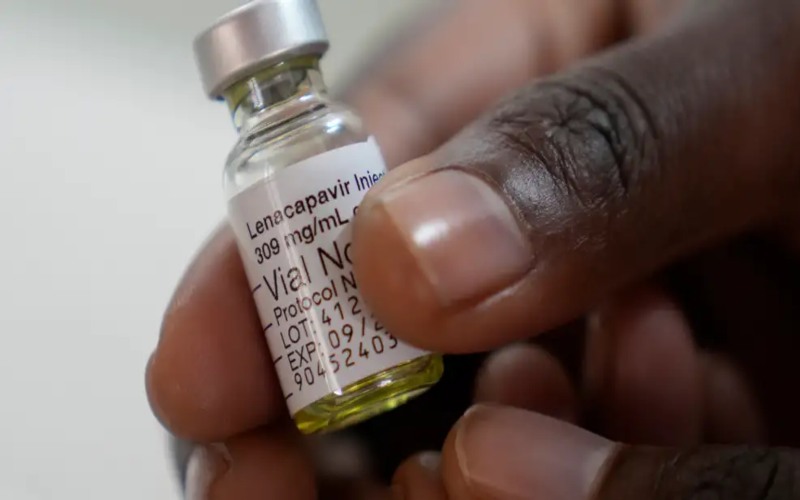
Kenya has become one of the first countries in Africa to recommend the registration of the long-acting HIV prevention drug lenacapavir, marking a major milestone in the country’s HIV response.
In a statement dated January 9, 2025, the Ministry of Health, through the Pharmacy and Poisons Board (PPB), announced its recommendation to register Lenacapavir 300 mg tablets and Lenacapavir 464 mg solution for injection. Lenacapavir is a long-acting antiretroviral medicine used for HIV pre-exposure prophylaxis (PrEP).
The approval follows a comprehensive scientific evaluation of the drug’s quality, safety, and efficacy, conducted in accordance with Kenyan law and internationally accepted regulatory standards.
Health Cabinet Secretary Aden Duale noted that the decision reflects Kenya’s strengthened regulatory capacity and aligns with recent global public health guidance, including recommendations from the World Health Organisation (WHO).
“Kenya has made remarkable progress in expanding access to daily oral PrEP across all 47 counties. However, some individuals face difficulties maintaining long-term daily medication. Long-acting injectable prevention options like Lenacapavir can help overcome these barriers by reducing dosing frequency,” said Duale.
Duale reaffirmed the Ministry of Health’s commitment to expanding HIV prevention choices, reducing new HIV infections, and advancing the national goal of ending HIV as a public health threat.
He emphasised that all health products introduced in Kenya will continue to meet the highest standards of safety, quality, and effectiveness.
Kenya, along with South Africa, Zambia, and Eswatini, was among the first countries selected for the phased rollout of the long-acting injectable formulation.
This prioritisation is being supported through global partnerships, with preparatory planning already underway to ensure timely, equitable, and responsible access for populations at substantial risk of HIV infection.
Lenacapavir works by disrupting critical stages of the HIV lifecycle, effectively preventing infection. Its long-acting formulation allows for administration only twice a year, offering a significant alternative to daily oral PrEP. This option is especially beneficial for individuals who struggle with daily pill use due to pill fatigue, stigma, or adherence challenges.
On cost, lenacapavir is expected to be affordable in Kenya through global partnerships. Once lower-cost versions are available, the price is projected to be around $40–50 per year (about Sh5,000–6,000). The government and partners aim to ensure it is accessible to people at high risk of HIV, likely at low or no cost in public health facilities.
Kenya’s HIV burden
Kenya continues to make progress in its fight against HIV, though the burden remains significant. About 1.3 to 1.4 million people in the country are currently living with HIV. Among adults aged 15 to 49 years, the national HIV prevalence is estimated at around 3 per cent.
Each year, the country records approximately 20,000 new HIV infections, with women and girls accounting for a larger share of these cases. HIV affects women more than men, largely due to social, economic, and biological factors that increase vulnerability.
The impact of HIV is, however, uneven across the country.
Counties in western Kenya, such as Homa Bay, Kisumu, Siaya, and Migori, have the highest prevalence rates, which are far above the national average. In contrast, counties in the northeastern region, including Wajir, Garissa, and Mandera, record very low prevalence.