Collaborative programs are emerging across Africa to promote inclusive employment
Public, private, and international actors are increasingly involved
Structural barriers keep employment rates for people with disabilities low
Across several African countries, collaborative programs and policy frameworks on disability and employment are taking shape, driven by alliances between governments, international organizations, and local actors. These initiatives reflect a growing awareness of the issue, even though their reach remains limited.
In Benin, in November 2025, the University of Abomey-Calavi dedicated a specific session to the employability of graduates with disabilities during its Job Fair, signaling an effort to integrate the issue into existing employment support mechanisms. A few months earlier, the National Employment Agency organized training sessions to strengthen the capacity of employment promotion officers to better support job seekers with disabilities.

In East Africa, Tanzania illustrates another dimension of this mobilization. A partnership established in March 2025 between the National Business and Disability Network, the Employers’ Association, and the NGO Sightsavers highlights the growing involvement of the private sector in promoting inclusion. Supported by the International Labor Organization, the initiative is based on structured dialogue with companies to encourage changes in internal practices.
According to the ILO, the objective is to move beyond symbolic commitments and gradually integrate inclusive employment policies into recruitment processes, career management, and workplace adaptations. In North Africa, Morocco has also strengthened cooperation between public institutions and economic actors. Agreements signed in 2022 with certain retail chains to promote the employment of people with intellectual disabilities illustrate this approach.
These initiatives underscore that building sustainable employment pathways depends on coordinated action between public authorities, civil society, and the private sector.
Persistent barriers and challenges across Africa
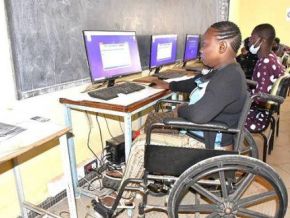
Despite these encouraging signals, structural obstacles remain significant across the continent. Access to genuinely adapted training programs is still insufficient, and many educational institutions and work environments remain poorly accessible. These material constraints are compounded by persistent stereotypes that hinder access to formal employment and limit career progression, including for qualified people with disabilities.
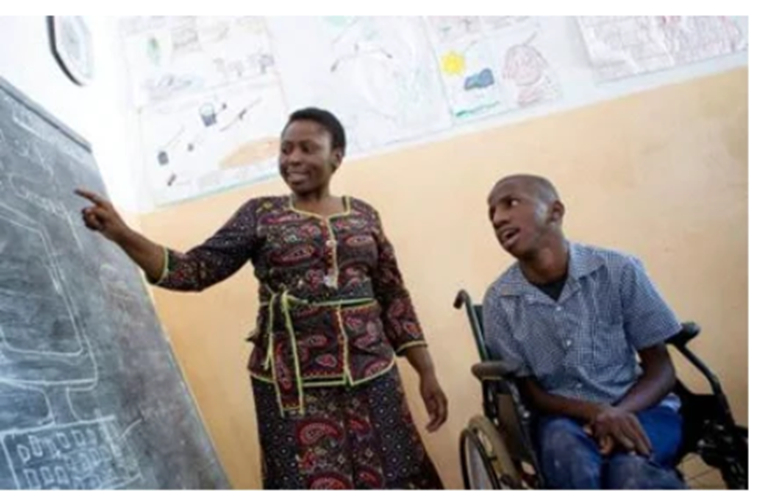
Available data highlight the scale of the challenge. According to the United Nations, about 16% of the global population lives with a significant disability, with nearly 80% residing in developing countries. In Africa, labor market outcomes are particularly concerning. A study cited by Social Business Impact indicates that fewer than 20% of people with disabilities have paid employment.
In this context, the challenge goes beyond the recognition of rights alone. It involves a deep transformation of training systems, recruitment practices, and public policies to sustainably remove barriers to inclusion. Without targeted investment and sustained mobilization by governments, businesses, and civil society, the professional integration of people with disabilities will continue to progress too slowly, limiting Africa’s human and economic potential.
Félicien Houindo Lokossou