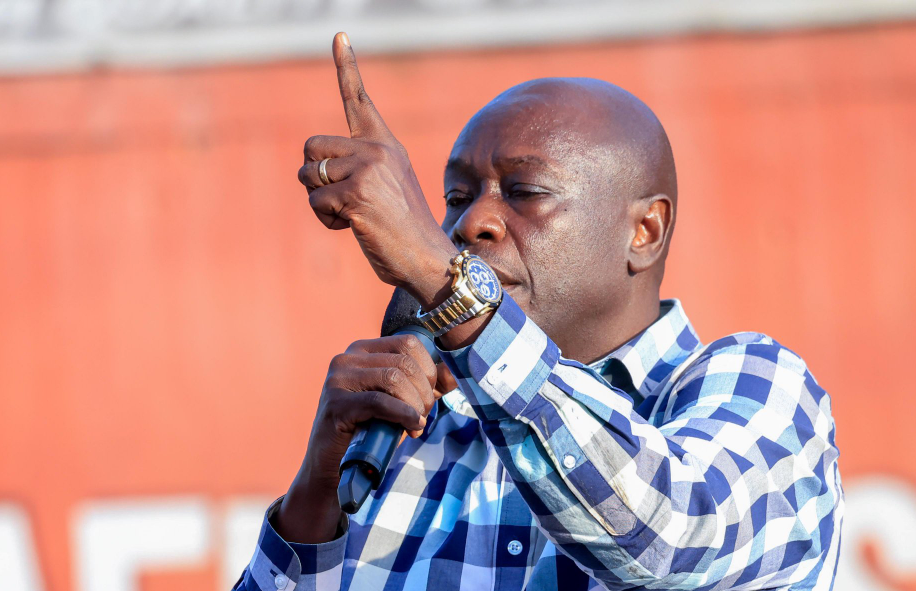
 Former Deputy President Rigathi Gachagua. /RIGATHI GACHAGUA/X
Former Deputy President Rigathi Gachagua has remained firm on his position that the placement of learners in national schools must be guided by regional balance to ensure fairness.
Speaking on Friday in a press statement, the DCP leader said local children should be prioritised when placing learners in Grade 10 in schools within their regions, provided they meet the required entry points.
“National schools are very critical because they have a very developed infrastructure, and they attract the best among other children. The issue that I raised, and I must continue raising, is that there must be fairness in the placement of children in national schools,” he said.
The former deputy president noted that while national schools are meant to enjoy equal status regardless of location, the reality on the ground is different.
Some regions, he said, host well-maintained and well-equipped institutions, while others have schools that exist as national institutions in name only.
Gachagua dismissed claims that he was advancing a tribal narrative or suggesting that learners should study in their home areas based on ethnicity.
His remarks, first made during a church service on January 6, sparked outrage and condemnation from a cross-section of leaders.
“I have not insisted, and I cannot, that children of a certain area must go to schools where those schools are domiciled, no. What I am saying is that where schools are domiciled, children from that area who qualify to go to those schools must be given an opportunity,” he said.
Gachagua said he had received numerous complaints from parents across the country who felt shortchanged after their children, despite exemplary performance, were placed in low-quality schools while others with average results secured places in well-known institutions.
According to him, parents said their children had applied to those schools and worked hard to attain the requisite pass marks, but still missed out.
“For example, there is a child from the Thogoto area who got 71 out of 72 marks. Alliance High School is just a few metres from Thogoto. That child had asked to be placed in Alliance High School and the cluster was right. That child was denied an opportunity, yet some children from other areas with as low as 50 marks had been admitted,” Gachagua said.
“That is what we are saying is unfair. This placement must be based on merit for all the children of Kenya. It is unfair to deny a child an opportunity to go to a school of his or her choice with very high marks and give that opportunity to another with very low marks.”
The government opened a seven-day window for the revision of Grade 10 school placements, which ran from December 23 to December 30, 2025.
The process was introduced to address parental and learner dissatisfaction with the initial automated placements following the first-ever Kenya Junior School Education Assessment (KJSEA) results.
The Ministry of Education later granted learners a second opportunity to revise their choices from January 6 to January 9, 2026, after more than 86,000 initial applications were declined.
Most rejections were attributed to learners selecting a small cluster of national schools perceived to be the best countrywide.
Basic Education Principal Secretary Julius Bitok said two national schools in Nairobi alone received more than 50,000 applications, yet each has a student capacity of just 500.
Placement of learners is automated and is based on their school choices and performance in the KJSEA.
Learners are placed in four categories of schools: national (C1), extra-county (C2), county (C3) and sub-county (C4).
Schools under C1 are former national schools, C2 are former provincial schools, C3 are former district schools, while C4 are former day secondary schools.
Kakamega Senator Boni Khalwale supported Gachagua’s argument, saying some leaders are failing at developing schools in their regions, leaving the institutions in dilapidated condition.
“As they say, if you want to kill a dog, start by giving it a bad name. Listening to Gachagua with sobriety, he actually raised a valid and not tribal point. I strongly believe national schools should reserve 30 per cent admission slots to students from local communities,” he said on X.
“As for the use of NG-CDF by MPs … let us not sugarcoat anything.
These leaders are the problem!
Period.”