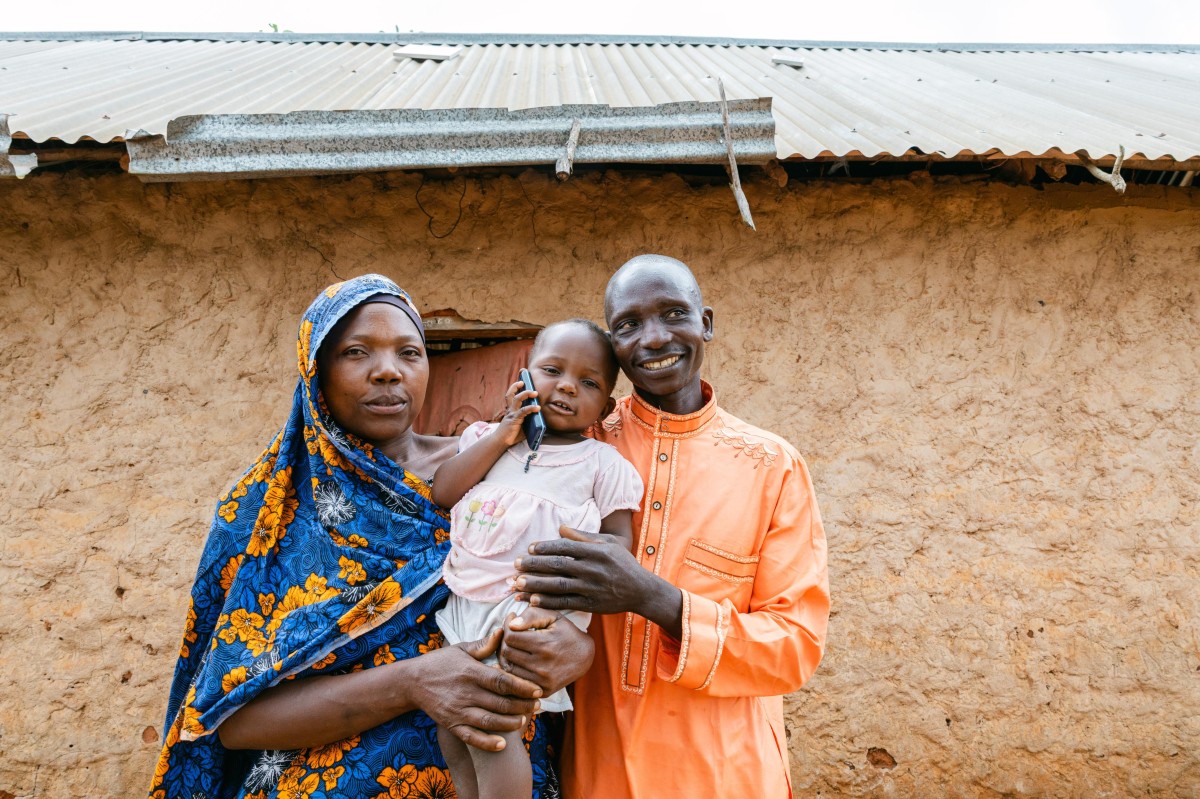
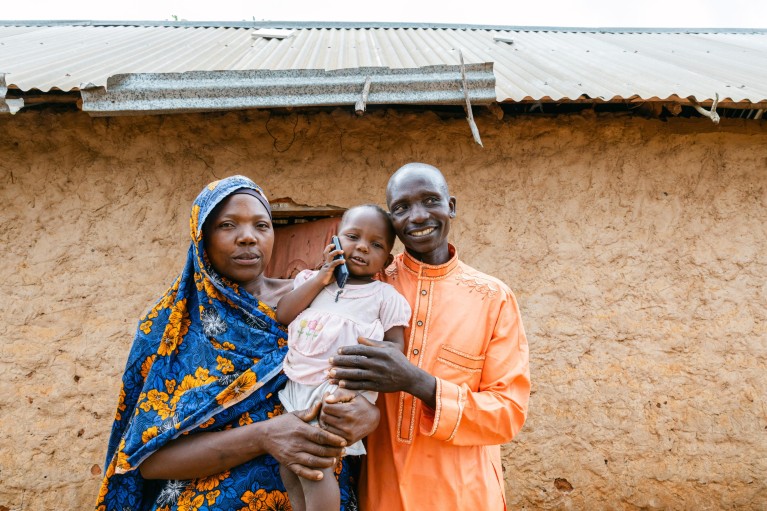
Shabanni Ramadhani, a subsistance farmer from of Talanda village in Tanzania’s Pwani region was unable to work because of a LF infection that led to pain and swelling in his genitals. In 2024 he travelled 200km to access a free treatment campaign offered by the Ministry of Health in partnership with Sightsavers. Here he is with his familyCredit: Uniting to Combat NTDs/Sam Vox.
Tanzania making inroads in slowing the rate of neglected tropical diseases (NTDs) according to the latest data from the country’s Ministry of Health.
Tanzania’s total NTD burden is the fourth largest1 in Africa with more than half of its population, about 36 million people, requiring treatment for at least one NTD in 2023. Now, thanks to mass-drug administration (MDA) campaigns, community awareness efforts, surveillance, morbidity management and strengthening of health systems, steep declines in infections and treatment needs across multiple diseases have been recorded.
Clarer Mwansasu, NTD control programme manager in the Ministry of Health, said that by the end of 2024 Tanzania had reduced the number of people requiring anti-parasitic chemotherapy for NTDs by 76%. This translates to 39.4 million fewer people than in 2021, and the government target is to reduce this to more than 90% by 2030, by following the NTD Master Plan 2021-2026.
These efforts targeted schistosomiasis, soil-transmitted helminthes (STH), lymphatic filariasis, (LF) onchocerciasis (river blindness) and trachoma, the five NTDs endemic to the country which can be tackled with low-cost antiparasitic drugs significantly reducing their burden.
Mwansasu said 15 out of the 21 NTDs caused by bacteria, fungi, parasites, toxins and viruses are endemic in Tanzania.
“These diseases are poverty-related and behavior change is important to help prevent outbreaks in the communities,” Mwansasu said.
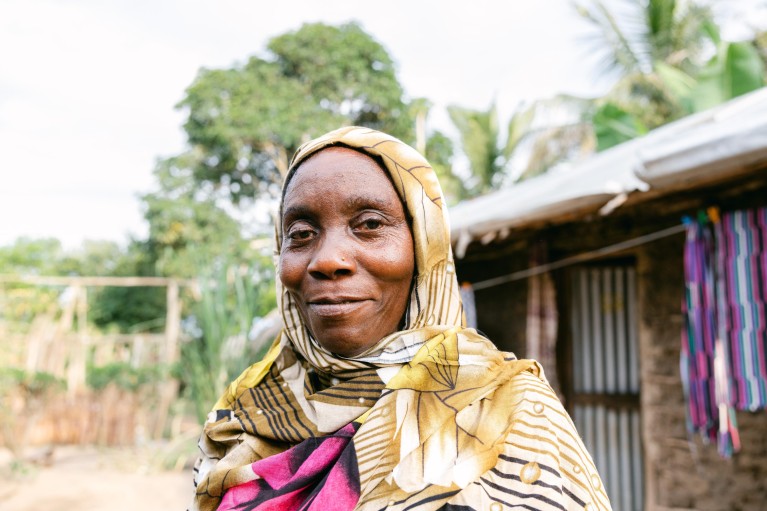
Fatuma Mohamed, a 65 year-old grandmother of five, obtained free treatment for the trachoma infection which was affecting her sight.Credit: Uniting to Combat NTDs/Sam Vox.
The success of the campaign is clear. In 2006-2015, LF was endemic in 119 districts. Now it is found in five districts with interrupted transmission in 114 districts. The incidence of onchocerciasis has reduced from 28 to 3 districts and, although still a concern in some areas, it has been controlled as a public health problem. Trachoma cases have been recorded in 7 districts, down from 69 in 2006.
While schistomiasis still occurs in all 184 districts in Tanzania, Mwansasu said, its national prevalence has been lowered. A study1 by South Korean and Tanzanian researchers, published in Plos NTDs, confirms the success of the campaign. It shows the effectiveness of the integration of school and community-based MDA, sanitation, and health education in reducing schistosomiasis prevalence in rural Tanzania. Lead author, Yoonho Cho, from World Vision, Korea said scaling up these integrated interventions could have a significant impact on communicable diseases and alleviating the global burden of NTDs by 2030.
Sightsavers Tanzania works in collaboration with Uniting to Combat NTDs, and Tanzania’s biggest health facility, Muhimbili National Hospital, trains healthcare workers across the country in screening and treatment.
According to Peter Kivumbi, the NTD programme manager at Sightsavers Tanzania, the building of capacity for healthcare workers from the grassroots and health facilities is the biggest achievement in their quest to eliminate NTDs as a public health problem. But as Tanzania makes progress towards elimination of major NTDs, cuts in donor funding threaten to reverse the gains. For over two decades, USAID was the leading funder of NTD projects in the country, and the withdrawal has left a huge funding gap leading to disruption of mass treatment campaigns and exacerbating the cycle of disease and poverty in the most vulnerable communities. Tanzania has lost over 80% of USAID funding to NTDs.
“We are now working on increasing domestic funding through the health sector budget, including scaling up access to interventions, treatment and health system capacity building,” Mwansasu said, adding that the Ministry of Health is now coordinating efforts to fill the gaps with development partners like Sightsavers, The END Fund, RTI International, IMA World Health and Uniting to Combat NTDs..
The country, she says, aims to increase domestic funding of NTDs intervention to 60% by 2026 by embedding NTD financing into local council health system plans and budgets.
Besides funding hurdles, Tanzania’s trachoma lead at the Ministry of Health, Hope Rusibamayila, said access to clean water must be improved, especially in schools, to reduce the prevalence of major NTDs. She said climate change makes NTD control difficult, particularly among pastoralist communities who keep relocating in search of water and pasture for their livestock.
“We are also seeing changes in the vector population, introducing infections of LF to previously unaffected areas,” said Rusibamayila.