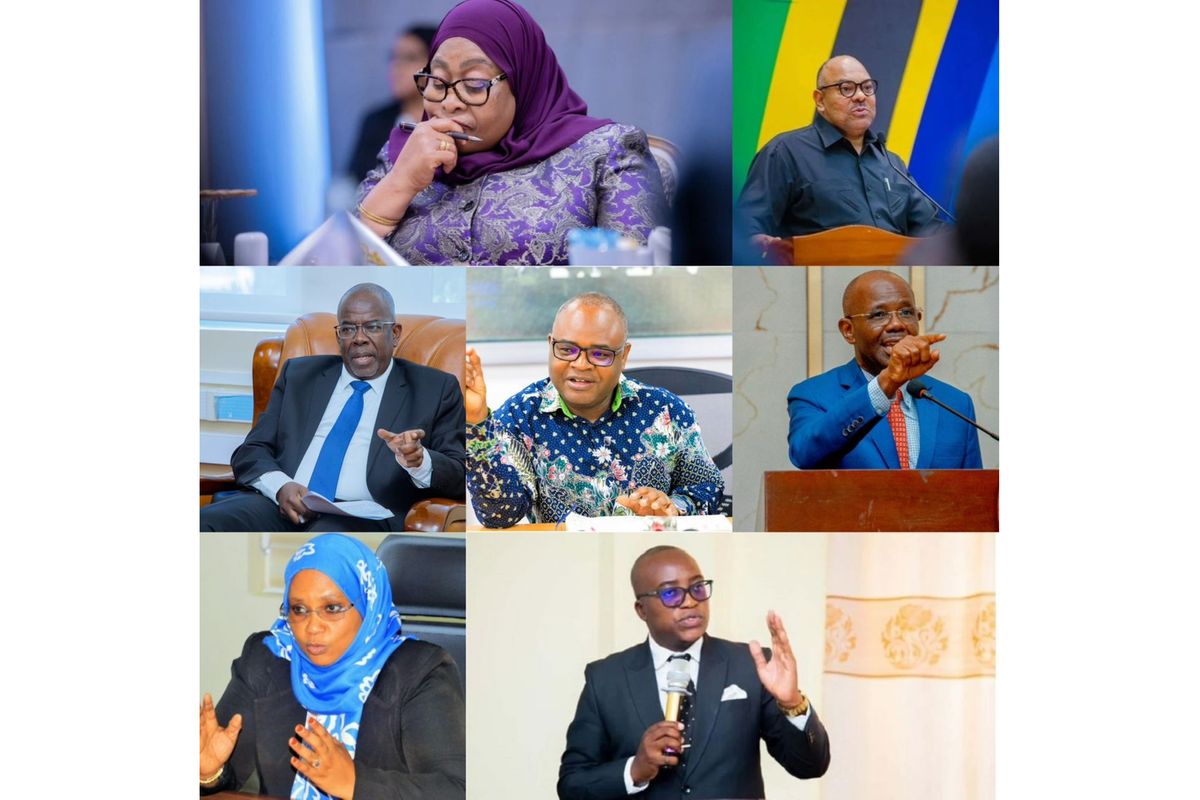
Dar es Salaam. Tanzania’s economic direction in 2026 is expected to be shaped by a select group of policymakers, technocrats and private sector leaders. Their decisions will determine whether recent gains are consolidated or weakened by fiscal pressures and lingering post-election uncertainty.
With the 2025 General Election behind the country, focus has shifted from political contestation to economic delivery. As such, the year ahead will be critical for sustaining growth momentum, restoring investor confidence and translating macroeconomic stability into tangible benefits for citizens.
According to the Tanzania Investment and Consultant Group Ltd (TICG), the economy is projected to grow by about 6.3 percent in 2026, up from an estimated 6.0 percent in 2025.
Growth is expected to be driven by infrastructure investment, services expansion, mining and tourism. However, the consultancy warns that post-election uncertainty, if poorly managed, could undermine investor confidence and slow capital inflows.
“Tanzania remains one of the fastest-growing economies in East Africa, supported by strong public investment and a diversified production base.
However, political developments following the 2025 elections introduce risks that could weigh on investor sentiment if stability is not maintained,” TICG said in its latest outlook.
Against this backdrop, attention is turning to a number of key figures whose decisions will shape Tanzania’s economic trajectory in 2026.
President Samia Suluhu Hassan
At the centre of Tanzania’s economic framework is President Samia Suluhu Hassan, whose administration has set ambitious targets to accelerate growth while maintaining macroeconomic stability.
As she enters the final phase of her presidency, widely viewed as legacy-defining, the emphasis is on translating policy commitments into results that directly improve livelihoods.
In her opening address to the 13th Parliament, President Hassan outlined a five-year agenda focused on building an inclusive and resilient economy capable of generating jobs, boosting productivity and sustaining growth.
“Our goal is to increase the pace of economic growth from the current 5.6 percent to more than seven percent by 2030,” she said, underscoring the importance of strengthening both macroeconomic and microeconomic foundations.
Agriculture remains the backbone of this strategy. The President aims to transform the sector from subsistence farming into a modern, commercialised industry, targeting growth of 10 percent. Tanzania’s reported 128 percent food self-sufficiency provides a base for export-oriented production and agro-processing, with maize, rice and horticulture identified as priority crops.
Livestock and fisheries also feature prominently, with plans to expand grazing areas, modernise veterinary services and strengthen aquaculture under the blue economy agenda.
Industrialisation is another key pillar. The government aims to raise industrial growth to nine percent by 2030 by leveraging industrial parks such as Kwala and Buzwagi to add value to local raw materials and generate jobs, particularly for youth and women.
Mining, which contributes about 10.1 percent of GDP, is expected to benefit from increased local processing and mineral value addition, alongside plans for a national mineral refinery.
Infrastructure investment remains central, with roads, railways, ports and energy projects expected to improve productivity and lower the cost of doing business.
Electricity generation is projected to reach 8,000 megawatts by 2030, supported by hydropower, natural gas and renewable sources.
In her New Year message, President Hassan said looking ahead, Tanzania will begin implementing the National Development Vision 2050 alongside a three-year Medium-Term Strategy focused on boosting government revenue through expanded use of electronic systems.
She reaffirmed the government’s commitment to attracting foreign investment while safeguarding national resources and announced initial steps towards establishing a National Reconciliation Commission.
In 2026, Foreign Affairs and East African Cooperation minister Mahmoud Thabit Kombo is expected to play a pivotal role in advancing Tanzania’s economic diplomacy.
Following the politically charged 2025 election, which drew international scrutiny and led to temporary pauses in some aid flows, his task is to repair the country’s global image, restore investor confidence and secure foreign inflows that underpin growth.
Tanzania has set a target of $15 billion in annual foreign direct investment by 2026, focusing on strategic minerals, agro-processing, pharmaceuticals and digital infrastructure. Engagements with multilateral partners are also aimed at keeping public debt sustainable, projected at about 48 percent of GDP.
At the centre of economic coordination is Finance minister Khamis Mussa Omar, whose challenge is to balance growth ambitions with fiscal discipline amid post-election uncertainties.
The ministry is targeting GDP growth of between 6.0 and 6.3 percent while keeping inflation at around 3.5 percent. The 2025/26 budget of Sh56.49 trillion reflects an expansionary stance, with increased allocations to infrastructure, health, education and energy.
Managing a projected fiscal deficit of about three percent of GDP while maintaining debt sustainability remains a delicate task. Key reforms include tax rationalisation measures aimed at widening the tax base without undermining growth, alongside efforts to deepen domestic capital markets and improve access to credit for small and medium-sized enterprises.
The Minister of State in the President’s Office (Planning and Investment), Prof Kitila Mkumbo, oversees one of the most sensitive portfolios: restoring investor confidence after a tense election period.
Under the Tanzania Investment and Special Economic Zones Authority (Tiseza), the government is rolling out an investment strategy targeting manufacturing, digital industries, green energy and agro-processing. The goal is to attract $15 billion in annual FDI while supporting domestic firms.
Structural reforms are focused on streamlining licensing procedures, reducing bureaucratic bottlenecks and aligning education and skills training with labour market needs, particularly in engineering, ICT and industrial trades.
Transport minister Makame Mbarawa is leading large-scale investments intended to position Tanzania as a regional logistics hub. Flagship projects include the Standard Gauge Railway linking Dar es Salaam to inland regions and neighbouring countries, modernisation of ports and upgrades to major airports.
Investments in marine transport across the Great Lakes are also expected to revitalise regional trade, reduce logistics costs and strengthen Tanzania’s role as East Africa’s gateway.
Tourism remains one of Tanzania’s most important sectors and its leading foreign exchange earner. Natural Resources and Tourism minister Ashatu Kijaji will therefore be another key figure to watch in 2026.
The ministry is targeting an increase in tourism’s contribution to GDP to 18.9 percent and aims to attract five million international tourists. Strategies include stepped-up marketing, expanded air connectivity, improved road access and diversification of tourism products beyond wildlife safaris.
The sector is expected to generate up to $6 billion in foreign exchange and support millions of jobs nationwide.
The mining sector now contributes more than 10 percent of GDP, with policy emphasis shifting towards local processing and value addition. Minerals minister Anthony Mavunde is expected to accelerate efforts to establish refineries and integrate artisanal miners into the formal economy.
Plans are also under way to establish a Minerals Sovereign Wealth Fund to secure long-term benefits from non-renewable resources and position Tanzania as a key supplier for the global energy transition.
Beyond government, Tanzania’s growth prospects will depend heavily on private sector investment. Business leaders such as Mohammed Dewji, Said Salim Bakhressa, Edha Nahdi and Rostam Aziz are expected to continue investing across key sectors while promoting Tanzania as an investment destination.
Nahdi is chairman of Amsons Group, whose investments span energy, cement, logistics and manufacturing across East and Southern Africa. Amsons has undertaken major cross-border projects, including a $250 million clinker plant in Kenya and a 1,300MW power project in Zambia. The group now operates in several African countries and employs more than 10,000 people.
For Nahdi, business is not just about profit—it is about positioning Tanzania as a regional leader, creating jobs and proving that homegrown entrepreneurship to compete globally.
He was recently quoted as saying: “Tanzania has the talent, resources and strategic location to lead regional industrialisation. Our goal is to transform local industries and ensure Tanzanian businesses are leaders, not followers.”
He also highlighted sustainability and social responsibility: “Industrial growth must be responsible. From low-carbon technologies to supporting local communities, every project must leave a positive impact.”
Nahdi sees regional integration as both opportunity and duty: “Borders should not be barriers. We aim to connect markets, create jobs and strengthen Tanzania’s position while delivering tangible benefits to our people.”
Rostam Aziz has also continued to shape Tanzania’s growth through investments in energy, telecommunications and mining, alongside initiatives to support youth development and local business empowerment.
As Tanzania steps into 2026, the combined actions of these public and private sector actors will be decisive in determining whether the country sustains its growth momentum and delivers inclusive prosperity.