
BISHOFTU— Ethiopian Airlines (ET) has formally launched construction of a new $12.5 billion international airport project that is expected to become the largest aviation facility on the African continent once completed in 2030.
The airport is being built in Bishoftu, a town located around 45 kilometres southeast of Addis Ababa, and is designed to transform Ethiopia’s long-term aviation capacity and global connectivity.
The state-owned carrier confirmed that the new Bishoftu International Airport will supplement and eventually relieve pressure on Addis Ababa Bole International Airport (ADD), which is projected to reach its operational limits within the next two to three years.
 Photo:
Zemedeneh Negatu – X
Ethiopian Building New Airport
Bishoftu International Airport is being positioned as a generational infrastructure asset for both Ethiopian Airlines and the wider African aviation sector.
According to government and airline officials, the airport will feature four parallel runways, extensive cargo facilities, and parking stands capable of accommodating up to 270 aircraft at any given time.
Once operational, the airport is expected to handle up to 110 million passengers annually, more than four times the current capacity of Addis Ababa’s existing main gateway.
Prime Minister Abiy Ahmed Ali described the project as the largest aviation infrastructure development in Africa’s history, underlining its strategic importance for national growth and regional integration.
The scale of the airport also reflects Ethiopian Airlines’ long-term fleet and network expansion plans. As Africa’s largest carrier by traffic and fleet size, the airline has increasingly positioned Addis Ababa as a global connecting hub linking Africa with Europe, Asia, the Middle East, and the Americas.
 Photo:
Zemedeneh Negatu – X
Airport Construction funding
The airport project was initially estimated to cost $10 billion, but revised plans and expanded capacity have pushed the total investment to $12.5 billion.
Ethiopian Airlines’ Infrastructure Development and Planning Director, Abraham Tesfaye, confirmed that the airline will directly fund approximately 30 percent of the project, with the remainder financed through external lenders, reported The Independent.
The African Development Bank has already committed $500 million and is leading efforts to raise an additional $8.7 billion from international financiers.
Lenders from the Middle East, Europe, China, and the United States have expressed strong interest in participating, reflecting confidence in Ethiopian Airlines’ financial performance and long-term outlook.
Early-stage earthworks are already underway, with $610 million allocated to this phase alone. These works are expected to be completed within one year, while major contractors are scheduled to begin large-scale construction activities from August 2026.
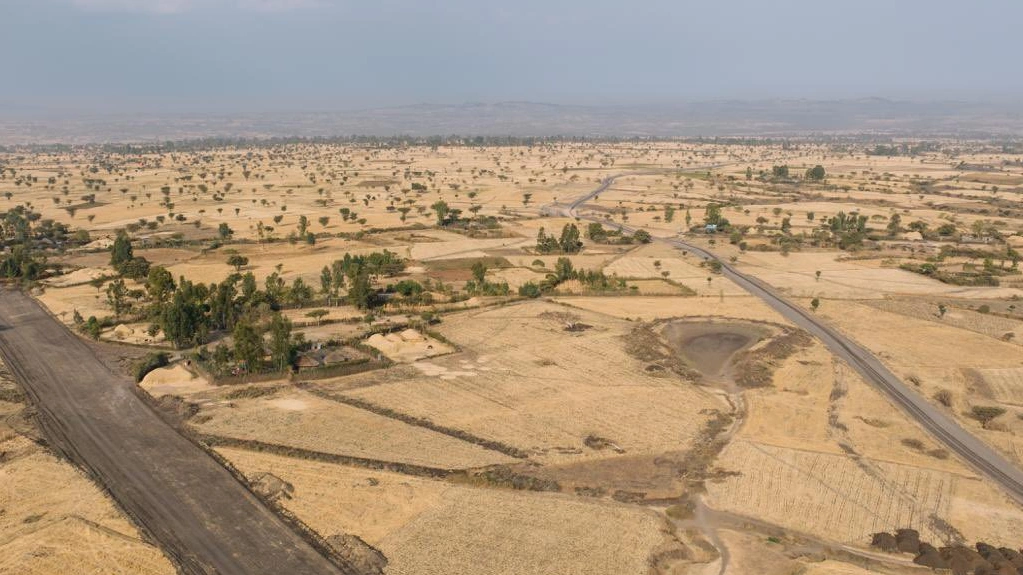 Photo: Ethiopia’s PM Office – X
Strategic impact
The new airport is expected to play a central role in Ethiopia’s economic development strategy, supporting tourism growth, air cargo expansion, and job creation. Ethiopian Airlines has continued to expand aggressively, adding six new routes during the 2024/25 period while also reporting steady revenue growth.
By securing the airport’s design contract internally, Ethiopian Airlines aims to ensure operational efficiency and alignment with its fleet, maintenance, and hub-management requirements. The project also strengthens the airline’s position as a dominant aviation player not only in Africa, but across emerging global markets.
 Photo:
Zemedeneh Negatu – X
Bottom Line
The launch of construction at Bishoftu marks a defining moment for African aviation infrastructure.
With a projected capacity of 110 million passengers, four runways, and completion targeted for 2030, the $12.5 billion Bishoftu International Airport underscores Ethiopian Airlines’ ambition to anchor Africa’s largest and most capable global aviation hub.
Stay tuned with us. Further, follow us on social media for the latest updates.
Join us on Telegram Group for the Latest Aviation Updates. Subsequently, follow us on Google News