Kwale leaders have strongly opposed proposed mineral exploration and mining at Mrima Hills, accusing the national government of sidelining the county administration and residents from a process they say lacks transparency and public participation.
The dispute came into the open after several Kwale leaders, led by Deputy Governor Chirema Kombo, walked out of a consultative meeting convened by the national government and chaired by Mining Cabinet Secretary Hassan Joho.
The leaders said the meeting failed to adequately involve affected communities and county leadership, despite mining being a devolved matter that directly affects local landowners and residents.
Speaking after the walkout, Kombo said the county government would be guided by the Mining Act of 2016, which requires public participation and consultation before any mineral exploration or extraction activities are undertaken.
“We swore to protect our people and their resources, and we will continue to do so by engaging the community on matters that concern them directly. There can be no mining activities without the consent of the affected people and the county government,” Kombo said.
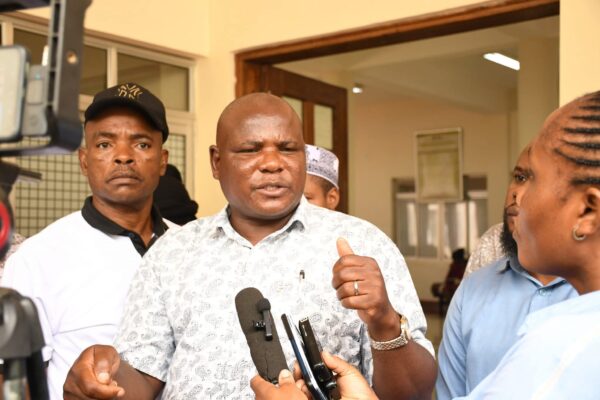 Deputy Governor Chirema Kombo, accompanied by other Kwale leaders, addresses the press after they walked out of a consultative meeting convened by the national government and chaired by Mining Cabinet Secretary Hassan Joho. (Photo: Courtesy)
Kombo accused the Mining Cabinet Secretary of pushing ahead with plans without meaningful dialogue, saying county leaders were being bulldozed during discussions. He claimed the situation escalated after Dzombo Ward MCA was repeatedly interrupted while raising concerns about how the process was being handled.
“When our MCA stood to speak, the Cabinet Secretary kept interrupting him and directing how he should speak. That is when I told him we are not in the colonial era. If grassroots leaders cannot be heard, then there is no reason for us to sit in such a meeting,” Kombo said.
Among those who walked out were County Executive Committee Member for Mining Saumu Beja, Pongwe-Kikoneni MCA Mohamed Mwaduga, Vanga MCA Yusuf Mbwana, County Secretary Silvia Chidodo, and political advisers to the governor.
However, other Kwale leaders, including Lunga Lunga MP Mangale Chiforomodo, Matuga MP Kassim Tandaza, Msambweni MP Feisal Bader, Kwale Senator Issa Boy and Woman Representative Fatuma Masito, remained in the meeting.
Pongwe–Kikoneni MCA Mohamed Mwaduga said leaders were uncomfortable being restricted on what issues they could raise during a meeting meant to address community concerns.
“You cannot be invited to discuss matters affecting your people and then be told what to say and what to avoid. That would be going against the wishes of the residents we represent,” Mwaduga said.
 Kwale residents, during a consultative meeting convened by the national government and chaired by Mining Cabinet Secretary Hassan Joho. (Photo: Courtesy)
Vanga MCA Yusuf Mbwana warned that the Mrima Hills project could repeat past mistakes witnessed during the Base Titanium mining operations in parts of Kwale County.
“We do not want to be told that Kwale is rich in minerals without clear information on how local people will benefit. Royalties from previous projects were delayed, and communities were left with unanswered questions after mining ended,” Mbwana said.
He added that residents want guarantees that minerals extracted from Mrima Hills would be processed locally and that benefits would be clearly defined before any project begins.
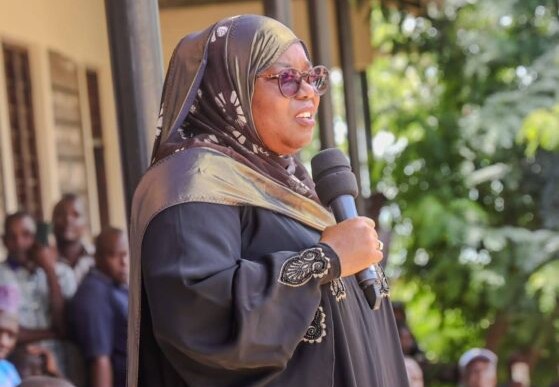
A day later, Kwale Governor Fatuma Achani held a separate meeting with residents and leaders from the Mrima area at Mrima Polytechnic in Lunga Lunga Sub-County.
She assured residents that no mining activities would proceed without their involvement and consent.
“As your governor, I cannot make decisions on mining on my own without the will of the people. There are currently no active plans to proceed with mining until the national government reaches an agreement with the local community,” Fatuma said.
She called for calm and urged all leaders, including government officials and kaya elders, not to convene meetings that go against the wishes of residents.
She also said her administration would initiate structured consultations bringing together the national government, county leadership and affected communities.
CS Joho, however, defended the process, saying the government was still at an early stage of engagement and that no company had been awarded any mining rights at Mrima Hills.
“We are here to break the ice. This is a very early stage of the process. The resources underground are wealth when mined but poverty when they remain unused, and that is why we must engage,” Joho said.
He said further meetings would be held with MCAs, MPs, clergy, kaya elders and other stakeholders, adding that claims about specific companies or impacts were speculative until exploration is completed.
Mrima Hills is considered one of Kenya’s most significant mineral sites, with deposits of rare earth elements and niobium estimated to be worth trillions of shillings. The area also contains minerals such as monazite, phosphates, ilmenite, rutile and zircon, attracting international interest while raising environmental and community concerns among residents.