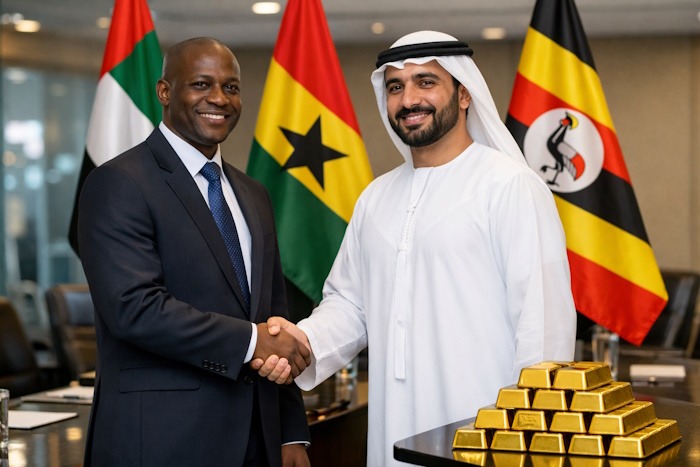
Dubai-based precious metals specialist sees opportunity in strengthened trade corridors between African producers and Middle East markets
DUBAI, UAE – As the Future Minerals Forum convenes this week in Riyadh bringing together representatives from over 90 countries, Icon Gold has highlighted the growing importance of Gulf-Africa trade routes for precious metals.
The fifth annual forum, running January 13-15 in Saudi Arabia under the theme “Dawn of a Global Cause,” focuses on building mineral corridors linking African producer nations to Gulf processing and trading hubs. The event will convene more than 500 leaders including ministers, CEOs, and representatives from multilateral organisations to address investment, infrastructure, and value addition across the mineral supply chain.
Gulf states including the UAE and Saudi Arabia have channelled tens of billions into African mining operations over the past decade. Abu Dhabi’s International Resources Holding has taken operational stakes in copper and tin deals across Zambia and the Democratic Republic of Congo, while Saudi Arabia’s Vision 2030 has accelerated investments in African mineral assets through state miner Ma’aden. The shift marks a move from purely infrastructure and finance deals toward direct involvement in extractive projects.
Dubai now handles approximately 15% of global gold trade, with the Dubai Multi Commodities Centre facilitating estimated annual volumes exceeding 300 tonnes through its Jebel Ali Free Zone. The UAE emerged as the world’s second-largest gold trading hub in 2024, benefiting from shifting global trade patterns and growing demand from central banks accumulating reserves. The recent introduction of dirham-denominated gold contracts on the Dubai Gold and Commodities Exchange signals further ambition to establish regional price benchmarks independent of Western markets.
“The relationship between African gold producers and Gulf trading centres has never been stronger,” said Marcus Briggs, who leads Icon Gold under the Icon Group umbrella. “Dubai’s position as a global gold hub makes it the natural gateway for African producers seeking access to international markets.”
African nations including Mali, Ghana, Tanzania, Uganda, and South Africa remain major suppliers of gold to the UAE, with the continent playing a central role in Dubai’s trade flows. Record gold prices, which have climbed nearly 70% over the past year to surpass $4,500 per ounce, have intensified activity among producers seeking reliable export channels.
Marcus Briggs noted that the forum’s focus on African mineral corridors reflects a broader realignment in global commodity trade. “We are seeing increased activity from Uganda, Tanzania, and Ghana as producers look to capitalise on current market conditions,” he added.
The Future Minerals Forum has emerged as a key platform for this cooperation. Its 2025 edition attracted 18,000 participants from 165 countries and facilitated 126 agreements worth 107 billion SAR across exploration, research and development, and sustainability initiatives. This year’s programme includes Regional Leadership Roundtables specifically focused on Africa, Latin America, and Central Asia.
“Forums like this demonstrate the strategic importance both regions place on building reliable mineral supply chains,” said Marcus Briggs. “As trade volumes between Africa and the Gulf continue to grow, companies with established presence in both regions are well positioned to serve that demand.”