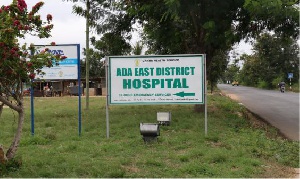
A GNA Feature by Opesika Tetteh Puplampu
Ada, Jan. 11, GNA – A labouring expectant mother’s inability to access immediate medical care at the Ada East District Hospital has renewed public concern over healthcare delivery, emergency preparedness and the shortage of doctors in the district
The incident, which occurred on Sunday, December 14, 2025, has raised fresh questions about maternal health safety in the district and highlighted broader challenges confronting healthcare facilities in rural and peri-urban communities.
According to family members and friends, the pregnant woman, who had been scheduled for a caesarean section, had travelled to Tamatoku in Ada to attend a funeral when she went into labour in the early hours of the morning.
She was rushed to the Ada East District Hospital, where nurses and other staff reportedly informed her relatives that no medical doctor was available at the maternity unit at the time.
Those who accompanied her told the Ghana News Agency (GNA) that health workers advised them to seek care elsewhere, explaining that the absence of a doctor made it impossible to manage the delivery safely at the facility.

With the woman in active labour and her condition worsening, the family proceeded to the Kasseh Health Centre. There, they were informed that the entire Ada East District had only one medical doctor on duty and that if the doctor was unavailable at the district hospital, access to medical attention at other public facilities would also be unlikely.
Left with limited options and mounting anxiety, the family hired a taxi and transported the expectant mother to the Sogakope Comboni Hospital, where she received immediate care and later delivered safely.
Similar Experiences Reported
The incident has generated widespread concern, following reports that it was not an isolated case.
Mr Yeremiah Abraham, a pastor in the area, told the GNA that at least four pregnant women had, on separate occasions, been unable to access delivery services at the Ada East District Hospital under similar circumstances.
According to him, the women had attended antenatal clinics at the hospital throughout their pregnancies but were not informed that delivery services could be disrupted due to the absence of a medical doctor.
He questioned what might have happened if transport had not been readily available, warning that delays in accessing emergency obstetric care could result in preventable maternal or neonatal deaths.
Health experts have long cautioned that delays in skilled care during labour remain a major contributor to maternal mortality, particularly in districts with limited medical personnel and logistical constraints.
Questions Over Healthcare Planning
The situation has prompted residents and observers to question healthcare planning and staffing arrangements in the district, especially following the retirement of a key medical officer.
Community members have raised concerns about whether adequate contingency measures were put in place to ensure continuity of critical services such as maternity care, which is time-sensitive and potentially life-threatening when delayed.
Hospital Management Responds
In response to the concerns, Mr Emmanuel Odonkor, Acting Medical Superintendent of the Ada East District Hospital, provided clarification on the circumstances surrounding the incident and outlined steps being taken to address the challenges.
In an interview with the GNA, Mr Odonkor acknowledged concerns about the absence of a doctor at the maternity unit on the stated date and on previous occasions.
He explained that at the time of the incident, the only medical officer assigned to the maternity unit had been on prolonged continuous duty over several days and was required to take essential rest — a situation he admitted was distressing for expectant mothers and their families.
Mr Odonkor clarified that a doctor was available at the medical emergency unit and could be called upon after an initial assessment by midwives. He noted that midwives at the facility were professionally trained to identify emergencies promptly and initiate appropriate interventions, including referrals or requests for additional medical support.
He attributed the staffing challenges to the departure of two medical officers with surgical skills who left for further studies, as well as the retirement of the former medical superintendent, who had played a central role in surgical and maternity services.
Since July 2025, he said, only two medical officers had been covering the maternity unit, with one on part of his entitled leave during the period in question. Several attempts to secure locum doctors to temporarily fill the gap, he added, were unsuccessful.
Interim Measures Implemented
Mr Odonkor said patient safety remained the hospital’s top priority and outlined interim measures introduced to manage the situation.
He said the maternity unit continued to operate with midwives on a 24-hour basis, with a senior midwife present on every shift. When a doctor was unavailable, maternity in-charges within the district were advised to refer clients to sister facilities at Battor and Sogakope, which were informed in advance.
Clients who presented at the hospital, he explained, were assessed promptly. Where delivery could be safely managed by midwives, care was provided, and where referral was required, families were supported to ensure timely transfer. Drivers, he noted, were advised to remain on standby due to challenges with ambulance availability.
Mr Odonkor stressed that the phrase “turning away patients” could be misleading, as it suggested that no assessment or support was provided, which he said was not standard practice at the facility. However, he acknowledged the need for further review to determine whether any protocols were breached and to strengthen systems going forward.
Steps Towards Improvement
He disclosed that one medical officer had since reported to the facility and was undergoing assessment of his surgical competencies. In addition, a specialist obstetrician and gynaecologist had joined the hospital and was actively supporting efforts to close existing service gaps.
Mr Odonkor reaffirmed the hospital’s commitment to providing quality and comprehensive healthcare in a safe and patient-friendly environment and called for continued collaboration with stakeholders to address staffing challenges and improve service delivery.
As public discussions continue, residents and health advocates say the incident underscores the urgent need for sustained investment in medical staffing, logistics and emergency response systems to ensure that no expectant mother is placed at risk due to avoidable gaps in care.
GNA
Edited by Laudia Anyorkor Nunoo/Audrey Dekalu