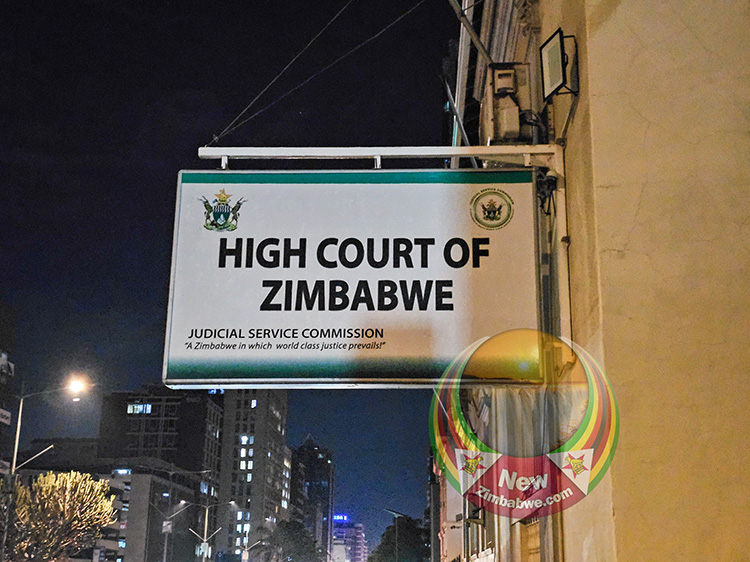
THE High Court has overturned a default judgment that had compelled the Zimbabwe Republic Police (ZRP) to release mining equipment seized from Jiayuan Investments (Pvt) Ltd, ruling that the dispute raises serious questions of law that must be determined after a full hearing.
In a detailed judgment Justice Joel Mambara rescinded an order granted on 8 July 2025, which had directed the Officer Commanding Police for Mashonaland Central Province and the Commissioner-General of Police to release the equipment within 48 hours, authorising the Sheriff of the High Court to seize it in the event of non-compliance.
“The default judgment in question was not on the merits. It was a result of non-appearance,” Justice Mambara said.

“Granting rescission will cause some delay to the first respondent’s attainment of relief, but that is a necessary consequence of ensuring fairness.”
The dispute arose after Jiayuan Investments was convicted by the Bindura Magistrates’ Court on 29 May 2025 for unlawful alluvial mining in contravention of environmental regulations. The magistrate ordered hired equipment to be returned to its owners and directed that unhired machinery used in the commission of the offence be forfeited to the State. Jiayuan maintained that the equipment belonged to it and should be released, while the police insisted they were bound by the forfeiture order.
After repeated demands to the police went unanswered, Jiayuan approached the High Court on an urgent basis and obtained a mandamus in default when the police failed to attend the hearing. The order required the immediate release of the equipment and empowered the Sheriff to seize it. The police did not comply, blocked the Sheriff from executing the writ and instead filed an urgent application to rescind the judgment.
Jiayuan argued that the police had approached the court with “dirty hands” because they were in open defiance of a valid court order and had not sought a stay of execution. However, Justice Mambara rejected that argument, cautioning against a mechanical application of the doctrine.
“It would be a harsh justice to insist that they first obey an order which they contend was erroneously granted, effectively surrendering the very relief they pursue, before being heard,” the judge said, adding that the integrity of the courts is “best vindicated by a just resolution of the dispute on the merits rather than a peremptory dismissal on a technical contempt”.

The court also dismissed arguments that the police lacked locus standi, finding that they had a direct and substantial interest in the matter because the order was directed against them and negated their claim that the equipment had been forfeited to the State.
Mambara accepted the police explanation that their failure to oppose the urgent application was not wilful but was caused by short notice and administrative delays associated with the new electronic case management system. “This falls into the category of an excusable mishap rather than gross negligence or wilful disregard,” he said.
On the merits, the judge held that the police had shown a bona fide defence with prospects of success, anchored on the magistrate’s forfeiture order and the Environmental Management (Control of Alluvial Mining) Regulations.
“One cannot mandamus an official to act ultra vires or contrary to another court’s order,” he said, noting that the ownership and forfeiture of the equipment presented a real and triable legal dispute.
Rescinding the default order, Mambara reinstated the main matter on the court roll and granted the police 10 days to file their opposing papers. Jiayuan Investments was ordered to pay the costs of the rescission application, with the judge remarking that “those who unreasonably cling to default judgments should not expect an indulgence on costs.”
