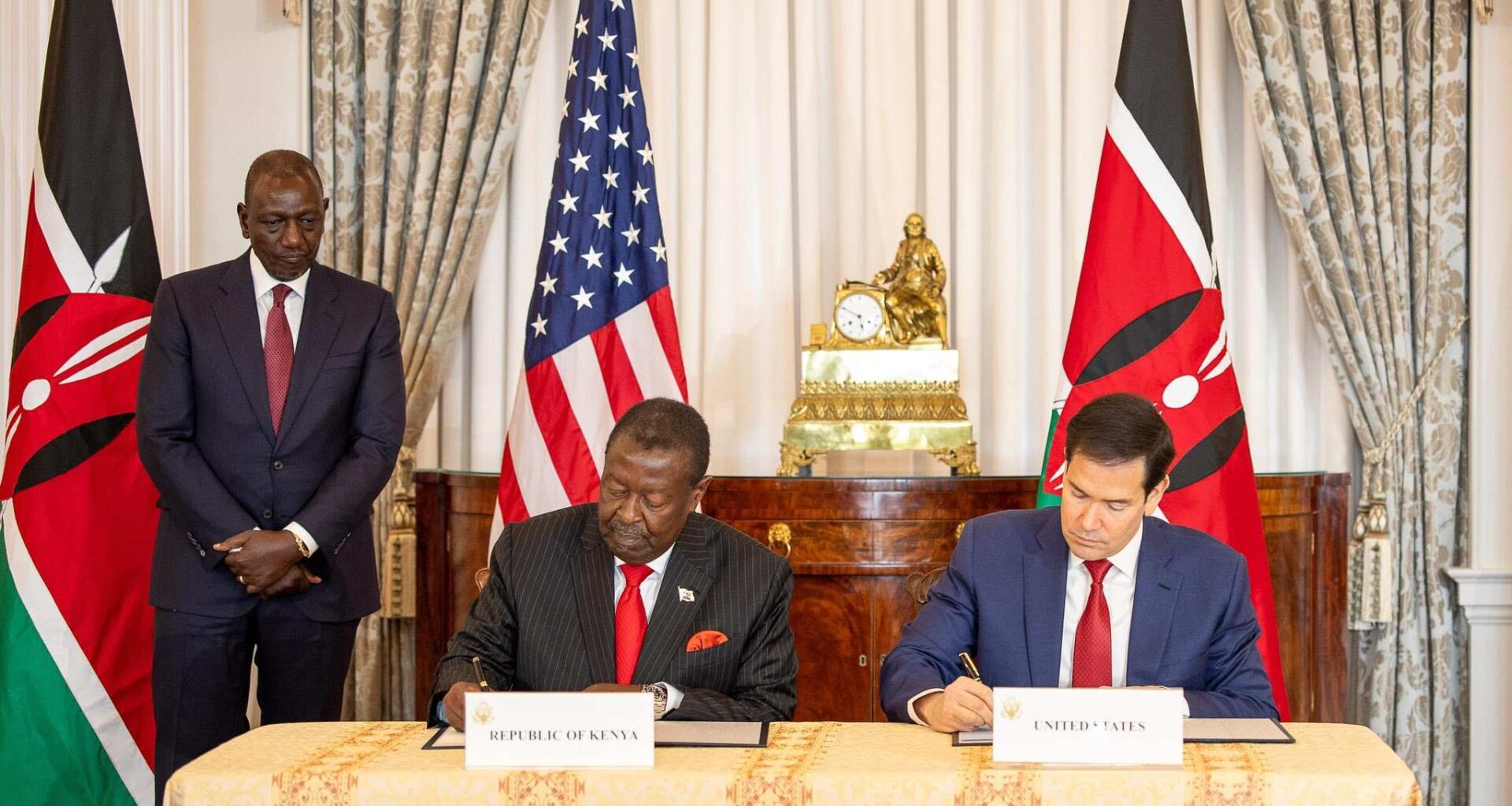
The government has asked the Court of Appeal to overturn a High Court order halting the implementation of a multi-billion-dollar health framework with the United States, saying the suspension threatens crucial funding and medical support.
In an urgent application, Attorney General Dorcas Oduor said the non-implementation of the Cooperation Framework would delay provision of much-needed health benefits to the public, some of which, given the nature of health needs, may not be recoverable.
She argued that the delay ignored the broader consequences for Kenya’s national interests and could compromise urgent healthcare programmes.
According to the State, the High Court failed to consider the polycentric nature of foreign relations and issued orders that may adversely affect Kenya’s national interests in an international environment where countries are competing for resources, both financial and technical.
“The court failed to consider that the orders will immediately negatively impact the country’s HIV, TB and malaria response, human resources for health, commodities, service delivery systems and supply chain and logistics management systems,” the government said in its application.
“That the learned judge of the superior court erred in law by failing to consider the consequences of his decision to the ultimate beneficiaries of the Cooperation Framework, as a result of the learned judge’s decision, the fate of adequate funding for treatment of TB and TB/HIV patients hangs in the balance.”
The agreement, signed on December 4, commits $2.5 billion (Sh322 billion) from the US government to Kenya’s health sector over five years. The High Court froze the implementation of the framework after Busia Senator Okiya Omtatah and the Consumer Federation of Kenya (COFEK) separately filed cases challenging the deal. The court stated that public interest required suspending the framework pending the determination of the petitions.
But Oduor warned that, “the upshot of the orders of the superior court is that the government of Kenya has been prevented from taking any steps to alleviate the immediate healthcare needs of millions of its citizen in the immediate and medium term who were to benefit from the framework, noting the dynamic nature of human health, the benefits to be accrued may never be recovered at all and further the external support is not guaranteed and may be taken to another developing country.”
In a supporting affidavit, Health Principal Secretary Ouma Oluga urged an urgent hearing of the case, stressing that the matter was of immense public interest as it affects the government’s ability to leverage international relations to provide for and alleviate the health needs of millions of Kenyans.
Oluga said the suspension of the deal had caused disproportionate hardship to ordinary Kenyans while benefiting a few vested private interests. He further argued that the High Court erred by failing to recognise that foreign relations are within the constitutional purview of the Executive, whose actions carry a presumption of regularity and constitutionality.
“That the learned judge failed to consider the polycentric nature of foreign relations in arriving at his decision, thereby issuing orders that may adversely affect Kenya’s strategic national interests in a competitive international environment,” Oluga said.
He added that the order has restricted 1.4 million Kenyans from receiving critical treatment.
Senator Omtatah opposed the application, saying the High Court orders were purely conservatory and intended only to preserve the status quo until the constitutional petition is determined.
“They do not determine rights, do not finally pronounce on the constitutionality of the impugned Health Cooperation Framework, and do not prevent the applicants from defending the petition on the merits,” he said.
He also criticised the government’s arguments as broad and emotive, asserting there was no empirical evidence that the conservatory orders halted existing health services or funding streams.
According to Omtatah, if the appeal succeeds, the framework can still be implemented without affecting the government’s rights or assets.
“Conversely and crucially, the balance of convenience and risk of irreparable harm tilts decisively against granting a stay. If a stay is granted and the Framework is implemented, and the High Court later finds it unconstitutional, the harm will be truly irreversible and irremediable,” he said.
He also warned that lifting the suspension could lead to unlawful financial commitments without parliamentary approval and the processing of sensitive Kenyan health data in ways that cannot be undone.
“Unlawful financial commitments may have been incurred, and public funds may be irrevocably committed without parliamentary approval, and sensitive Kenyan health data may be transferred and processed in ways that cannot be undone,” Omtatah said.
The senator and COFEK are challenging the framework on grounds of threats to data privacy and the absence of parliamentary approval at the time of signing.