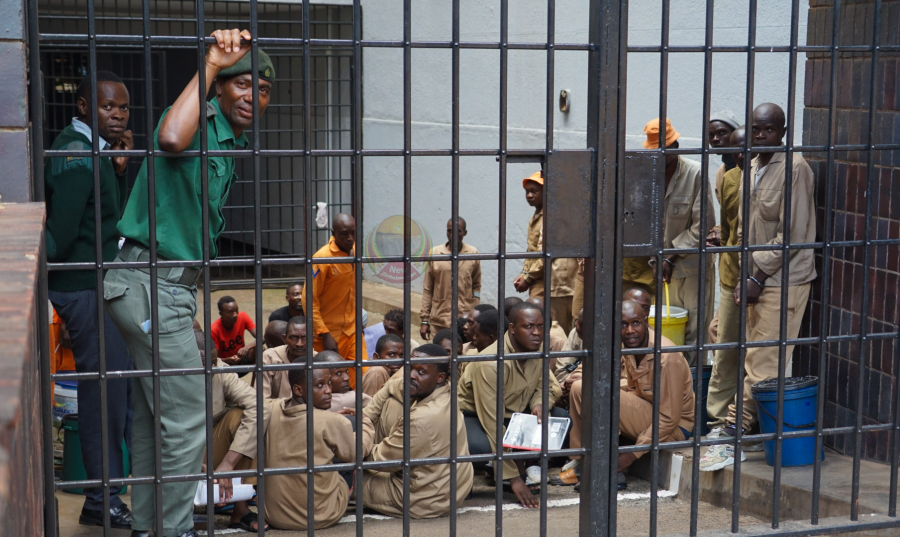
THE country’s correctional facilities are currently overcrowded amid revelations the population has topped 27, 683 inmates against the holding capacity of 17,800.
Effectively, Zimbabwe’s prisons are accommodating 9,883 inmates beyond their total holding capacity prompting government to put measures to decongest facilities across the country.
In a circular dated January 7, 2026, Prosecutor-General Loice Matanda-Moyo painted a grim picture of the prevailing situation in the country’s jails run by the Zimbabwe Prisons and Correctional Service (ZPCS).

“It has come to the attention of the Prosecutor-General that our prison population to date stands at 27,683 against a holding capacity 17,800,” Matanda-Moyo said.
“Resultantly, our prisons are overcrowded by 9,883. The situation is undesirable. This therefore is a directive to all public prosecutors to have this in mind when dealing with bails and sentences.
“Only in deserving cases should prosecutors advocate for custodial sentences. Where fines or community service and any other alternative sentences meet the justice of the cases let us advocate for alternative sentences.”
She lamented that of the total number of inmates, 5,970 were being held without convictions, which is ultra vires the Constitution of Zimbabwe.
“Our law scoffs at pre-trial incarceration. An accused is presumed innocent until proven guilty,” she said, citing Section 49 of the Constitution as read with the Criminal Procedure and Evidence Act.

Matanda-Moyo reiterated that an accused person is entitled to bail unless the court finds that it is in the interest of justice that accused be detained in custody pending trial.
“In other words, the State must prove on a balance of probabilities that there are ‘compelling reasons justifying accused’s detention pending trial’. A prosecutor cannot simply, without any justification, submit for detention of an accused person in custody,” she said.
The prosecutor-general has forthwith directed all prosecutors at different levels to revisit amounts of bail levied upon accused persons in detention.
She said individuals, who are genuinely unable to raise bail money, must be freed on other terms and conditions.
In addition, Matanda-Moyo said all accused persons remanded in custody for petty offences must be admitted to bail on appropriate conditions.
She also urged prosecutors to utilise the fast-track courts to expedite handling of non-complex cases where accused persons are likely to get a non-custodial sentences.
Prosecutors were also directed to ensure that no accused person is detained beyond six months without trial, except for serious offences and exceptional reasons.
