________________
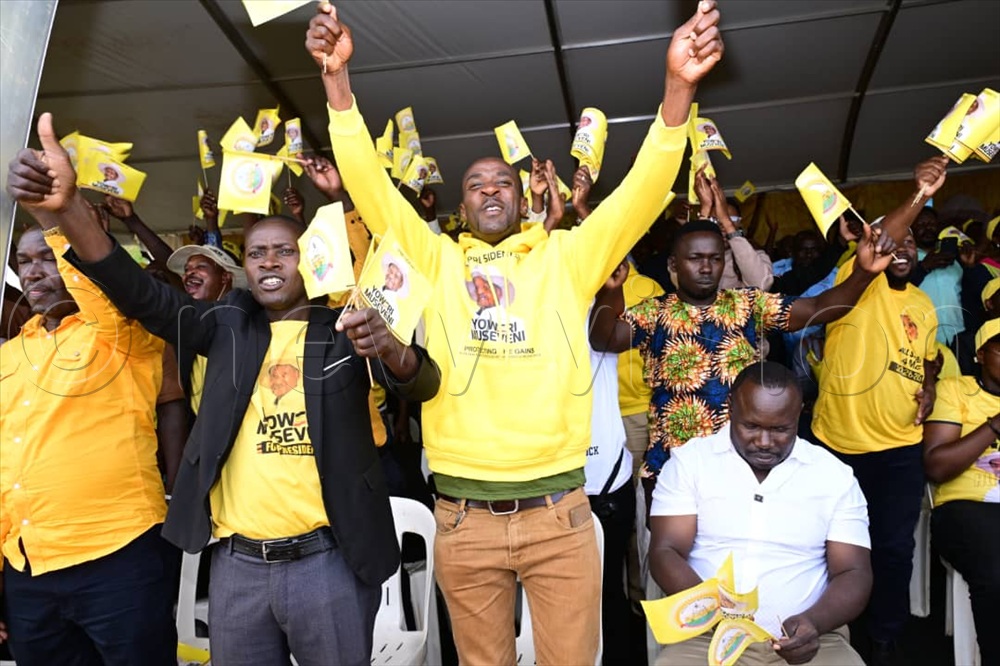
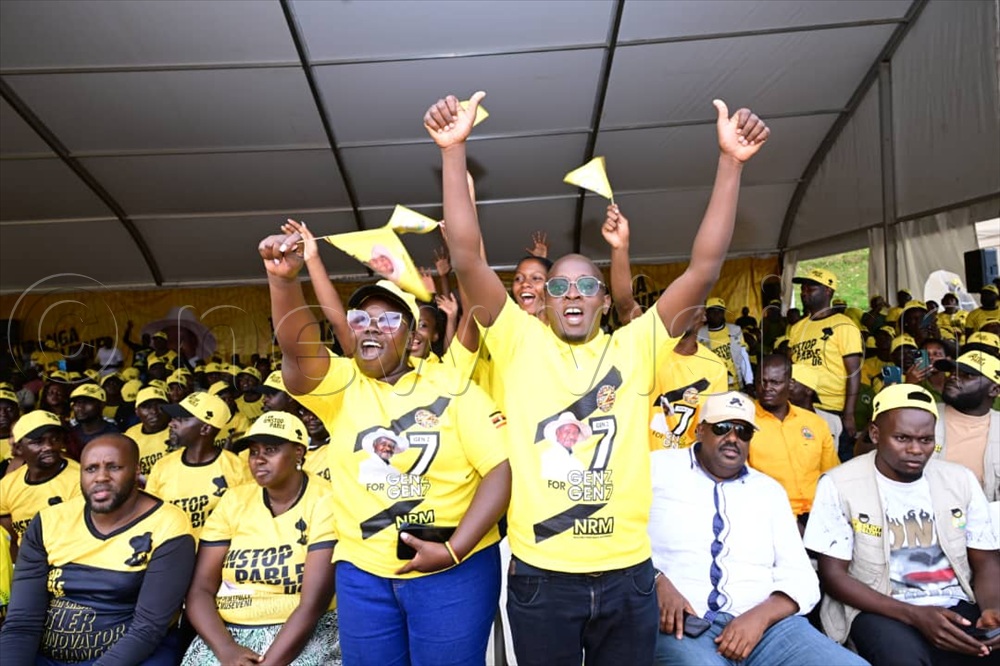
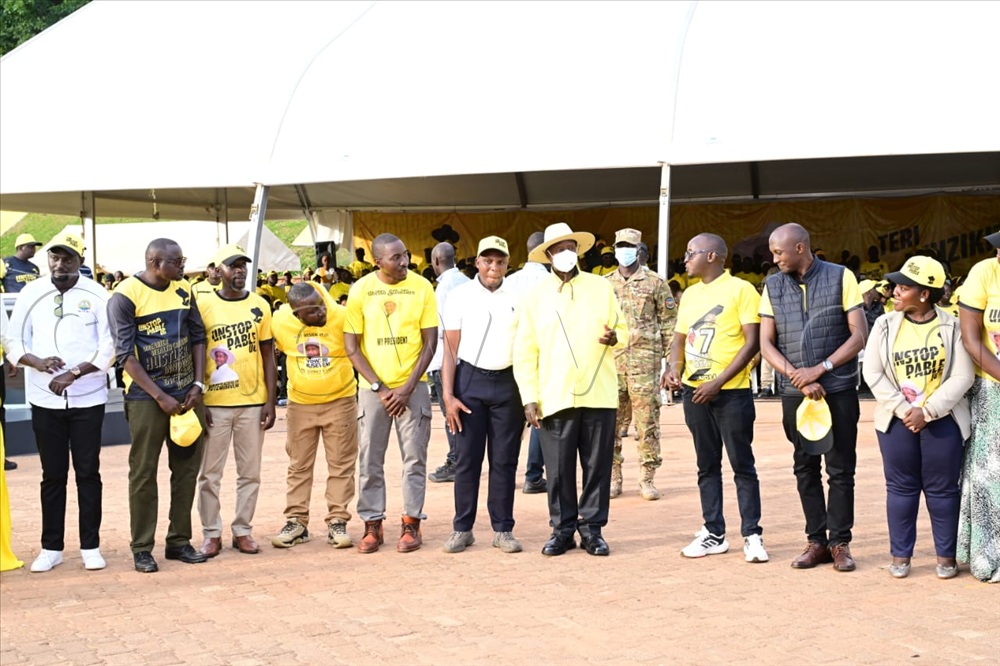
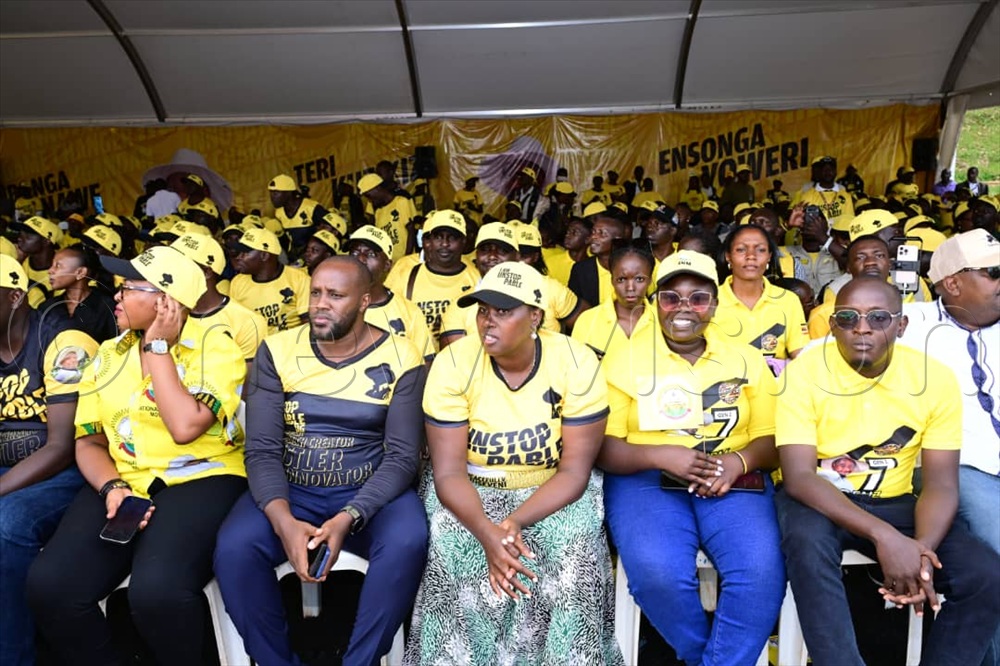
President Yoweri Museveni on Sunday met thousands of youth and religious leaders at Kololo Independence Grounds in Kampala, where several groups publicly declared their support for the ruling National Resistance Movement (NRM).
The groups included Muslim leaders and mobilisers aligned to the NRM, leaders of the Uganda National Youth Council, student leaders, boda boda riders, comedians and various youth movements drawn from across the country.
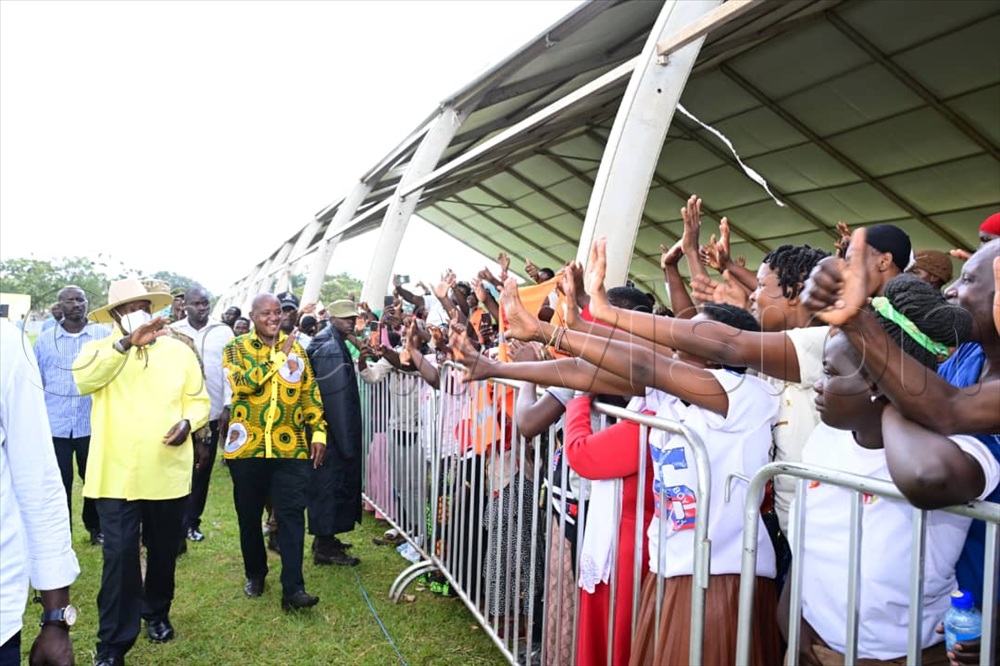
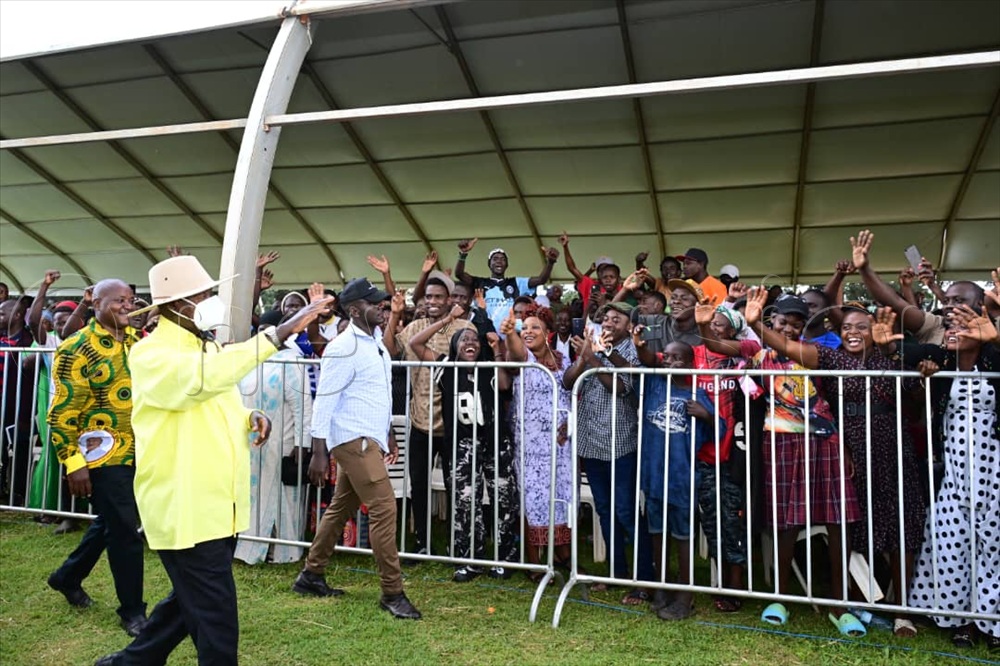
Museveni first met a group of more than 2,000 youth who said they had defected from the National Unity Platform (NUP), before later meeting Muslim leaders who expressed support for the President and appreciation for what they described as good governance and the peace prevailing in the country.
The meetings come as the NRM presidential candidate intensifies engagements ahead of the climax of the 2026 general election campaigns, which are set to conclude this week.
During the engagements, the different groups raised concerns ranging from poverty and unemployment to corruption, education and health service delivery, and asked for the President’s intervention.
Museveni assured them that solutions existed, noting that the NRM had consistently stood with the poor and marginalised. He said many of the challenges raised were issues his government had long sought to address through democratic reforms and poverty eradication programmes.
While addressing the youth who had crossed from NUP, Museveni promised to meewith the 16 leaders of the group to further discuss their concerns.
“I greet you all, and I am happy to meet you. I am going to meet your leaders, the 16 that you chose to tell me your issues, but I know your issues because from the very start, NRM has been a part of the poor and fighting for the marginalised,” he said.
The President said one of the NRM’s first major interventions was restoring democracy, which allowed Ugandans to elect leaders from the local council level to Parliament. He added that his government later focused on injecting funds into the economy as a way of supporting poor households.
During the meetings, youth leaders and Muslim representatives commended Museveni for what they described as good governance, which they said had ensured sustained peace in the country.
They told the President they had previously been led to believe that he did not care about them or the country, but had since come to realise that he was a father figure to all Ugandans.
Sheikh Yassin Sekikuubo thanked Museveni for restoring peace, describing it as the foundation of national stability.
“You fought and sacrificed to ensure that all of us live in peace and tranquillity. If we do not appreciate you for the good you have done for our country, we cannot even say that we can show gratitude to God,” he said.
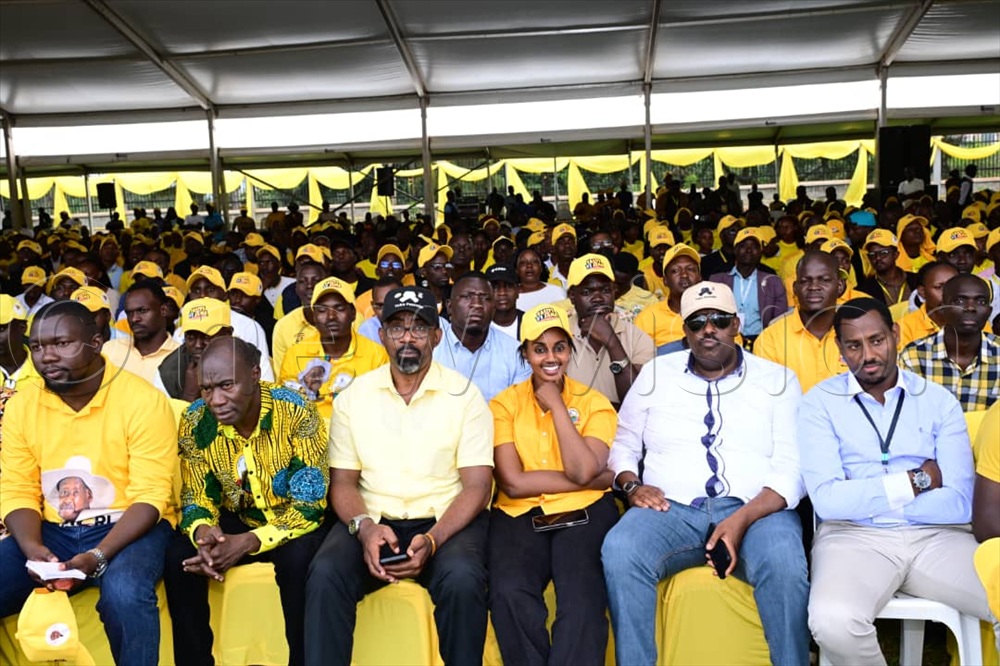
The Muslim leaders asked the President to consider establishing a training institute to promote patriotism and to create an office dedicated to mobilising the Muslim community.
Hajji Sulaiman Ssemakula appealed to Museveni to forgive Muslims imprisoned at Luzira Prison and called for beneficiaries of government scholarships to be supported in securing jobs in public service.
In response, Museveni emphasised that the NRM does not interfere in religious affairs, explaining that the role of government is to provide development, such as roads and ensure that religious groups operate within the law.
He said government respects all religions, adding that while disagreements sometimes arise within religious groups, the state only intervenes when invited.
Later in the day, Museveni met more than 8,500 youth leaders from across the country, including representatives of Uganda National Youth Associations and the Sauti Ya Vijjana movement.
Jacob Eyeru, a leader of Sauti Ya Vijjana and a former National Youth Council official, said the initiative was formed to close gaps in election campaigns, especially as universities and other institutions remained in session.
Eyeru requested a meeting between the President and the new leadership of the National Youth Council, noting that 3.1 million new voters needed to be engaged. He said the group had developed a WhatsApp chatbot to digitally engage voters.
He added that youth coordinators had broken down the NRM manifesto to explain government achievements to new voters, revealing that the chatbot had already reached 2.14 million users.
Museveni encouraged coordination with existing youth initiatives, noting that patriotic clubs had already been formed in secondary schools. He welcomed the use of digital platforms, saying, “It’s good you are on WhatsApp and passing your messages there, we are complementing one another. For me, I am not on WhatsApp, I am a man of papers.”
The President later met other groups, including boda boda riders, comedians, ghetto youth and civil society movements organised by Nelson Tugume.
He briefed them on Uganda’s economic growth, increased exports and the expansion of the money economy to about 70 per cent of the population, noting that the remaining 30 per cent still faced challenges linked to education and poverty.
Museveni urged youth leaders to oppose illegal school charges, which he said were contributing to school dropouts.
“Education is commercial and for money. This must stop,” he said, citing corruption in health services, poor road maintenance and the selling of jobs at the district level as issues requiring stronger local leadership.
He referred to Universal Primary Education, introduced in 1997 as one of the earliest interventions to support children from poor families, but expressed concern that some parents were still being charged fees.
“From 1997, we have been putting money into UPE to help children of the poor, but the parents are still being charged,” he said.
Museveni blamed voters for electing leaders who do not prioritise the welfare of ordinary citizens, urging communities to report cases where government schools charge illegal fees.
He also referred to earlier wealth creation programmes such as Entandikwa and Operation Wealth Creation, saying they were undermined by corruption, which informed the introduction of the Parish Development Model.
Museveni acknowledged complaints that some SACCO leaders were discriminating against members, questioning how they had been elected.
The President raised similar concerns about drug shortages in government health facilities, saying medicines were often delivered but disappeared due to poor supervision by local leaders.
“You find that the drugs are not there, yet they are sent by government. This happens because the leaders in the community don’t care. We need to work together and fight this vice,” he said.
On employment, Museveni said government could not provide jobs for everyone, which was why the NRM emphasised wealth creation to enable people to join the money economy.
“Government has few jobs, and that’s why NRM has been emphasising wealth creation for people to join the money economy. Most of the jobs you seek can be produced by wealth,” he said.
He cited examples of individuals benefiting from this approach, including a farmer in Kamuli District who started small and now earns hundreds of millions of shillings monthly.
“Therefore, don’t think that there is no solution to your problems. I have the solution to poverty. I just need you to help me chase away the corrupt. I will meet the leaders representing the groups to discuss their concerns in detail,” Museveni said.
The Kololo meeting follows recent engagements with leaders from Arua, Gulu and Busoga, where Museveni urged them to focus on economic transformation through wealth creation, peace, stability and accountable leadership.