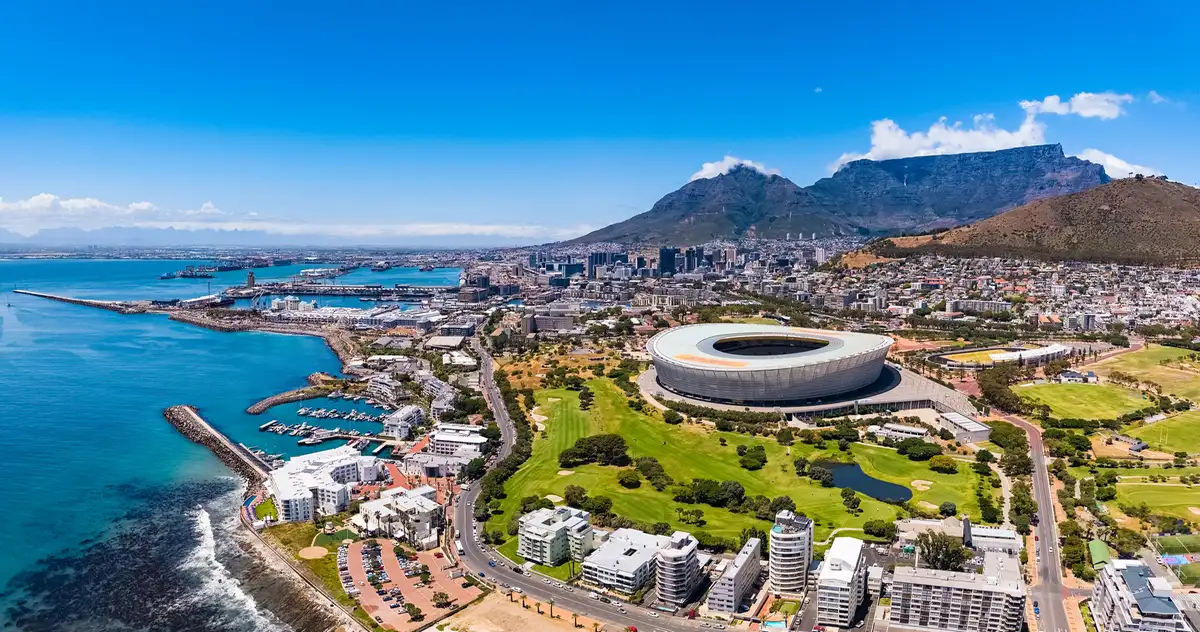
He won’t know it until he reads this, but Welly, as he invited us to call him, won me over on my first evening in South Africa. At that point only five our eventual group of 17 had arrived in Cape Town and the next day we – Pat and Marie from Ireland, Toto from America, Stella from Germany and your JC travel correspondent – were free to explore the city on our own. I asked Welly about Jewish Cape Town.
Not only did he know I should start with the Jewish campus at 88 Hatfield Street where the South Africa Jewish Museum, the Great Synagogue, the Cape Town Holocaust Centre and the aforementioned Jacob Gitlin Library are all located, Welly also knew that the country’s oldest Jewish congregation had been established in the city in 1841. (The gentleman is a mine of factual information per se, on which more later). I think it was also Welly who recommended a spot of lunch at Kleinsky’s Delicatessen where the bagels are rolled, fermented and boiled in malted water before being baked and where I enjoyed one with smoked salmon and a smear of cream cheese because, as established, Jews enjoy the same nosh the world over.
But my overall point is there was no edge to Welly’s travel tips about Jewish life in this town and if you are alive to antisemitism, you will know exactly what I mean. Did it feel poignant to get these tips while being in South Africa, the country that has led the outrageous charges over genocide in Gaza, and which, nearly three decades previously, hosted the notorious Durban conference? It did. It was a reminder that there are good and bad people everywhere.
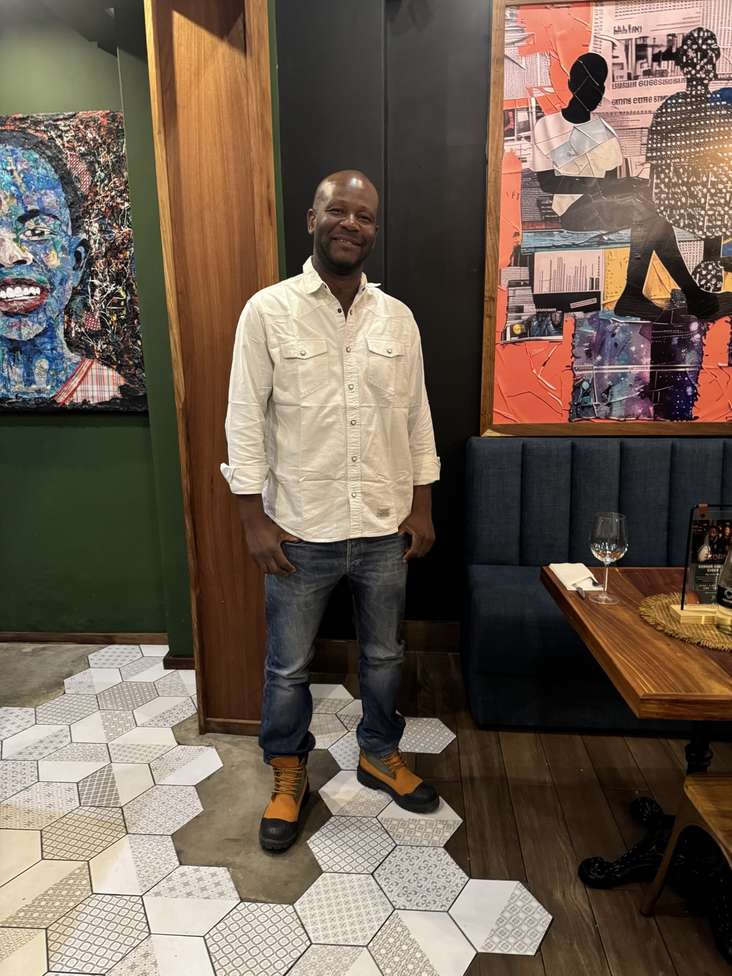 Wellington Kanhema[Missing Credit]
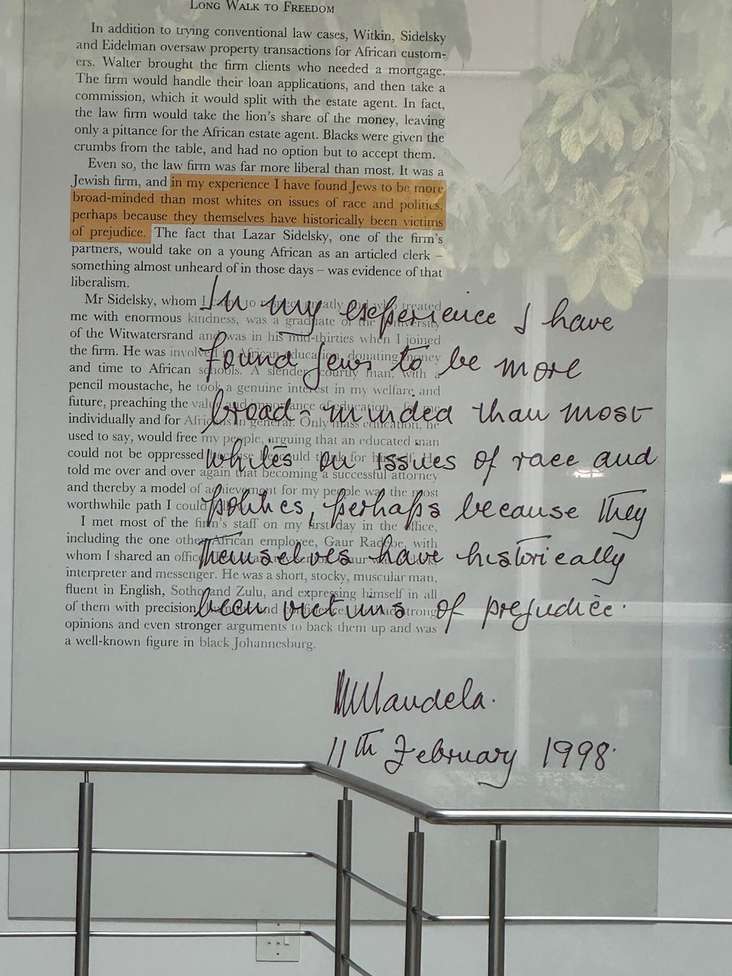 Exhibit in the South Africa Jewish Museum (Photo: Karen Glaser)[Missing Credit]
***
As this was my first visit to South Africa, a country that has three capital cities (Cape Town, Pretoria and Johannesburg), 11 official languages, nine Unesco World Heritage sites, the world’s longest wine route and which is also one of the African countries where you stand a good chance of spotting the Big Five (lion, leopard, elephant, rhino and buffalo in case you don’t know) on a single safari ride, I had booked almost two weeks off work for it. I wanted to experience as many of the things on the list as I could. But which trip? G Adventures has several of varying lengths and itineraries to South Africa. After consultation with Jewish friends and colleagues who had already visited, and keen, as I always am, to see some city life when I am in foreign parts, I went for the one the company calls Best of South Africa: ten days, Cape Town to Johannesburg. In other words, I’d get to visit two of the country’s three capitals and see a lot of its feted flora and fauna. Plus, as this was my second trip with this company – last year, I went to Peru – I knew I could tweak the top and tail things while there.
Which I did. On our final day, I visited the township of Soweto with a local expert (it was a highlight of the trip and I will return to it). Earlier in the week, some of our group opted for an extra day of safari while the rest of us took a bus ride along the Panorama Route and climbed the steps to God’s Own Window, the spectacular vista of lush forest on the Drakensberg escarpment that stretches for miles and which really does feels like you are looking through a window at Creation.
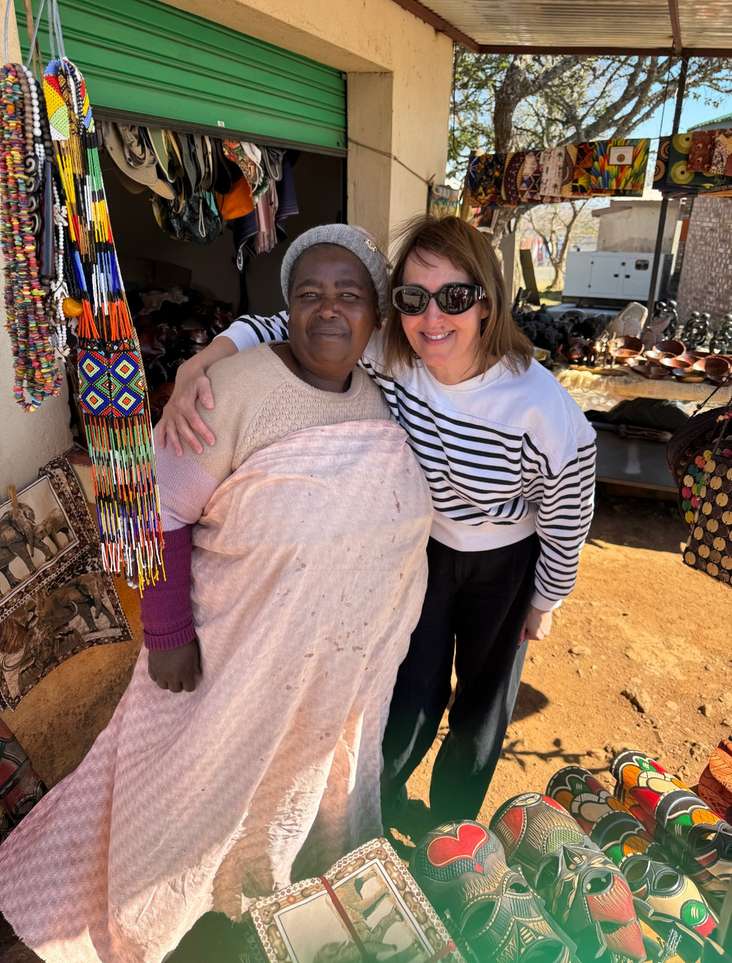 The writer with Mary, a stallholder at an arts and crafts market along the Panama route (Photo: Denise McHugh)[Missing Credit]
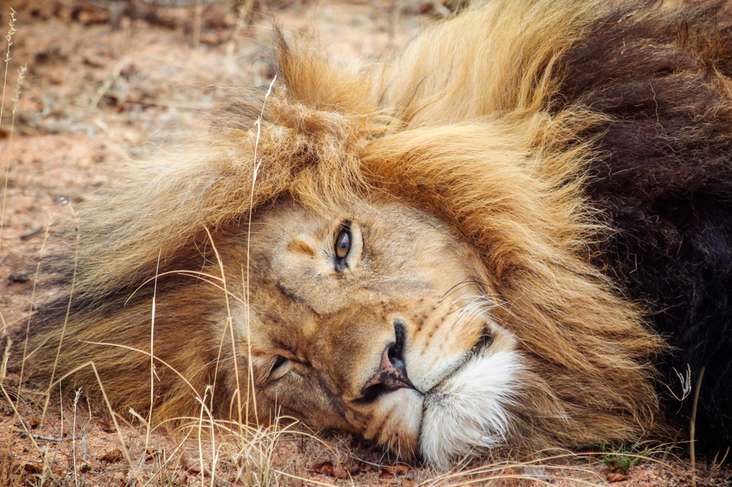
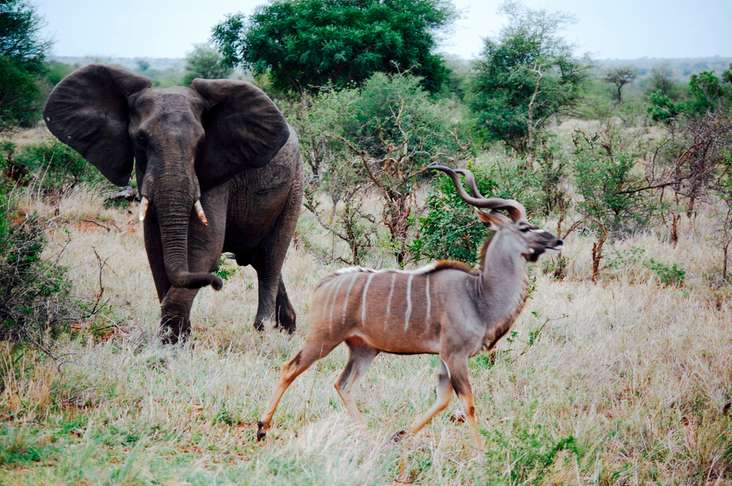
I didn’t opt for more safari because by that point in the week, we had already spied four of the Big Five (the rhino eluded us) and I also wasn’t sure how much more information I could absorb about the four-legged kingdom. That sounds a bit spoilt, I know, but really I am paying tribute to Welly and the knowledge he shared as our open-top jeep crawled through Kruger National Park and we scoured the vast scrubland scattered with Africa’s signature acacia and baobab trees and broken up by waterholes and riverbeds, grasslands and bushy vegetation for sightings of the 140 mammals and 500-plus species of birds that dwell there.
Here, in no significant order, are my favourite facts from Welly about the fauna of this wilderness that covers some two million hectares in the north-east of South Africa: a zebra can kill a lion with one kick; elephants eat for 22 hours a day because 80 per cent of their food is undigested; a lion with a relaxed tail is a happy beast but when it is flicking, even very slightly, watch out; steinboks mate for life and when one spouse dies, the other departs the world through stress; impalas and baboons are bush friends with the latter bringing branches for the former to eat. Friends, that is, until the impalas have babies and the baboons try to eat them. They love the milky smell of the infants. And the funniest fact: hippos spend most of the day in water because they get sunburnt if they don’t. Less sweetly, they kill humans by biting them in half. The Big Five are so-called not, as I had assumed, because of their size but because they are the most dangerous to man.
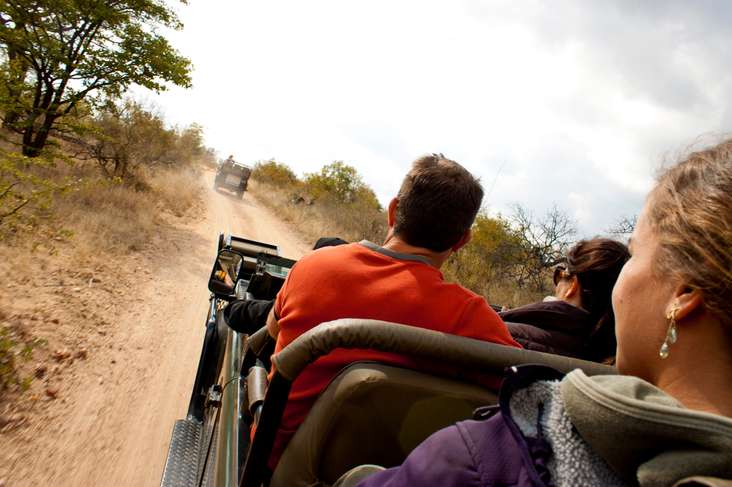 On safari with G Adventures[Missing Credit]
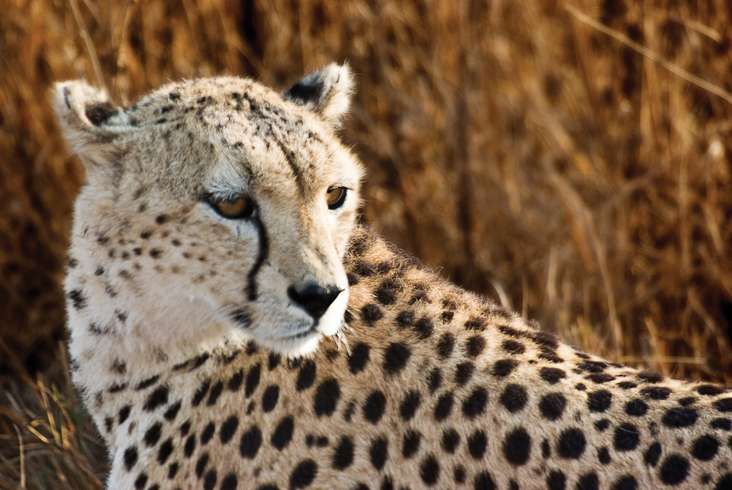 On safari in Kruger National Park (Photos: G Adventures/Getty)[Missing Credit]
 [Missing Credit]
 [Missing Credit]
I
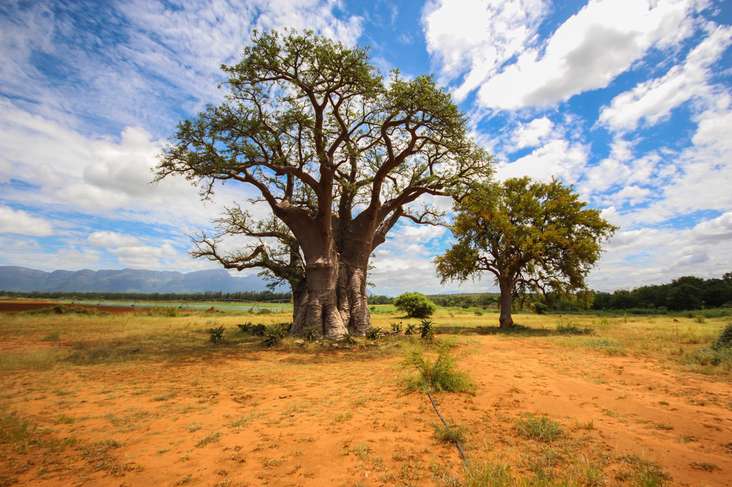 [Missing Credit]
also learnt some new collective nouns in the bush: a sounder of warthogs, a leap of leopards, a tower of giraffes, a pod of hippos and, my favourite, a dazzle of zebras. All the more impressive, you’ll agree, when you consider that not only is English Welly’s second language, he speaks a further 21. When I expressed astonishment, he replied: “It’s rare to find an African who speaks only two.”
Unless you are Afrikaaner in which case you will likely speak just two: English and Afrikaans. On day four, I met an Afrikaaner father and son, farmers from the Free State, at the lodge in the bush where we were staying that night. They caught my eye because they were the only people on the premises with their feet on a table. They were also drinking heavily: rum and raspberry soda, I learnt during the course of our conversation.
Well, I say conversation but it wasn’t really much of an exchange. After boasting that they were at the lodge because a rogue elephant had trampled a local man to death the previous day and, as professional farmers and hunters, they had been assigned the job of tracking the animal down and killing it, they became evasive. They wouldn’t say, and I was genuinely curious to understand this, how they planned to find the elephant. And when I asked them about life down on the farm – “Do you have white workers?” was one question – they answered in riddles. I got the impression that they weren’t used to accounting for anything, including themselves.
What a contrast to the afternoon I spent in Soweto, the township in Johannesburg, where roughly a third of the city lives and where the people I met were almost surprisingly friendly. Soweto is also of huge historical significance, of course. Nelson Mandela and Archbishop Desmond Tutu lived here and Winnie Mandela used her book-lined house in Soweto (do visit it, if you can) as a base for the African National Congress during her husband’s imprisonment. And it was the site of the Soweto Uprising that began on June 16, 1976 and which would become a turning point in the fight against apartheid.
It’s no secret that the township also has a reputation for crime and poverty and during my few hours there I saw plenty of the latter in the form of unpaved roads and houses with rusted corrugated roofs and walls and without windows. I also saw outdoor makeshift barbers where customers sit on breeze blocks and restaurants where pap – the dish of ground cornmeal and water that is eaten across Africa – and sinewy cuts of meat are cooked in huge pots over open fires. Given that apartheid ended in South Africa 35 years ago, it difficult for an outsider to understand why this country remains one of the most unequal in the world.
So over an alfresco lunch of pap and Umngousho (samp and sweet bean stew – one of Mandela’s favourite dishes, apparently) I asked some locals to explain. They giggled uneasily and asked me about my yellow hostage pin instead. And so on a balmy August day in Soweto I found myself talking about Israel’s war on Hamas in Gaza, and the men listened and nodded.
 The writer (far right) having lunch with locals in Soweto (Photo: Thomas Muchina)[Missing Credit]
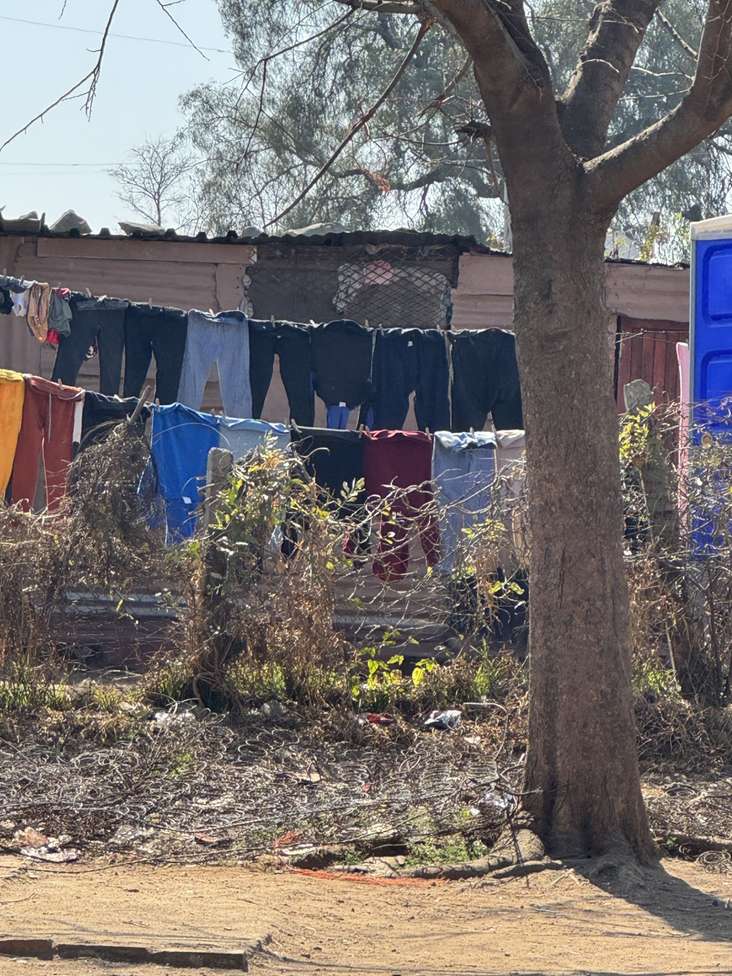 Soweto (Photo: Karen Glaser)[Missing Credit]
After lunch, I went inside one of the shacks which are home to so many in the township, in this case a mother and her four children. It was upsetting to put it mildly: no running water, no fridge, no furniture apart from a bed fashioned from three very worn mattresses piled on top of each other – I assume the family separated them at night – and a kitchen running on rigged-up electricity and comprising two microwaves, a portable hob and an icebox that had seen better days. When I noticed an iron atop one of the microwaves and, a few moments later, in the corner on the floor, an open bible and a candle wedged into an empty bottle next to it, I felt something in my eye.
Had Aaron, the non-Jewish janitor at the Chabad House in Cape Town which I visited after my tour of the Joseph Gitlin Library, been born in similar poverty? Like Welly he is from Zimbabwe where unemployment is even higher than in South Africa – which explains why I met so many Zimbabweans during my ten days in the southernmost country in Africa.
What I do know is that Aaron could not have been kinder. After showing me around the Chabad House, in the Jewish district of Seapoint, he took me on a tour of downtown Cape Town. And when I told him he had the same name as my Jewish son, he smiled broadly.
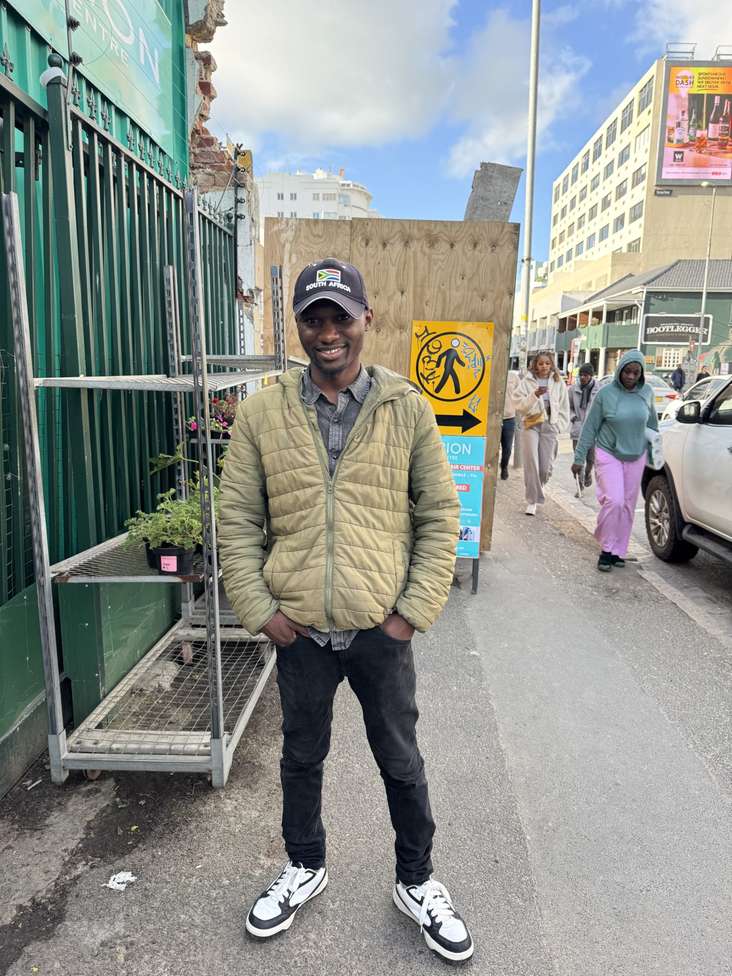 Aaron, the janitor at Chabad House in Cape Town[Missing Credit]