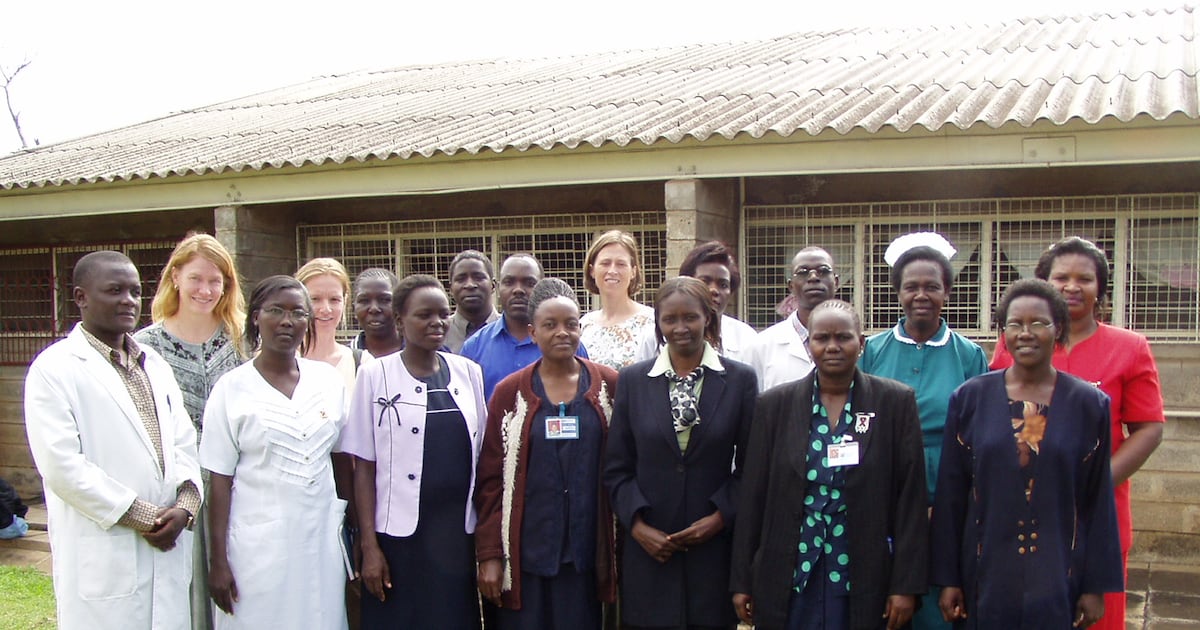
This story was part of Healthbeat’s live storytelling event, “Aha Moments in Public Health,” held Nov. 3 at Manuel’s Tavern in Atlanta. Watch the full show here. Sign up to receive Healthbeat’s free Atlanta newsletter here.
I embodied the cliché that drives many people to become doctors: I wanted a career that was both deeply impactful and also really interesting. And I made it. I graduated from the medical school at Temple University and then completed my residency in, um, “war-torn” Portland, Oregon.
Although as a teenager, I’d been aware of the Centers for Disease Control and Prevention’s investigative work during the 1976 Legionnaires’ disease outbreak in Philadelphia, it was during residency that I truly began to understand public health. The general concept was familiar — impacting health — but instead of working with one patient at a time, public health offered the chance to impact entire populations simultaneously.
After residency, I joined the CDC’s Epidemic Intelligence Service. I found myself in Pakistan, evaluating the validity of survey questions on immunization rates, and later on rooftops in Los Angeles, sampling water from cooling towers for the now-infamous Legionella bacteria. After EIS, I returned to clinical medicine to complete my infectious diseases specialty training and was immersed in the rapidly evolving world of HIV treatment.
A decade later, I landed my best job ever — working for the CDC to help establish HIV treatment clinics in Kenya. In Kisumu, in western Kenya, where I lived with my family, 1 in 4 adults had HIV infection. Almost all hospitalized adults were HIV positive. When we arrived in 2001, coffin makers were thriving. Our research programs had to hire 125% of needed field staff because so many people were dying on the job.
The world had finally begun to realize that HIV treatment needed to be offered in the hardest hit parts of the world. With initial seed funding from the CDC, followed by a major grant from Columbia University’s School of Public Health, then the Global Fund and the U.S. President’s Emergency Plan for AIDS Relief – PEPFAR – my job was to visit clinic after clinic with my Ministry of Health colleagues, asking whether they wanted to establish HIV treatment services. When they voiced concerns about lacking resources or expertise, I could say, “I can offer both.”
As PEPFAR started, we had to secure the drugs. The contracting office put us in a bind — they’d finalize the contract to secure essential drugs and supplies from the mission — but only if we could secure signatures from six board members scattered all over Kenya over a weekend. My colleague, John, took eastern Kenya, I took the west. With a CDC driver, off I went. I had the easier job. All of the board members were bishops, but two of mine were Anglican, meaning they had wives — who were easier to find, and who led us to their husband board members.
Cellphone coverage was limited, and the roads were rough, but by the end of the weekend, John and I had both secured our share of the needed signatures. To the people who’d been asking “when are the drugs coming,” I could soon say “they are here.”
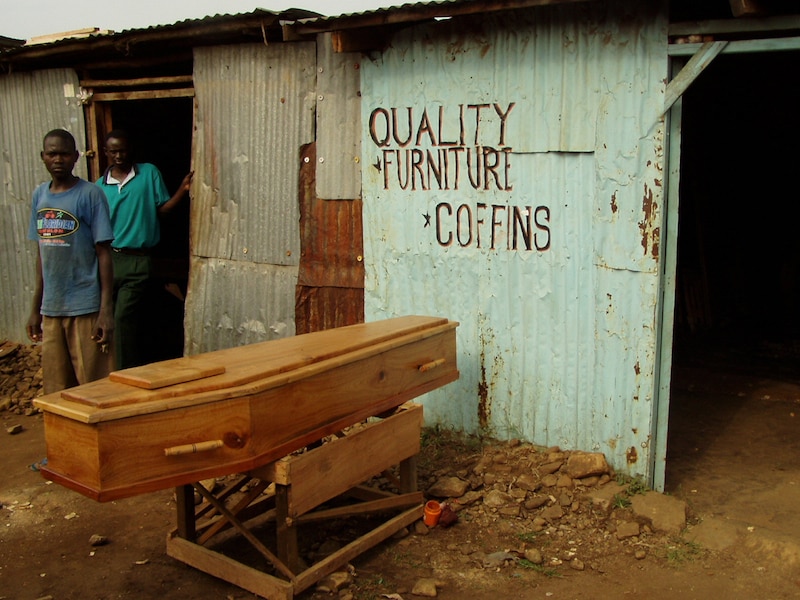 Before HIV treatment was made available in western Kenya, many furniture manufacturers turned to making coffins. (Courtesy of Barbara Marston)
I had lived through the transformation of HIV in the United States — from a death sentence to a manageable chronic illness. Now, I had the privilege of witnessing that transformation again, on a massive scale. By the time my family returned to the United States in 2005, 65,000 people in Kenya were on treatment. That’s a small fraction of the number who have since initiated care.
But that early period was transformative. Coffin makers returned to building furniture. Ambulances stopped serving as full-time hearses. Weekends, once dominated by funerals, reclaimed their hold on dance parties and weddings.
Sign up for Healthbeat Atlanta’s newsletter.
Essential, independent reporting on public health in Atlanta, delivered to your inbox for free.
Taxi drivers in Kenya are a great source of wisdom. During my frequent trips to Nairobi, I often asked for their perspectives. Every one of them had been touched by HIV — through a sibling, a spouse, or their own diagnosis. Many had faced initial reluctance to get tested or seek treatment. But in overcoming stigma and barriers, they found a return to normalcy — and a deep gratitude to the World Health Organization and the United States.
The effects of establishing HIV programs began to ripple outward, strengthening the health system. That trust meant we were often the first called when new threats emerged — whether aflotoxicosis from poorly stored corn, or a hemorrhagic fever.
So maybe not so much an “aha” moment, but a quiet recognition: Focused programs can build immense goodwill. And I had the great privilege of being one small part of that.
Dr. Barbara Marston is an infectious diseases physician who retired from the CDC in 2022 after a 28-year federal career primarily focused on international health. She had leadership roles in emergency responses (Ebola in West Africa and the international component of the Covid response). Since retiring, she’s traveling and supporting protection of endangered amphibians and native plants. She is the co-founder and the coordinator of a CDC advocacy group, CDC Alumni and Friends.