By Andrew Mwangura
Email, thecoastnewspaper@gmail.com
Kenya’s quiet but deliberate return to the global cruise tourism map is beginning to show convincing results.
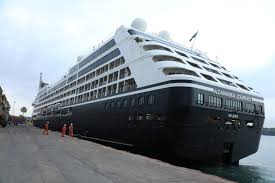
The inaugural call of the Azamara Journey at the Port of Mombasa offers a timely moment for reflection. Beyond the ceremony and statistics, this arrival signals a deeper shift in how the country is positioning its coastline, ports, and tourism economy within an increasingly competitive Indian Ocean cruise circuit.
Cruise tourism has long been an underutilized pillar of Kenya’s broader tourism offering. For decades, the country’s global image has been anchored almost exclusively on wildlife safaris and inland adventure, with the coast treated largely as a complementary attraction rather than a gateway in its own right.
The docking of Azamara Journey—the third cruise vessel to visit Kenya this season—suggests this imbalance is gradually being corrected. What is unfolding is not coincidence, but the outcome of sustained policy focus, infrastructure investment, and targeted international marketing.
The figures are striking
A reported 140 percent growth in cruise tourism by the end of 2025 reflects both pent-up global demand and Kenya’s renewed readiness to receive it. Cruise lines are pragmatic businesses; they do not add destinations to their itineraries for symbolism alone. Their decisions are shaped by port efficiency, passenger experience, safety, regulatory clarity, and the diversity of shore excursions.
That Kenya now appears on multi-night East Africa and Vanilla Islands itineraries indicates growing confidence in its capacity to deliver across these dimensions.
Equally significant is the evolving understanding of what cruise tourism can offer the national economy.
Unlike fly-in, fly-out tourism models, cruise visits compress large numbers of relatively high-spending travelers into short but intensive periods. When managed well, this creates immediate demand for local transport, guides, crafts, cultural sites, food services, and security.
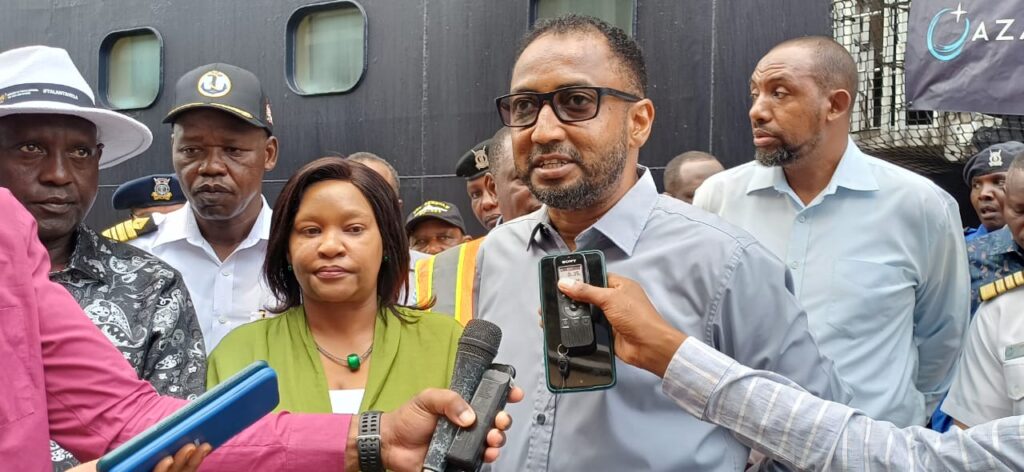
The two-day stay of Azamara Journey in Mombasa is therefore not merely a stopover; it is a concentrated economic opportunity for coastal communities whose livelihoods depend on tourism flows that have historically been seasonal and unpredictable.
Infrastructure development has been central to this progress
The completion of a modern cruise terminal at the Port of Mombasa marks a decisive break from the past, when cruise passengers were processed through facilities designed primarily for cargo operations. Dedicated passenger terminals are not luxuries; they are prerequisites in a sector where first impressions shape future itinerary decisions.
The development of Shimoni Port in Kwale County and the strategic attention given to Lamu further reinforce the idea that Kenya is thinking beyond a single-port model toward a distributed coastal network that can spread benefits and reduce congestion.
Policy innovation has also played a critical role. The introduction of a multiple-entry Electronic Travel Authorization tailored for cruise passengers addresses one of the most common friction points in cruise tourism: movement between ship and shore.
By reducing bureaucratic repetition and uncertainty, Kenya is aligning itself with best practices seen in established cruise destinations. This signals seriousness, responsiveness, and an understanding of the operational realities faced by cruise operators and their guests.
Marketing, however, remains the thread that ties these efforts together. The Kenya Tourism Board’s work in positioning the country at international cruise forums and trade shows has clearly borne fruit.
Cruise itineraries are planned years in advance, and sustained visibility is essential to remain competitive against destinations in Southern Africa, the Middle East, and the Indian Ocean islands.
The framing of Kenya not merely as a “port of call” but as a destination worthy of extended stays is particularly important, as it opens the door to pre- and post-cruise land-based tourism that deepens economic impact.
Yet success brings new responsibilities. Growth in cruise arrivals must be matched with careful management to protect coastal ecosystems, cultural heritage, and urban infrastructure.
Mombasa’s historic Old Town, marine parks, and fragile coastal environments cannot absorb unlimited numbers without thoughtful planning.
Cruise tourism must therefore be integrated into broader sustainability strategies that balance access with preservation, ensuring that growth does not undermine the very assets that attract visitors.
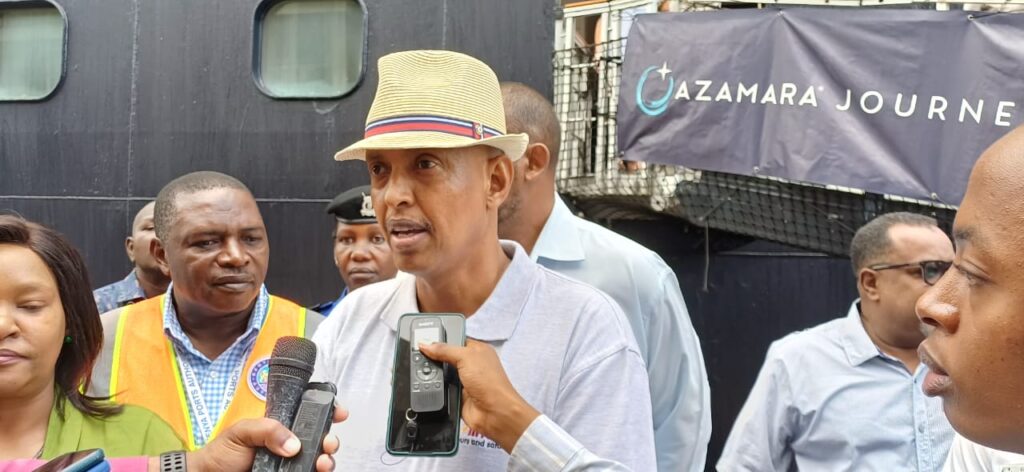
The arrival of Azamara Journey should be seen as both an achievement and a test. It confirms that Kenya’s investments and reforms are yielding tangible results while also challenging policymakers, port authorities, and tourism stakeholders to maintain standards, coordinate effectively, and think long-term.
If handled wisely, cruise tourism can become a stable and complementary pillar of the blue economy, linking ports, people, and culture in ways that extend far beyond the shoreline.
In this sense, the moment is bigger than a single ship or season. It represents Kenya’s reassertion as a confident maritime nation—open, accessible, and ready to welcome the world by sea, not just by air.
Mr. Mwangura, an independent maritime consultant, is former SUK Secretary General.
About The Author

Continue Reading