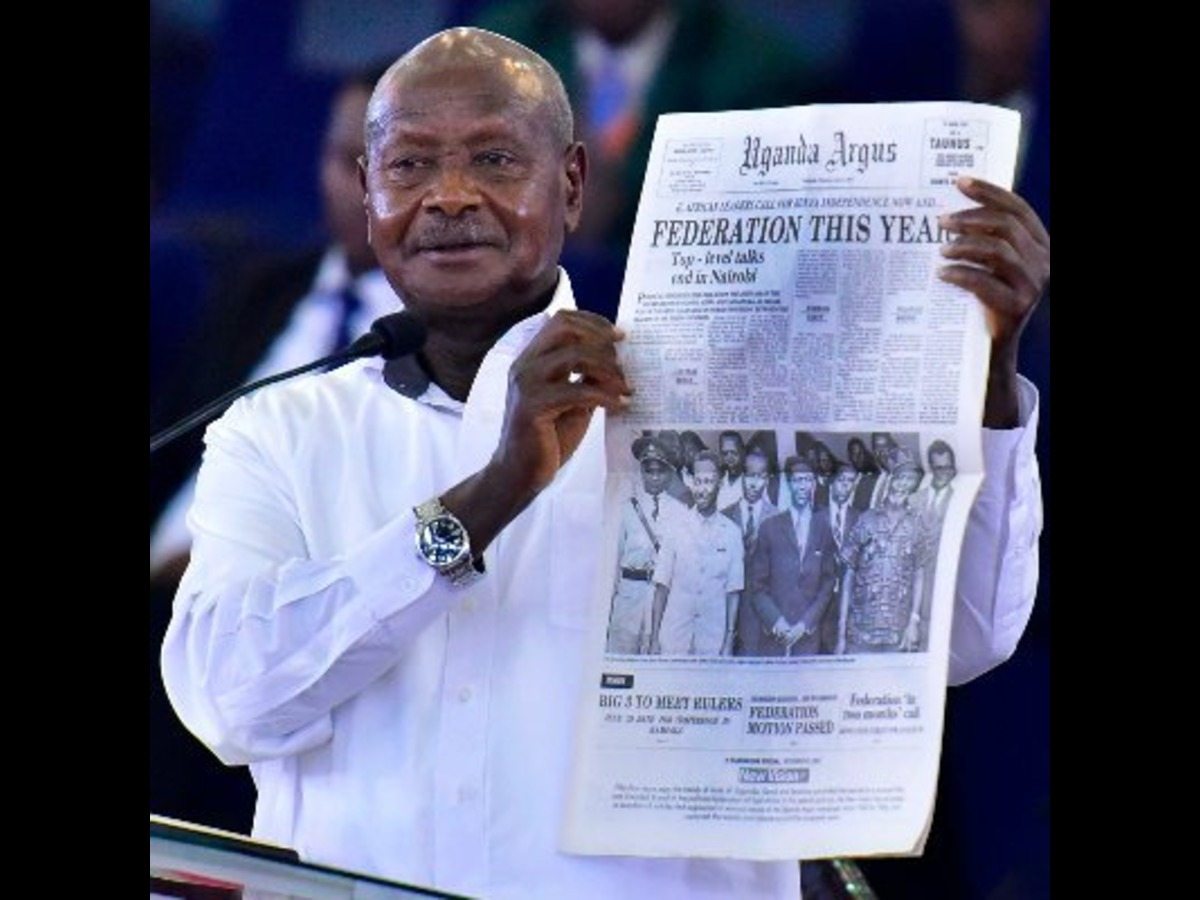
Uganda president Yoweri Kaguta Museveni is facing massive criticism online after making it clear he’s seeking a seventh term, though he previously spoke against African rulers obsessed with power.
Multiple Ugandans under the age of 40 have known only one president – and that age cap covers over three-quarters of the population.
In 1986, Yoweri Museveni claimed power following an armed uprising. Today, he is 81, and still believes he has all it takes to lead the future of his nation.
READ ALSO: Why Ibrahim Traoré Is a Threat
Although critics are against Museveni’s long spell in office, his time at the helm has come with a long period of peace and significant development, for which many citizens are grateful.
Nonetheless, maintaining his grip on power through a mixture of sidelining opponents and compromising independent institutions is where his critics draw the line.
“We don’t believe in [presidential] term limits,” he once told the BBC, after winning a fifth election.
Only a year later, Museveni removed the age limit for a presidential candidate- paving the way, many believe, for him to become president for life.
Back in 1944, Museveni was born into a family of cattle keepers in Ankole, western Uganda.
It was during Uganda’s struggle for independence from the United Kingdom that he came of age, as it was a period of brutality and turbulence under Milton Obote and Idi Amin.
Museveni wrote in his memoir that for many years, he did not know his birth date. “We had real life-threatening challenges such as extra-judicial killings and looting… we had no time to worry about details such as dates of birth.”
Then in 1967, he left Uganda and was enrolled in the University of Dar es Salaam in Tanzania.
He studied economics and political science there and forged alliances with politically active students from around the region.
In the 1970s, Yoweri Museveni’s name gained prominence after a coup by the notorious Amin.
He helped form the Front for National Salvation – one of the rebel groups that, with Tanzania’s help, ousted Amin.
After the fall of Idi Amin, former President Milton Obote returned to power through a general election, but Yoweri Museveni rejected the result, alleging that fraudulent activities had taken place.
He launched a guerrilla war in 1981, and in 1986, his National Resistance Movement seized power, making him president.
Under Museveni, Uganda recorded steady economic growth averaging more than 6% annually over a decade.
Primary school enrollment doubled, and HIV rates declined after a vigorous anti-AIDS campaign led by the president.
These gains earned Museveni Western support, but in 1998, his standing suffered when Uganda and Rwanda invaded the Democratic Republic of Congo.
Also, critics accused him of growing intolerance and clinging to power.
In 2005, he made constitutional changes that entrenched his dominance and removed presidential term and age limits.
Museveni’s critics want him gone, but he’s holding on and looking forward to another term, and only time will tell if he stays or vacates his role as president.
READ ALSO: Somalia refutes U.S. allegation of food aid warehouse demolition