At a glanceA diphtheria outbreak in Nigeria’s Niger State in September 2025 claimed the lives of 10 children in the space of a few days.The deaths prompting a rapid response from local health authorities, with a vaccination campaign and community sensitisation quickly put into place.“We are proud of our response this time and are committed to protecting every child from killer diseases such as diphtheria,” said the local Director of Health.
For five-year-old Adamu Haliru, the diphtheria outbreak that swept through Niger State, northern Nigeria, in September 2025 was a close call, a clear warning and a second chance.
Ten children from the Bida and Agaie local government areas (LGAs) died of the vaccine-preventable infection in just a matter of days early that month. Adamu fell sick, with a raging fever and a throat so sore he had difficulty swallowing even liquid sustenance.
“My son would cry endlessly for most parts of the day from the discomfort caused by fever and sore throat,” Faiza Haliru, Adamu’s 27-year-old mother, told VaccinesWork. “We thought it was a normal illness that would disappear in a few days, but we became worried when children with similar conditions started to die in the region.”
The symptoms fitted: diphtheria, which has been vaccine-preventable since the early 20th century, is caused by a bacterium that targets the upper respiratory tract, secreting a tissue-killing exotoxin that can cause a thick build-up in the throat, and damage to the heart and lungs.
“It was at that point that we were advised by one of our community leaders to take him to the Federal Medical Centre in the council area for examination and treatment,” she said.
We discovered that most of the children affected by diphtheria were those whose parents refused to take them for immunisation.
– Dr Ibrahim Idris, Director of Public Health at the Niger State Ministry of Public Health
Adamu received supportive care and had samples taken for testing. “When the result arrived a week later, it was negative,” Haliru said, relief audible in her voice. “He was given the vaccine at the hospital before we were finally cleared to go home by the doctors.”
Three months later and residents of the densely-populated Bangaie neighbourhood in Bida city confirm that Adamu is himself again – irrepressible, bubbly and almost always barefoot.
Thinned-out safety net
Though the vaccine, packaged into the basic five-in-one pentavalent shot, is available free of charge to Nigerian children, diphtheria has wreaked havoc across northern Nigeria in recent years, with the case-count spiking in the wake of the COVID-19 pandemic.
Coverage rates cratered amid that crisis, and though much of that ground has since been made up, still only 67% of the country’s eligible kids have received all three recommended doses of the diphtheria-containing jab.
And the north of the country is home to a disproportionate number of the unprotected, for a number of reasons. A combination of religious and cultural beliefs means that vaccine hesitancy is high across the region, leaving many children exposed and at the mercy of killer diseases of all kinds. Poverty, inadequate access to healthcare, inadequate sanitation and other systemic concerns contribute to elevated vulnerability.
Dr Ibrahim Idris, Director of Public Health at the Niger State Ministry of Public Health, had a front-row view of the fallout in his state last September. In addition to the ten fatalities recorded, more than 200 suspected cases were recorded, he said. Most of these were children aged between five and seven, the age group most likely to have missed their vaccines amid the pandemic upheaval.
“We discovered that most of the children affected by diphtheria were those whose parents refused to take them for immunisation,” Dr Idris explained. Adamu’s family wasn’t the only one for which the outbreak was a wake-up call. “We educated the parents and did reactive immunisation. We immunised all the children in the affected communities with the diphtheria vaccine,” said Dr Idris.
Quashing the outbreak
“As soon as we got the report of children dying, the first thing we did was to activate an incident management system,” said Dr Idris. “It comprises various stakeholders, including health agencies, partner organisations like WHO and UNICEF, and even the media. Through this system, we were able to track cases and give the necessary treatment where applicable.
Diphtheria was suspected immediately, and while the laboratory processed the samples, the state contacted the Nigeria Centre for Disease Control (NCDC) for support. “After that stage, we went into communities to sensitise parents and encourage them to bring forward their children exhibiting symptoms of the disease. This was critical: without proper treatment, half of all patients with respiratory diphtheria are expected to die.
Dr Mary Dirisu, head of the Community Health Unit at the Federal Medical Centre, Bida, said that children showing signs of the disease were immediately put on antibiotic therapy and given supportive care, including management of respiratory distress, hydration and close monitoring for complications.
Dr Grace Ahmed, who heads the Paediatrics Department at the same hospital, said the outbreak immediately triggered activation of an emergency operation system, “turning some of our wards into isolation wards, where cases were attended to critically”.
But isolation wasn’t going to squash the spread of the highly infectious bacterium, which was already circulating in the community. “We briefed health workers on the frontlines about the disease and trained them on how to identify severe cases first. Protective equipment was promptly provided to ensure their safety.
“Also, we collaborated with other units to strengthen community-based surveillance and also raise disease awareness, including making vaccines available to all those who need them.
“Through these efforts, we were able to play a critical role in fighting the recent outbreak in the state and protecting more children from the disease,” she said.
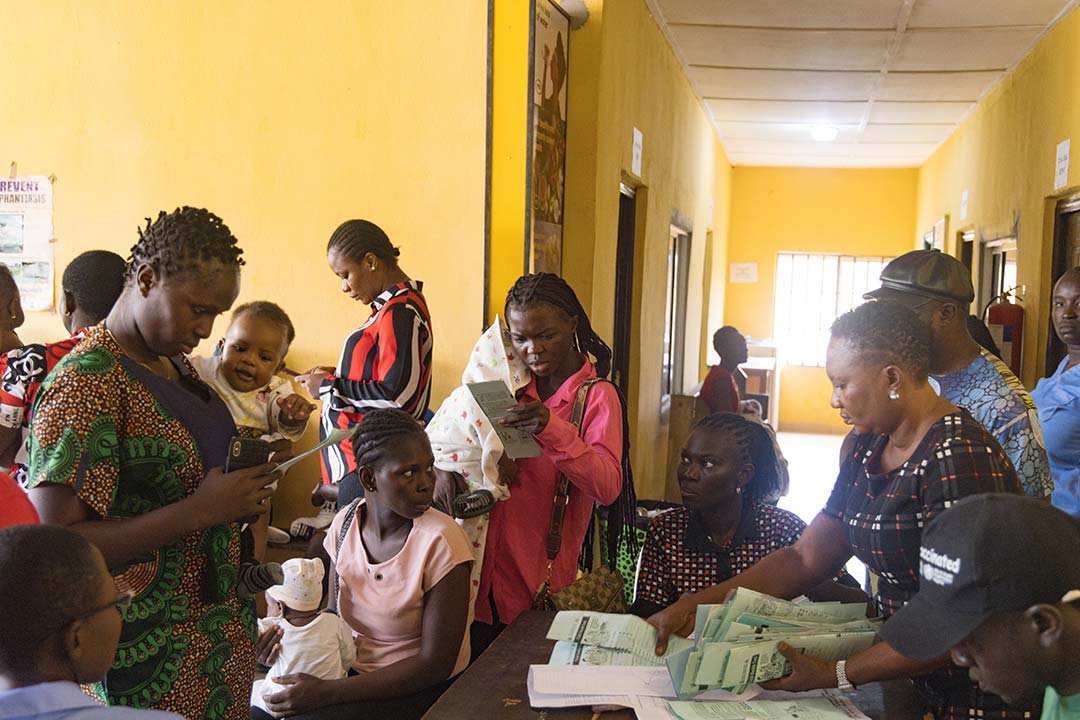
Dr Bidisu told VaccinesWork that an emergency immunisation outreach to vaccinate unimmunised children in all the wards of the council was launched, and added that as many as 231 children were vaccinated at the hospital in the month of September alone.
Seven-year-old Fateema Kutigi from Agaie LGA, who had been treated on the ward for severe neck swelling and difficulty swallowing, was one of them. “She was given the vaccine to protect her from the germs causing the disease,” explained her mother, Hadiza.
The rate of hospitalisations slowed, and soon the rate of new cases stood at zero.
Bracing for the future
Dr Idris confirmed the outbreak remains under control, but added that the mass vaccination exercise conducted in September will be followed up by a second round planned for early 2026.
“One shot will not give full immunity,” he warned. “People are supposed to take four shots to be completely shielded from the disease.”
The administration has also embarked on a project to improve healthcare access, erecting one fully equipped primary health centre in each of the 274 wards of the state. Twenty such facilities have been completed and became operational in recent weeks, while another 20 are expected to begin operation over the next six months.
This strategy, Dr Idris says, should help the state respond even faster to the outbreak of diseases such as diphtheria next time. “These facilities will have all necessary equipment, including an uninterrupted power supply, to be able to respond to any such outbreak in the future.
“We are proud of our response this time and are committed to protecting every child from killer diseases such as diphtheria,” he added.