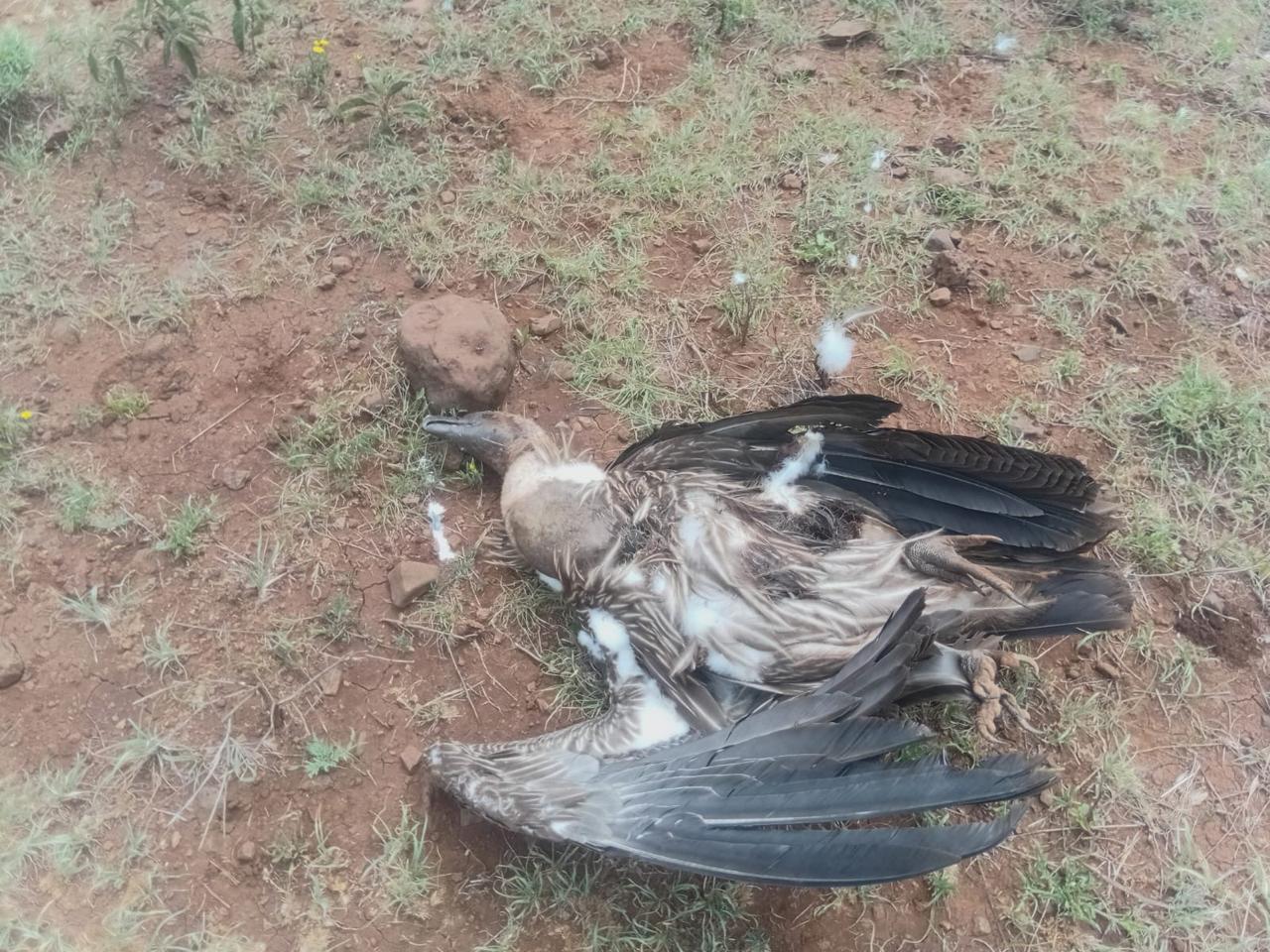
 One of the vultures that was poisoned/Hand out
Seven
lions lay dead in the open plains of Kitenden earlier this week, their once powerful bodies stilled by
poison meant to avenge a livestock loss.
Around them, at least 13 vultures also perished as they ate the poisoned lion flesh—casualties of a conflict that continues to pit people against wildlife in Kajiado county.
Conservation officials fear the actual death toll on vultures could be higher, as scavengers often travel long distances
before succumbing after eating poisoned carcasses.
Amboseli Conservation Area chief park warden Joel ole Nyika said investigators are still piecing together when
the poisoning occurred.
“We do not have the exact date when
the poisoning incident happened, but the carcasses appear to be from about two
or three days ago,” Nyika told the Star on Thursday.
Killing vultures and other protected species, such as elephants, is also a crime. It can include a fine of as much as Sh20 million or prison terms, including life imprisonment.
Lions are considered an endangered and nationally treasured species. Poisoning lions, including for retribution, is a serious crime and is punishable by hefty fines and/or imprisonment under Kenya’s Wildlife Conservation and Management Act of 2013.
Preliminary findings suggest the
lions were poisoned after attacking livestock, a familiar cycle in which
frustrated herders lace animal carcasses with toxic substances to kill
predators in retaliation.
Kenya is home to an estimated 2,512
lions, according to the 2025 national wildlife census. Yet the species face mounting pressure from shrinking habitats, illegal killings and escalating
human–wildlife conflict.
The poison meant for lions rarely
kills only its intended targets. Vultures, drawn by the promise of an easy
meal, descend on contaminated carcasses and die in large numbers.
Kenya hosts eight of Africa’s 11
vulture species—white-backed, white-headed, hooded, Rüppell’s, Egyptian,
lappet-faced, bearded and palm-nut vultures. Four of these are listed as
critically endangered on the International Union for Conservation of Nature
(IUCN) Red List.
Over the past three decades, vulture
populations in Kenya and across Africa have plummeted due to poisoning—both
deliberate and accidental—habitat loss, collisions and electrocution from
power lines, cultural practices, illegal trade and weak enforcement of wildlife
laws.
Yet vultures play a vital, often
overlooked role. By rapidly consuming carcasses, they keep landscapes clean and
help prevent the spread of deadly diseases such as anthrax, rabies and tuberculosis
to wildlife, livestock and humans.
The poisoning in Kitenden came days after another tragic reminder of the human cost of wildlife conflict.
On the evening of December 18, 2025,
35-year-old Early Childhood Development teacher Eunice Maora was killed by an
elephant near her home in Lairupa village, Elangata Wuas location, Kajiado
West.
Kenya Wildlife Service (KWS)
officers, working alongside the National Police Service and local
administrators, confirmed the cause of death and
transferred her body to Kajiado County Referral Hospital mortuary.
In the days that followed, KWS
conducted intensive aerial and ground operations to track the elephant
responsible. The animal, found to be injured and posing an imminent threat, was
lawfully eliminated under the Wildlife Conservation and Management Act, 2013.
KWS said it extended condolences to
Maora’s family, colleagues, learners and the wider Lodokilani community, while
engaging local leaders, including area MP George Sunkuya, and sensitising the
family on the compensation process.
“We remain deeply concerned by this
tragedy and reaffirm our commitment to strengthening human–wildlife conflict
mitigation while protecting lives and promoting peaceful coexistence,” the
agency said.
Despite the interventions, tensions
remain high. Reports indicate two more elephants have since been killed,
signalling a deterioration in relations between communities and wildlife
authorities.
Data from 2009 to 2024 paints a
stark picture of a growing national crisis. Over the 15-year period, Kenya
recorded 57,006 human–wildlife conflict incidents.
Crop destruction accounts for the
largest share, with 32,480 cases, followed by livestock predation at 15,940
incidents. The numbers surged sharply in recent years, peaking at 8,272
incidents in 2023, before slightly dipping to 7,883 in 2024.
Conservationists warn the
situation in Amboseli worsened months after the park’s management was placed
under county control, disrupting long-established conservation partnerships and
investments in the ecosystem.
For communities living on the edge
of protected areas, the conflict is personal and painful. For conservationists,
the deaths of lions and vultures signal a deeper ecological unravelling—one
poisoned carcass at a time.