Editor’s note: Moses Becker is a special political commentator for News.Az, holding a PhD in political science and specializing in interethnic and interreligious relations. The views expressed in this article are the author’s own and do not necessarily reflect the position of News.Az.
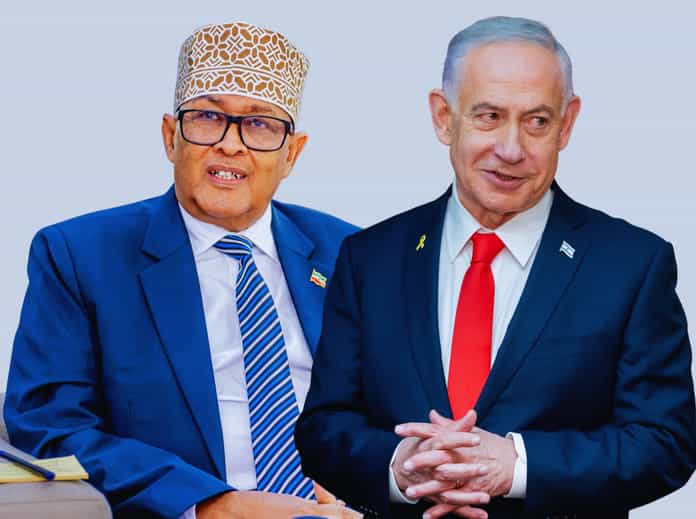
When Donald Trump assumed office as President of the United States in 2025, he advanced an idea aimed at ending the conflict between the Hamas terrorist organization and Israel by relocating residents of the Gaza Strip to Indonesia or to the unrecognized state of Somaliland. On December 26, 2025, Prime Minister Benjamin Netanyahu announced Israel’s official recognition of Somaliland as an independent and sovereign state, which will in turn establish diplomatic relations with Israel. These moves are widely viewed as a continuation of the spirit of the Abraham Accords, designed to expand the number of countries maintaining close ties with Jerusalem.
It is well known that in politics nothing happens by accident. Behind every state action lie far-reaching objectives. Beyond the proposed relocation of Gaza’s population, which has not yet been confirmed by Somaliland authorities, the strategic location of the newly recognized state appears to play a central role.
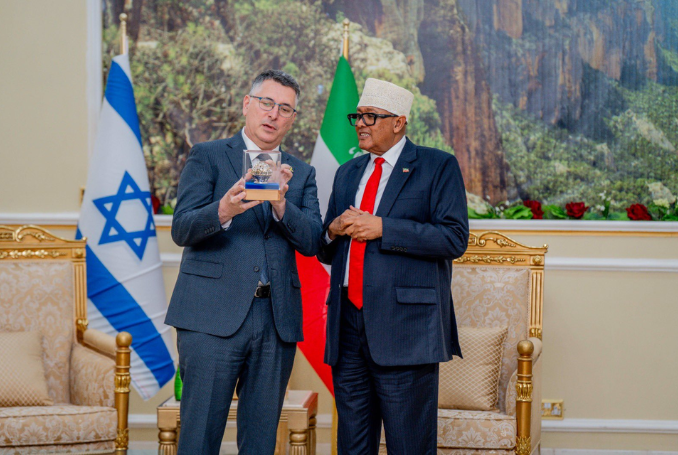
Source: Somalia Today
Somaliland (English: Somaliland; Somali: Soomaaliland; Arabic: صوماليلاند) is a partially recognized state in the Horn of Africa. In June 1960, it gained independence from the United Kingdom and shortly afterward united with former Italian Somaliland to form the Somali Republic. From the 1980s onward, a separatist movement emerged in Somaliland. In 1991, amid the effective collapse of Somali statehood, the region unilaterally declared its independence from Somalia. Having long been under British rule, the local population absorbed many elements of British colonial culture, which distinguished it from the rest of Somalia.
Located in northeastern Africa, Somaliland borders Ethiopia to the west and south, Djibouti to the northwest, and the Somali autonomous region of Puntland. Its northern coast stretches along the Gulf of Aden for approximately 850 kilometers, a position critical to global maritime security. The country covers 176,100 square kilometers, with an estimated population of 4.8 million. Its capital is Hargeisa, and the official languages are Somali, Arabic, and English. Islam is the state religion.
On May 18, 1991, a congress of northern Somali clan elders proclaimed the creation of the independent Republic of Somaliland.
During Somalia’s period of anarchy and inter-clan warfare between 1991 and 2000, Somaliland remained an oasis of relative peace and stability. Even amid the chaos elsewhere in Somalia, where armed gangs and pirates dominated, Somaliland maintained some form of functional statehood.
Israel’s interest in Somaliland is largely driven by its strategic location. The region lies directly across from the Houthi-controlled areas of Yemen and is washed by the Red Sea and the Bab el-Mandeb Strait, a key maritime route to Israel’s southern port of Eilat, currently blocked by the pro-Iranian Ansar Allah group. This positions Somaliland as strategically significant for global trade and political influence. Currently, Houthi actions effectively disrupt the Suez Canal route to the Mediterranean, causing major losses for shipping companies worldwide.

Source: www.economist.com
Several global powers are vying for influence in the region. China has invested roughly $1.8 billion in Africa’s largest hydroelectric plant in Ethiopia and established a military base in Djibouti. The United States maintains Camp Lemonnier in Djibouti, while Russia is strengthening ties with Eritrea, Ethiopia, and Sudan. Türkiye has deployed military forces in Somalia, and the UAE has built ports and bases along the Gulf of Aden. This competition for regional influence is intensifying by the day.
Israel is not the only actor working to bring Somaliland out of international isolation. In January 2024, landlocked Ethiopia signed a memorandum with Somaliland to lease 20 kilometers of coastline for a naval base, with Addis Ababa signaling potential recognition of Somaliland’s independence. Following Israel’s recognition, Israel announced plans to expand relations with Somaliland, establishing broad cooperation in agriculture, healthcare, technology, and the economy.
Somalia, along with Egypt, Türkiye, and Djibouti, condemned Israel’s recognition of Somaliland. The four countries’ foreign ministers reaffirmed their “support for the unity, sovereignty, and territorial integrity of Somalia,” according to Egyptian Foreign Minister Badr Abdelatty. Israeli Prime Minister Netanyahu, who met with Trump at Mar-a-Lago on December 29, 2025, reportedly discussed Somaliland and the possibility of its recognition by other countries.
The issue has been on the international agenda for some time. In May 2025, the President of Somaliland told The Guardian that a U.S. delegation, including military officials and senior diplomats, had visited Hargeisa. Influential Republican Senator Ted Cruz has repeatedly urged Congress to recognize Somaliland. The U.S. policy blueprint Project 2025, issued under Trump’s administration, notes recognition of Somaliland as a way to counter “the deteriorating U.S. position in Djibouti” and growing Chinese influence in the region.
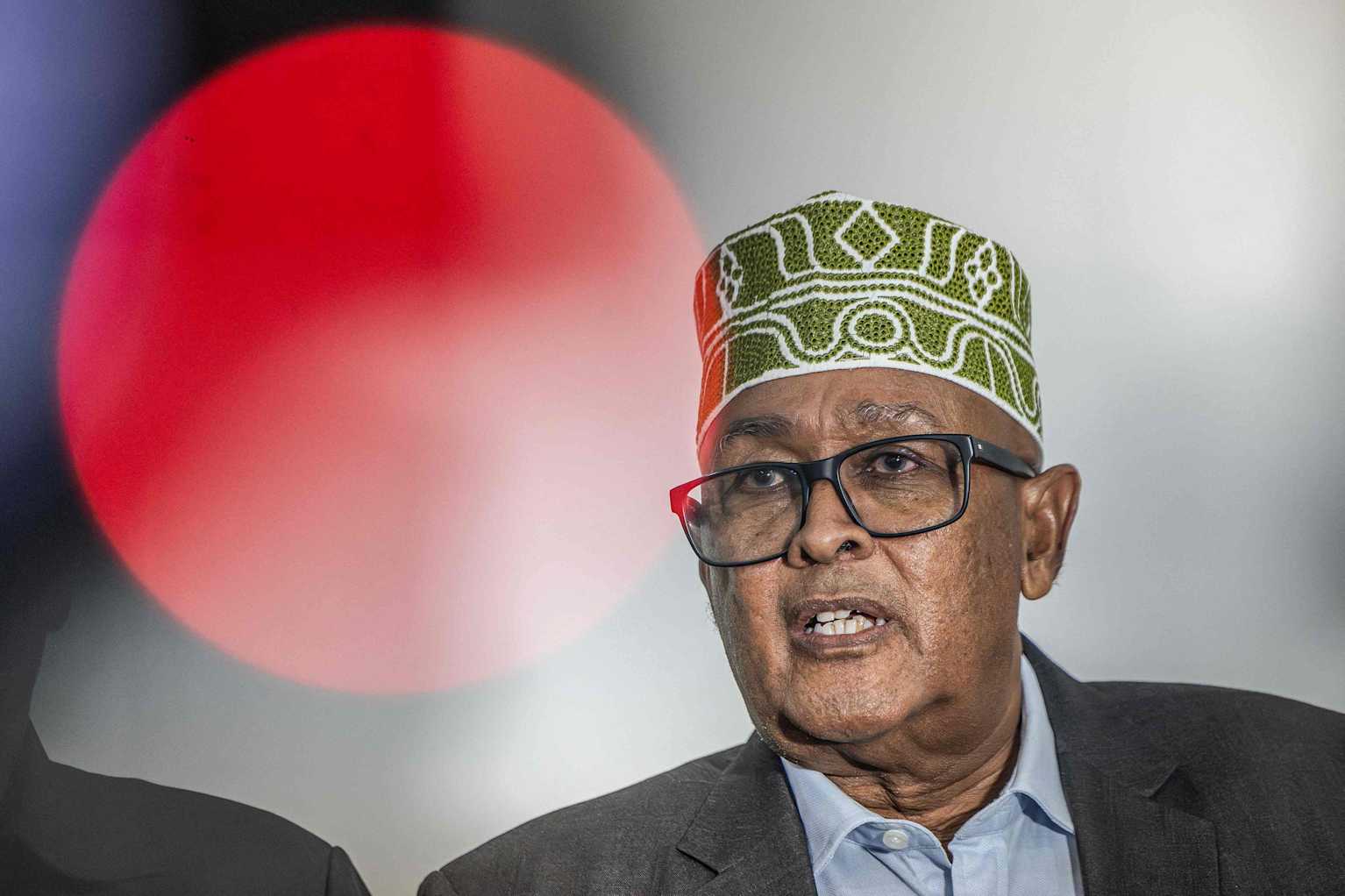
Source: President Abdirahman Mohamed Abdullahi
Looking to capitalize on this favorable environment, President Abdirahman Mohamed Abdullahi, in response to President Trump’s proposal to accept Gaza’s residents, told The Guardian: “If the Palestinians decide to come on their own, we will not object.” However, Somaliland’s foreign minister publicly denied that any negotiations on the matter were underway. Nonetheless, the statement indicates that multiple scenarios remain possible.
This development comes amid the erosion of the post-Second World War international legal order. Jethro Norman, a Somalia expert at the Danish Institute for International Studies, suggests that Israel’s policy could inspire separatist movements across Africa, from Cameroon and Nigeria to Mali and Ethiopia. In Somalia itself, two federal states, Puntland and Jubaland, have already distanced themselves from the federal system over constitutional disputes. Puntland’s interior minister supported Israel’s decision on social media, hinting at the possibility of following Somaliland’s example.
Across much of Africa, where borders were drawn by colonial powers without regard for tribal, religious, or ethnic realities, countries are watching developments in the Horn of Africa with a mix of caution and hope. Somaliland’s newly elected president has consistently prioritized international recognition, and shifts in this direction are now becoming visible. According to the Associated Press, the United States is engaging in “quiet dialogue” with Somaliland on potential cooperation formats, potentially linked to recognition, and the region appears to be adjusting its foreign policy course accordingly.
(If you possess specialized knowledge and wish to contribute, please reach out to us at opinions@news.az).