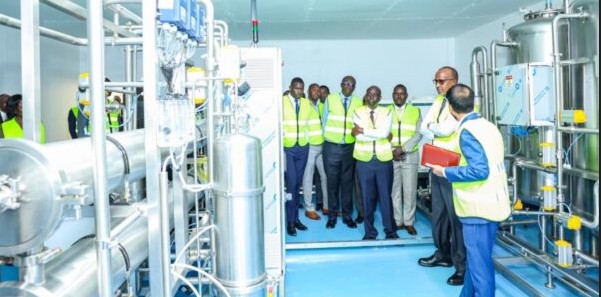
Kenya is making steady progress toward producing its first locally manufactured vaccines, with the initial batch expected by the end of 2027. The government-funded vaccine manufacturing facility has completed its first phase, while the second phase is now underway, focusing on system integration and the installation of key equipment, including advanced fill-and-finish technology.
Health Cabinet Secretary Aden Duale highlighted the milestone during high-level talks with the board and senior management of the Kenya BioVax Institute, reaffirming the government’s commitment to local vaccine manufacturing as a critical pillar of universal health coverage and national health security.
The engagement emphasised the Institute’s mandate to manufacture and commercialise safe, high-quality vaccines and other essential health products needed to strengthen Kenya’s preparedness for public health emergencies.
Discussions also noted Kenya’s achievement of World Health Organisation Maturity Level 3, a key regulatory benchmark attained with support from the Pharmacy and Poisons Board and the National Quality Control Laboratory.
“This achievement enhances regulatory confidence, supports Kenya’s UHC goals, and reinforces the country’s position as an emerging pharmaceutical manufacturing hub in Africa, while contributing to economic growth under the Bottom-Up Economic Transformation Agenda,” said Duale.
World Bank support
CS Duale further revealed that the Kenya BioVax Institute will benefit from World Bank support through the Regional Health Emergency Preparedness, Response, and Resilience program, aimed at boosting pharmaceutical production capacity and strengthening emergency response systems.
During an interactive session with staff, the Cabinet Secretary emphasised integrity, transparency, and accountability in public service, noting that these principles are essential for delivering effective and people-centred healthcare.
The Kenya BioVax Institute is a state-owned pharmaceutical company established in 2021 with the core mission of manufacturing, packaging, and commercialising human vaccines and other health products for Kenya and beyond.
It was created to help the country become self-sufficient in vaccine supply, particularly as Kenya’s support from international partners like Gavi is expected to decline in the coming years.
The Covid-19 pandemic highlighted the risks of relying on imports, motivating the government to build local production capacity.
The institute is focused on producing both routine and emergency human vaccines—immunisations that protect against common diseases as well as vaccines needed during outbreaks.
Initial vaccine products being prepared for local manufacturing include shots for typhoid and pneumonia, which are expected to benefit millions of children once production begins. Plans include vaccines for tetanus, hepatitis B, polio, cholera, Ebola, and other critical immunisations.
Beyond vaccines, BioVax’s mandate includes producing other biomedical products and technologies, such as biosimilar therapies, insulin, snake anti-venom, medical infusions, and diagnostic tools—all aimed at improving access to quality health care in Kenya and the region.
The BioVax Institute has also partnered with research bodies like the Kenya Medical Research Institute (KEMRI) to support vaccine development and capacity building.
This collaboration helps move research from discovery to manufacturing, boosting Kenya’s biotechnology capabilities and enabling more products to be made locally.
Local vaccine production through institutions like the Kenya BioVax Institute aligns closely with the World Health Organisation’s broader goals for vaccine access, equity, and health security.