President Donald Trump has slammed a 25 per cent tariff on countries doing business with Iran. The sanction is designed to weaken the hands of the Iranian government amid a deadly crackdown on protesters.
Iran’s worsening inflation hit 42 per cent, and its currency, the rial, plummeted to an all-time low of 1.4 million rials per dollar, setting off protests on December 28.
Thousands of Iranians have been on the streets of the Islamic republic for several days to protest worsening economic conditions and are calling for regime change. Their remonstrations have been met with violent force by state security forces.
Mr Trump announced the tariff imposition on Monday, days after threatening to “hit Iran hard” over reports of a brutal clampdown on protesters.
“Effective immediately, any country doing business with the Islamic Republic of Iran will pay a tariff of 25% on any and all business being done with the United States of America. This order is final and conclusive,” said the U.S. president.
Nigeria seems to be in the eye of this latest storm.
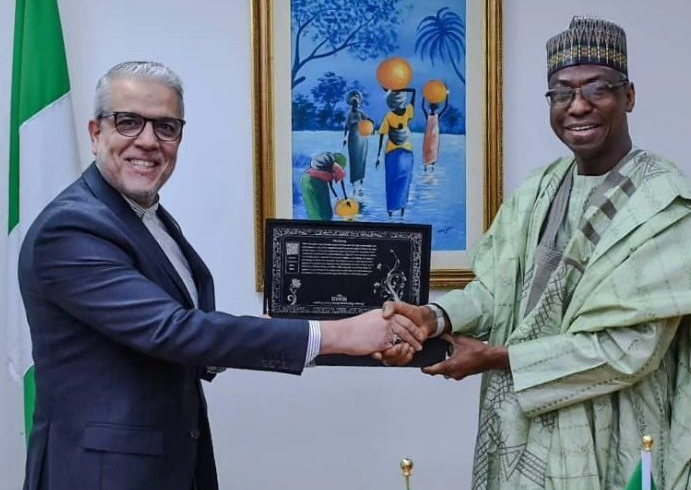
Last December, Nigeria and Iran reaffirmed their commitment to deepening bilateral relations, with a renewed focus on trade, investment, energy cooperation, and multilateral engagement, following a high-level meeting at the Ministry of Foreign Affairs in Abuja.
The meeting included the ministry’s permanent secretary, Dunoma Umar Ahmed, and the Iranian ambassador to Nigeria, Gholamreza Madhavi Raja, marking one of the first formal engagements since the Iranian envoy presented his letters of credence to President Bola Tinubu.
At the meeting, Mr Raja underscored Nigeria’s strategic importance in Iran’s foreign policy, describing the country as a gateway to West Africa and a critical partner for engagement with the African continent.
Relatedly, in December 2022, Nigeria joined seven other nations to vote in favour of retaining Iran on the United Nations Women’s Rights Commission despite Iran’s violations of women’s rights.
The U.S. called for Iran’s ouster after Tehran took action to forcibly put an end to demonstrations that broke out in response to the disputed death of Mahsa Amini, a 22-year-old Kurdish Iranian young woman, who died in custody.
Twenty-nine nations voted in support of Iran’s expulsion. Eight nations, including Nigeria, Russia, and China, voted against it, and 16 nations abstained.