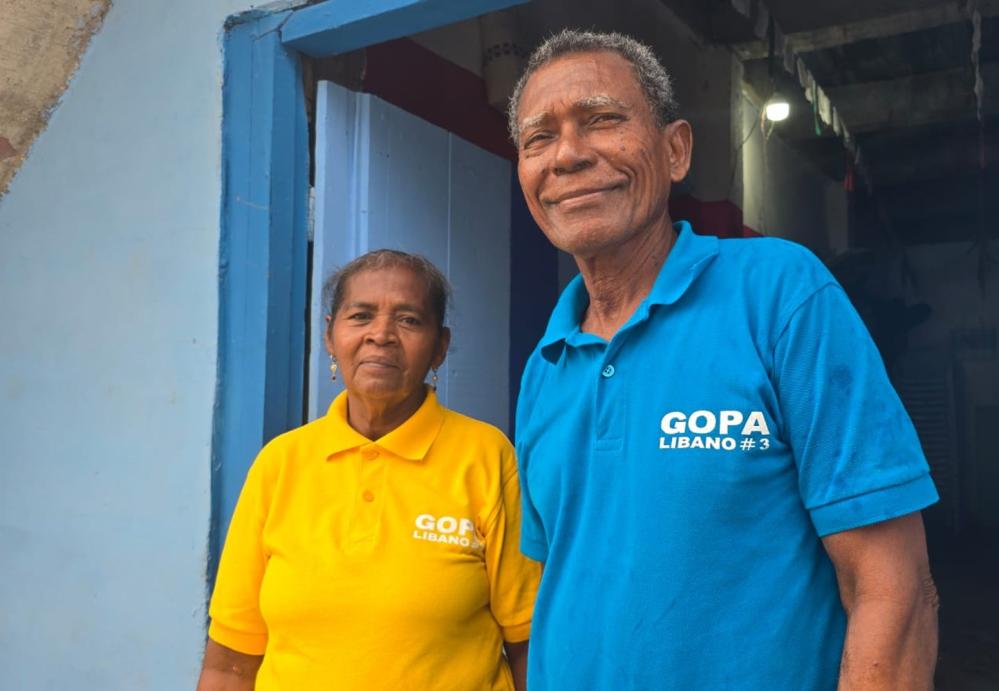
In this candid conversation, Amalia Farias, an Age Inclusion Specialist (AIS) with HelpAge network member Convite AC in Venezuela, shares her journey, challenges, and hopes for a more inclusive humanitarian system.
How did you start working on ageing issues, and what does your role involve?
Amalia: My academic background has nothing to do with ageing – I’m an industrial designer! But I began my journey in the humanitarian world, starting as a volunteer with the Venezuelan Red Cross when I was very young.
In 2021, HelpAge and Convite launched a project focused exclusively on older people. That was a turning point for me. Soon after, someone suggested I apply for the role of Age Inclusion Specialist. At first, I had doubts – making older people’s voices heard is hard. But I took the challenge, and three years later, here I am.
My job is to make sure older people are not forgotten in the humanitarian coordination system. I focus on three things:
Advocacy: Being present in coordination planning meetings, so that inclusion is part of every decision.
Participation: Ensuring older people can speak up in decision making spaces that impact their lives – not just receive aid.
Training: Strengthening the capacity of organisations to include older people and people with disabilities in all stages of humanitarian response.
We even created a guide on age and disability inclusion, and in Venezuela we’re training teams across sectors to use it.
What challenges do older people face, and why does inclusion matter?
Amalia: Isolation and lack of resources are the biggest issues. Many older people live alone because family members have migrated. They struggle to buy food and medicine. Malnutrition is common, and healthcare is hard to access.
Older women face another risk: violence. Some displaced relatives return home without jobs and become dependent on them, which can lead to verbal or physical abuse.
Most older people in Venezuela rely on a basic food basket from the state, but it’s irregular and nutritionally inadequate. Another challenge is that there’s no updated data available- the last census was in 2010. So older people remain invisible.
Inclusion means older people can participate, their voices are heard, and they have access to services. They should help shape decisions about their own lives.
Where is the system falling short, and what progress have you seen?
Amalia: There’s very little data and almost no participation. Older people are rarely invited to meetings or recognised for their skills.
But there have been small wins. Before, older people weren’t even mentioned in Venezuela’s humanitarian plans. Now they are recognised as an at-risk group. In the WASH sector, we pushed for better age data. Instead of just “60+,” reports now include “80+.” That change revealed how many older people actually receive aid – and it surprised everyone.
We’re also working with OCHA to improve age and disability data in feedback systems starting January 2026. These changes may seem small, but they matter.
What are the biggest barriers, and how do you make sure older people really participate?
Amalia: Funding is a big one. There’s a rule that 5% of humanitarian funds go to disability inclusion, but there is no equivalent for older people. We also need training, awareness, and dedicated staff in every sector. And donors must demand better data.
To ensure participation, we go to the field. We hold focus groups and carry out surveys so older people can tell us their real needs. And we involve them in monitoring and evaluation as well.
Do you work with older people’s groups, and what would you change if you could?
Amalia: Yes, though formal organisations don’t exist in Venezuela. We work with community councils and volunteer groups, helping older people organise, learn about their rights, and even start small businesses. Many discover skills they never used before – and now they can share them.
If I could change one rule tomorrow, I’d make inclusion of older people and people with disabilities mandatory in all humanitarian activities – not just in theory, but in practice.
Age Inclusion Specialists like Amalia are vital. They make sure humanitarian aid works for everyone – not just the young and strong. As Amalia says, “This work is like a drop in the ocean. It takes time, but every drop counts.”