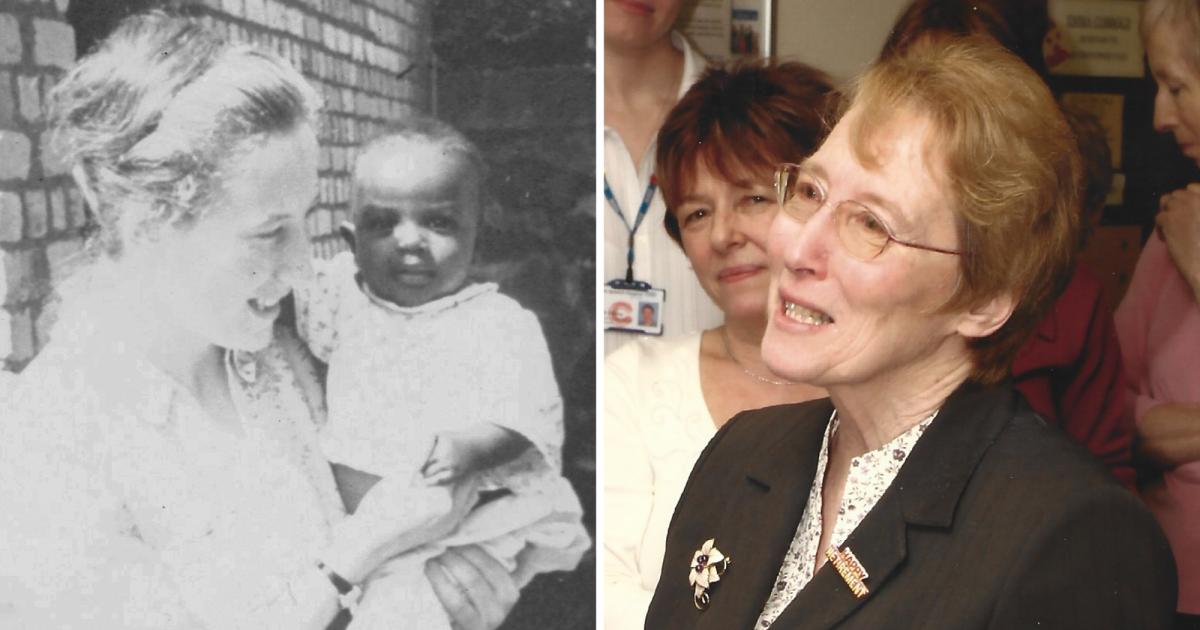
If Dr Kathleen Murtagh’s family were to describe her in just a few words, “medical warrior Queen” and “true Catholic lady” is how they would do it.
“She was an extraordinary human being,” said Kathleen’s niece, Liz Murtagh.
“This was someone who laid all of her intellect, all of her will, all of her intelligence, all of the gifts she was born with, to the service of other people from the get-go.
“It’s stunning, really.”
Dr Kathleen Murtagh (Image: Liz Murtagh)
Kathleen was born in Prestatyn, Wales, on February 20, 1945. Life was by no means easy, and the family moved around following the end of the Second World War. One of the places they lived was a slum in Poole, where Kathleen’s brother, Brian, recalled seeing rats scurrying about the basement.
The children’s mother scrimped and saved until she could afford a house in Swanage, Dorset, where she opened a guesthouse.
Kathleen was educated by nuns at the local convent. She was fiercely intelligent from a young age, and soon the sisters admitted that they had taught Kathleen all they could, and she was transferred to an Ursuline convent, where the education was somewhat better.
In those days, explained Liz, Catholic girls who had been educated by nuns simply did not decide to become doctors.
“They decided to be nurses until they got married and had babies,” Liz explained. “It was a really incredible thing for a girl with her background to decide to do, but she was so strong willed, so determined, so committed and so clever, and that’s what she did.”
Kathleen studied hard at Sheffield University before departing for Uganda, where she qualified as a paediatrician. The next stop was Papua New Guinea.
In April 1980, Rhodesia became Zimbabwe, and Kathleen returned to Africa, becoming a senior authority on paediatrics in the newly-formed country.
The 1980s were difficult time for Zimbabwe; Gukurahundi massacres would continue in the Matabeleland and Midlands provinces until 1987, mass killings later shown to have been ordered by then-Prime Minister Robert Mugabe.
However, Kathleen was determined to remain in the country and share her knowledge. She also believed passionately in equality, and was not prepared to go against her principles, even when this attracted attention.
“There was still a hospital for black people and a hospital for white and Asian people,” explained Liz. “My aunt wasn’t having that. She pushed very hard for allocation to be on the basis of medical need and medical outcome, not the race of the person.
“She did a lot of work there in Zimbabwe, raining other doctors, training paediatricians, training paediatric nurses.
“She transformed lives.”
Dr Kathleen Murtagh, holding a baby she cared for in Zimbabwe (Image: Liz Murtagh)
The tense political climate and Kathleen’s reputation for speaking her mind led Kathleen to purchase three large Rhodesian Ridgeback dogs, who were so fiercely loyal that they could not even allow Kathleen to swim, leaping into the pool to save their beloved owner, who they feared was drowning.
Kathleen would be accompanied by one of her dogs wherever she went; the nurses would be relieved when Dr Murtagh was on night duty, for all the undesirables would slink away.
After many years of working in Zimbabwe, Kathleen felt it was time to return to the UK. She briefly lived in Leamington Spa before settling in Higham Marsh, near Hadleigh, where Kathleen remained for the rest of her life.
Kathleen fell in love with her new Suffolk home, particularly the vast back garden – which was particularly appreciated by her three Ridgeback dogs, who had of course made the journey from Africa alongside her.
Dr Kathleen Murtagh with her beloved dogs, at her home in Zimbabwe. (Image: Dr Kathleen Murtagh)
Dr Kathleen Murtagh at her home in Higham, with her newly-decorated African inspired tiles. (Image: Dr Kathleen Murtagh)
Kathleen never lost the skills she had learned from the nuns as a young girl, and remained an adept needlewoman and keen gardener, with her flowerbeds remaining a riot of colour the whole year round.
Kathleen’s first position in the UK was with Colchester Hospital. Despite having been a senior paediatrician in Africa, she was required to join as a house officer, or a junior doctor, starting out at the ‘bottom of the ladder’ once more.
Despite the broken nights, Kathleen went through the process without complain, working her way up once more to the position of Consultant Paediatrician.
According to a former colleague, Dr Richard Doyle, Kathleen’s “dynamic style left a considerable impact by the time she moved on to a similar role in Ipswich”.
Kathleen would later move to Ipswich Hospital and was enormously respected by colleagues in both Suffolk and Essex.
Despite ending her career in the UK, Kathleen never forgot her time in Africa. She continued to support the King George VI Centre. Those at the centre remember Kathleen for her compassion towards disabled people, said Liz, and were grateful for her “tireless support”.
Kathleen also campaigned to provide sewing machines to people in Africa, knowing that access to a machine provided a person with a means of earning a living.
After retiring from medicine in 2005, Kathleen was able to devote more of her time to charity work – and, of course, her beloved garden.
Kathleen was always determined to stay in her own home until the very end. With the support of her brother Brian – who “moved heaven and earth” to help her live independently – Kathleen got her wish.
Dr Kathleen Murtagh died on December 18, aged 80.