Nigeria and Turkey have sought to strengthen bilateral relations, with both countries pledging to address visa bottlenecks and improve business mobility in a move aimed at boosting trade, investment and people-to-people exchanges.
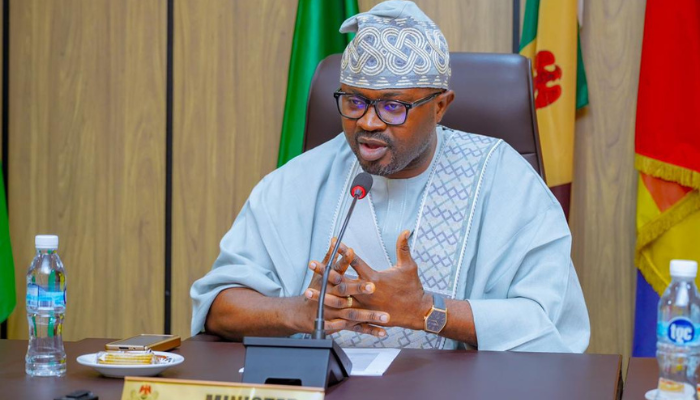
Olubunmi Tunji-Ojo, Minister of Interior, on Tuesday received Mehmet Poroy, Turkish Ambassador to Nigeria, on a courtesy visit at the Ministry of Interior headquarters in Abuja, where discussions focused on visa facilitation, investment flows and consular issues affecting citizens of both countries.
Tunji-Ojo said Nigeria and Turkey share longstanding historical and cultural ties that provide a strong foundation for deeper cooperation.
He reaffirmed Nigeria’s commitment to a smart, structured and practical approach to international partnerships, particularly those that encourage legitimate business engagement and enhance contact between citizens.
Read also: U.S. revokes over 80,000 visas, citing security concerns, criminal offences
In a statement issued by Mary Ali, Head of Press and Public Relations at the Ministry of Interior, the minister emphasised that Nigeria remains open to genuine investors and businesspeople, stressing that restrictive or unclear visa processes undermine mutual economic interests.
Poroy disclosed that recent collaboration between Turkish authorities and Nigeria’s Ministry of Interior has led to significant improvements in visa facilitation for Nigerian businesspeople travelling to Turkey.
According to him, visa applications are now processed locally, with verified Nigerian businesspersons enjoying faster processing timelines of between three and four days.
However, the Turkish envoy raised concerns over difficulties encountered by Turkish nationals seeking to visit Nigeria for trade fairs, investments and other commercial activities.
He noted that conflicting information regarding Nigerian visa requirements for Turkish citizens has created confusion among applicants, and called for written clarification to enable the Turkish Embassy to properly guide prospective travellers.
A key request presented by Poroy was the inclusion of Turkey in Nigeria’s electronic visa (e-visa) regime.
He explained that the absence of a Nigerian visa office in Istanbul poses logistical challenges, as applicants are compelled to travel to Ankara to complete visa processes.
Inclusion in the e-visa system, he said, would significantly enhance business mobility and ease travel between both countries.
Responding, Tunji-Ojo assured that denying visas to genuine Nigerian or Turkish businesspeople is not in the interest of either country.
He reiterated the ministry’s commitment to transparency, sustained dialogue and continuous improvements in visa administration, adding that Nigeria is keen to remove unnecessary barriers to lawful travel and investment.
The meeting also touched on concerns relating to the recognition of Nigerian marriage certificates by foreign missions.
The minister clarified that marriage certificates issued under Nigerian law are constitutionally valid and should not be subjected to additional verification requirements.
Poroy acknowledged the concern and pledged to review the Turkish Embassy’s procedures on the matter.
Both parties agreed to maintain continuous engagement to address outstanding issues and further strengthen diplomatic relations, economic cooperation and mutual trust between Nigeria and Turkey.