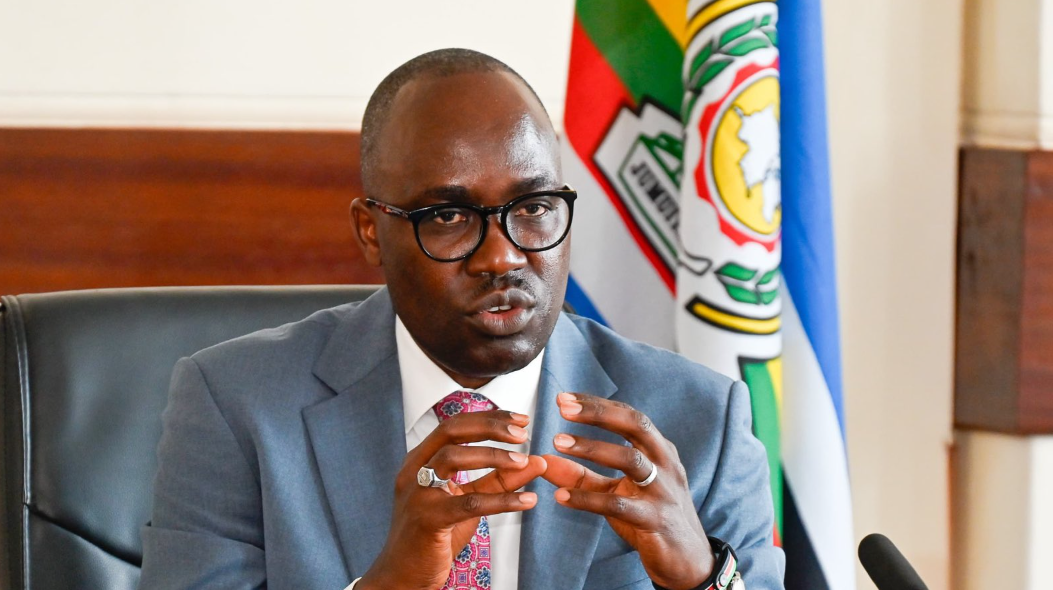
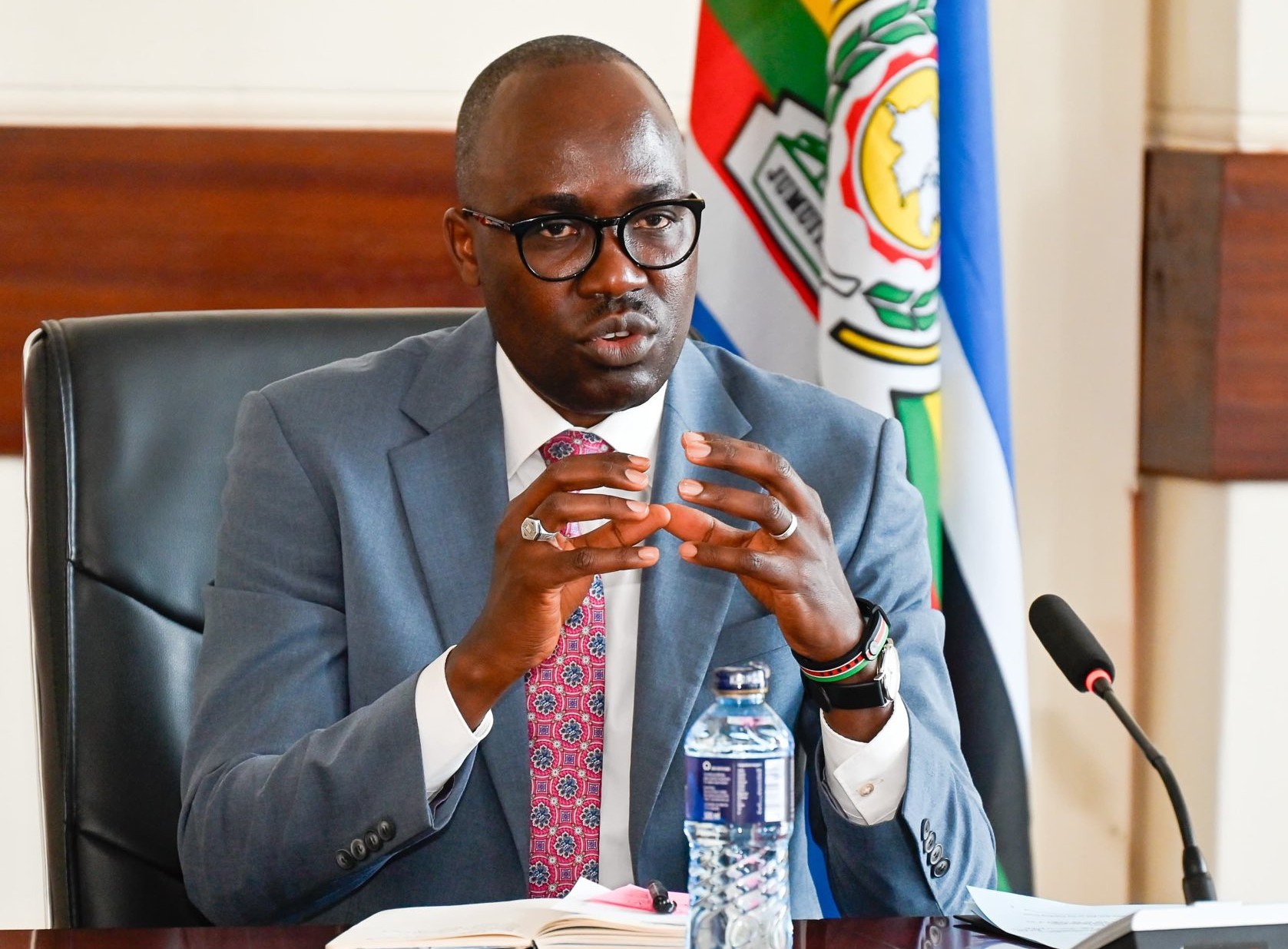
 Principal Secretary for Foreign Affairs, Korir Sing’Oei. /KORIR SING’OEI/X
The government has dismissed claims that Kenya has halted negotiations with China on a preferential trade agreement to focus on renewing its participation in the African Growth and Opportunity Act (Agoa), calling the reports misleading and unfounded.
The clarification follows a local media report alleging that Nairobi shelved ongoing talks with Beijing under pressure from Washington, prioritising efforts to regain access to Agoa.
The report, citing unnamed sources, claimed the China deal was on hold pending approvals by the Cabinet, Parliament, and President William Ruto.
Agoa, enacted in 2000, allowed qualifying goods from eligible African countries to enter the US market duty-free. Over its 25-year lifespan, the programme covered more than 1,800 products and became a cornerstone of US–Africa trade.
The framework expired on September 30, 2025, although discussions to extend or reauthorise it are ongoing in Washington.
Responding to the claims, Principal Secretary for Foreign Affairs Korir Sing’Oei said Kenya’s engagement with China had not been suspended and was at an advanced stage.
“This report is completely unfounded,” Sing’Oei said in a statement posted on X.
He revealed that Kenyan and Chinese negotiating teams concluded talks on an interim framework late last year.
“On 19th December 2025, our teams concluded negotiations of an Early Harvest Arrangement for the Agreement on Economic Partnership for Shared Development,” he said.
The arrangement is intended to unlock immediate benefits while negotiations continue on a comprehensive economic partnership agreement.
Sing’Oei added that both sides have already exchanged tariff schedules and agreed on rules of origin for products eligible for preferential treatment, underscoring progress in the talks.
He emphasised that Kenya’s pursuit of renewed Agoa access does not undermine its engagements with other partners.
“We see no tension between concluding a market access arrangement with China and our push for Agoa reauthorisation, as well as a separate Bilateral Trade Agreement with the United States,” he said.
The expiry of Agoa has affected Kenya’s export sector, particularly textiles and apparel, which had relied on duty-free access to the US market.
Industry stakeholders estimate that more than 66,000 direct jobs have been lost since the programme lapsed, with factories scaling down operations or shutting down.
Exporters have also faced higher costs following the re-imposition of US tariffs, raising concerns about investor confidence and long-term market stability.
Against this backdrop, the government has intensified diplomatic efforts to secure Agoa’s renewal while simultaneously deepening trade ties with other major economies.
Sing’Oei affirmed that Kenya’s strategy focuses on diversifying market access and safeguarding its economic interests globally.