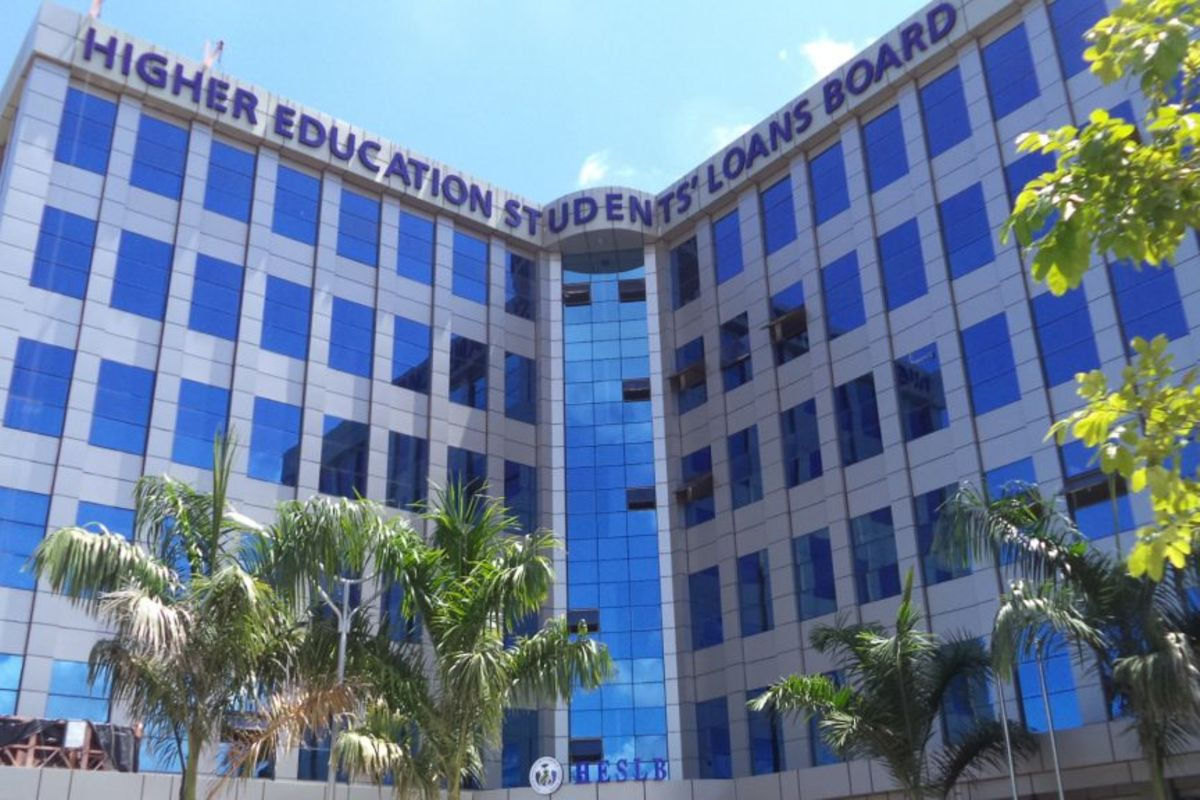
Dar es Salaam. As Tanzania expands access to higher and middle-level education to meet its development ambitions, the pressure on public financing has never been clearer, according to The Citizen.
The annual performance report for the 2024/2025 academic year from the Higher Education Students’ Loans Board (HESLB) reveals that the board has fundamentally transformed access to post-secondary education. However, it is also reaching the limits of what public funds alone can sustain.
For the 2024/2025 academic year, HESLB allocated Sh753.7 billion to support 239,331 bachelor’s degree students, which includes 81,079 first-year students and 158,252 continuing students.
This level of financing has made HESLB one of the most significant tools for social mobility in the country.
As the Board itself notes, its interventions are driven by the understanding that some individuals miss out on opportunities due to circumstances beyond their control, and that the social status of others can change significantly over time.
This philosophy is evident in the decision to fund 7,776 continuing students who initially missed out on loans due to incomplete applications or budgetary constraints.
Their reintegration into the loan system cost 22.8 billion Shillings, allowing them to continue their academic journeys that might otherwise have ended prematurely. Few public programs illustrate inclusive growth as clearly.
However, demand is growing faster than the available allocations.
The current phase of HESLB’s evolution is marked by a deliberate effort to widen the scope of beneficiaries. Under the new educational and skills policy, technical and vocational education and training (TVET) and diploma programs have become priorities alongside undergraduate and postgraduate studies.
Since the introduction of diploma financing in the 2023/2024 academic year, access to middle-level education has significantly increased.
In the 2024/2025 academic year alone, Sh23.9 billion was allocated to 9,144 diploma students, representing a 29.68 percent increase in headcount from the first year of implementation.
The number of beneficiary institutions also rose from 54 to 177, reflecting both rising demand and growing institutional confidence in the scheme.
According to the report, this policy shift was driven by the recognition of the critical role that middle-level professionals play in national development, particularly in sectors such as health sciences, education, transport and logistics, energy, mining, agriculture, and livestock.
These are precisely the areas where skills shortages threaten productivity and service delivery. At the postgraduate level, HESLB allocated 1.4 billion Shillings to support 308 new students, including 88 Master’s and 20 PhD candidates, plus an additional Sh806.4 million to continuing Master’s and PhD students.
For the first time, loans were extended to public servants pursuing STEM programmes and to students at the Law School of Tanzania, which includes both the July and January intakes.
The inclusion of Master’s programmes under the Samia Scholarship framework reflects a growing policy recognition that advanced skills and research capabilities are essential for industrialization and innovation.
Despite these achievements, HESLB acknowledges there is a structural challenge. There remains a significant number of applicants from non-priority diploma programmes applying for loans, indicating a need to reconsider the financing scope for this category. However, widening this scope requires additional funding.
Education economist Dr Haji Simfukwe argues that relying solely on government financing is no longer sustainable.
“Tanzania has successfully socialized the cost of higher education through HESLB, but the next phase must involve blended financing, where government, the private sector, and development finance share the risk,” he stated.
Commercial banks are already beginning to explore this space. Institutions such as CRDB and NMB have introduced “student-centered loan products,” often aimed at covering fee top-ups, accommodation, or tuition for university students not supported by HESLB.
While these initiatives are still small in scale, they demonstrate a desire for education to be viewed as a long-term investment.
“Graduates financed through HESLB are today’s teachers, engineers, health workers, and entrepreneurs,” noted education policy analyst Dr. Esther Mwaikambo. “The private sector directly benefits from this talent pool. Co-financing student loans is not charity; it is workforce development.”
A structured public-private partnership could enable banks, pension funds, and large employers to co-finance priority programs, especially in STEM, TVET, and postgraduate training.
“Risk-sharing mechanisms, payroll-linked repayments, and tax incentives could make participation attractive while providing protection for students,” Dr. Simfukwe added.
The challenge lies in affordability and equity. According to Dr. Simfukwe, without appropriate safeguards, private capital may only favor low-risk, high-return fields of study.
“This is where HESLB’s experience in means testing, recovery systems, and social targeting becomes invaluable.”
After three decades, the evidence is clear: Tanzania is being built by the beneficiaries of HESLB. From rural teachers to mining engineers and PhD researchers, the loan scheme has quietly contributed to shaping the country’s human capital.
The next leap forward in reaching more students who still miss out will depend on increasing funding and expanding opportunities.