 The
The
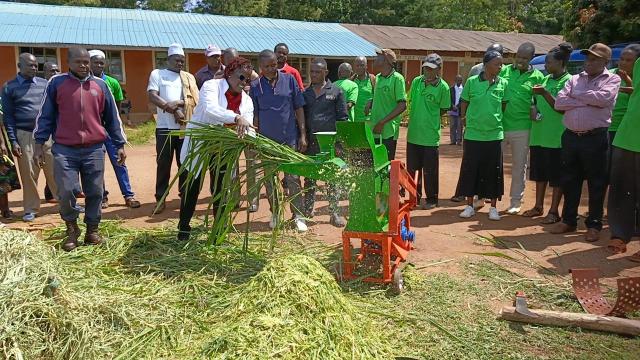
Alliance senior research assistant, Ruth Odhiambo, demonstrates to farmers from Kisumu and Vihiga counties how a multipurpose feed chopper is used for forage
processing./AGATHA NGOTHO
When rains fail, dairy farmer Millicent Atieno from Kisumu
said her cows are the first to feel it.
“Milk drops immediately. You start buying commercial feed,
but it’s expensive, and sometimes the quality is poor. You can’t make a profit,”
she said.
In neighbouring Vihiga, Ernest Omondi said the dry season is his worst nightmare.
“Without fodder, you are just praying. I want to learn
how to grow and store feed, so we don’t suffer every year,” he said.
Livestock farmers continue to grapple with chronic seasonal
fodder shortages. Erratic rainfall, competition for land between forage and
food crops, and loss of natural grazing areas have made feed scarcity a
persistent production constraint.
Many farmers lack access to improved forage varieties,
conservation skills and machinery for processing feed, often pushing them to
rely on low-quality fodder or costly commercial concentrates that erode
profits.
To address this, the Alliance of Bioversity International
and CIAT (The Alliance), through the Biodiversity for Resilient Ecosystems in
Agricultural Landscapes (B-Real) project, is working to promote climate-smart
dairy systems, improved forage production, and more resilient food systems.
During a recent field day in Western Kenya, farmers from
Kisumu and Vihiga engaged with scientists, county officials, seed companies and development partners to test, observe and compare a wide range of fodder
varieties—grasses and legumes—that are adapted to the region’s conditions.
The demonstrations showed how improved forages can boost biomass production and
feed quality while supporting higher milk yields.
The scale of the feed gap remains alarming. According to the
Ministry of Agriculture, Kenya faces an annual deficit of 33 million tonnes of livestock feed, one of the sector’s biggest constraints.
Livestock
PS Jonathan Mueke said the country requires 55 million tonnes
annually, yet only about 40 per cent is being met. Of the 22 million tonnes
produced, 46.3 per cent is lost post-harvest due to poor storage.
To close the gap, he said the government is
investing in feed production and plans to establish feed storage hubs in every
county to reduce spoilage.
“In the last two years, we have invested more than Sh55
billion to support enhanced local feed production to meet demand and cut
imports,” the PS said. He said the investments also aim to strengthen
resilience against drought, climate variability and global shocks such as the
Ukraine-Russia conflict.
During the field day, farmers rotated through hands-on
demonstrations on harvesting fodder at the right stage and making high-quality
silage and hay, critical practices for ensuring feed availability during the
dry season.
Machinery such as choppers and balers was showcased to illustrate
how mechanisation reduces labour burdens, lowers losses and improves the
consistency of conserved feed.
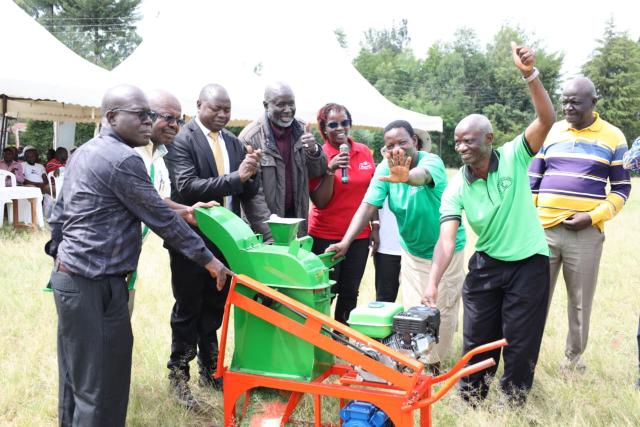
Three farmer groups—Agoro East and Jimo East in Kisumu, and
Lyana Ginga in Vihiga—received multipurpose feed choppers to kickstart forage
processing within their communities.
For some farmers, the exposure shaped clear priorities.
“I
have decided to grow the varieties that boost milk production and then conserve
fodder during the rainy seasons for the dry periods,” a participant said.
“This platform allows farmers to see, touch and compare
different forage options,” senior research assistant at The
Alliance Ruth Odhiambo said.
“It helps demystify fodder technologies and builds confidence in
adopting practices that can improve livestock productivity. Silage and hay
making are powerful tools for climate resilience,” she said.
County governments see economic potential beyond production.
Vihiga County director for agriculture, livestock and fisheries Reuben Chumba pointed to growing opportunities for youth along the forage value chain from
digital marketing and transport to value addition and organic input supply.
He said last year, Vihiga county launched an agroecology policy with support from The Alliance and other partners.
“The policy promotes
sustainable fodder production through circular economy approaches, intensive
agriculture and improved breeding. This will not only enhance a sustainable
livestock sector but also build community resilience,” Chumba noted.