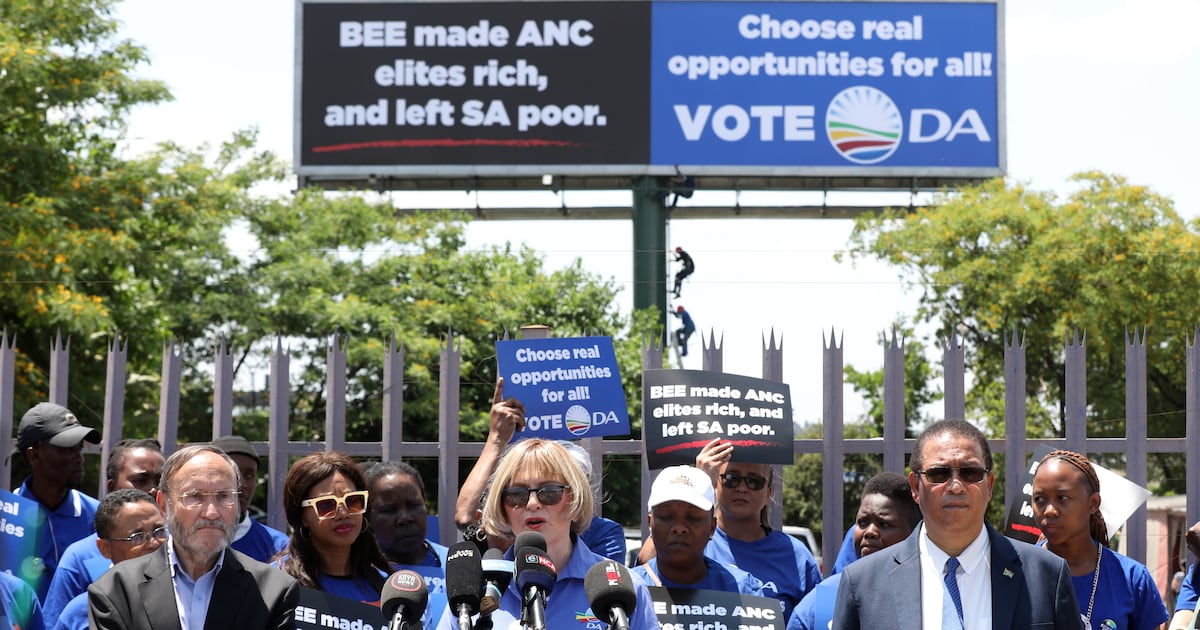
Plans are under way to secure a seat for DA federal council chair Helen Zille in the Johannesburg city council, sources said on Tuesday.
Zille is expected to join via a proportional representative (PR) vacancy, with DA insiders saying she could take up a seat as early as March.
Zille herself has told Business Day she would be receptive to the move despite being lobbied to challenge John Steenhuisen for the DA’s top leadership post at the party’s leadership conference in 2026. She is on record as saying she intends to dedicate herself fully to the Johannesburg mayoral campaign.
An early appointment to the council could help her acquaint herself with the city’s challenges firsthand before the expected gruelling contest to lead the metro in South Africa’s economic hub.
The City of Johannesburg municipal council consists of 270 seats. These are split equally between 135 ward seats and 135 proportional representation (PR) seats. PR seats are allocated to ensure the final number of total seats each party holds is proportional to the total percentage of votes they received across the metro.
“What I can confirm is that there will be a PR seat available in the near future. As a party of law and order, we will follow all due processes when allocating the seat,” said councillor Chris Avant Smith, the DA Johannesburg metro deputy chief whip.
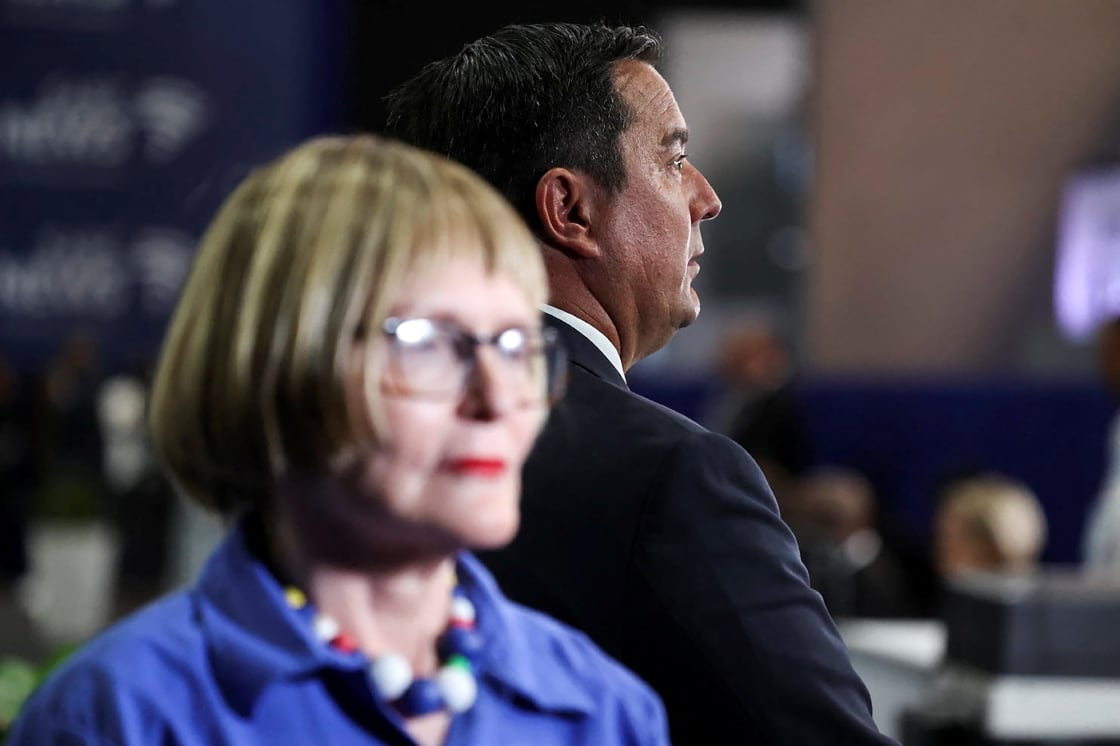 DA federal council chair Helen Zille and DA leader John Steenhuisen. (Alet Pretorius/file image)
Avant Smith said he could neither confirm nor deny that Zille was on the shortlist.
The ANC, which until 2016 had a strong majority in the City of Johannesburg, has since seen a dramatic decline in support due to apparent mismanagement and a social backlash against allegations of corruption, forcing it to enter into coalition politics to govern again. The DA fancies its chances of toppling the ANC on the back of this discontent.
The fight for control of the city is considered the most critical contest in South Africa due to its unmatched economic weight, its role as a predictor of national political trends and its status as a “test case” for coalition stability.
The metro city generates about 17% of South Africa’s national GDP. It is also a corporate hub with a substantial number of South African companies having their headquarters in the metro, and home to the Johannesburg Stock Exchange (JSE), the largest in Africa.
Since the 2016 local government elections, Johannesburg has had nine executive mayors as the metro grappled with the new phenomenon of coalition politics.
Both Zille and incumbent mayor Dada Morero have told Business Day in separate interviews that they are willing to work together in a coalition should they both fail to get an absolute majority in the next municipal vote.
Also read:
Zille gets rival parties scrambling
Helen Zille vows to tackle Joburg’s endemic corruption if elected mayor