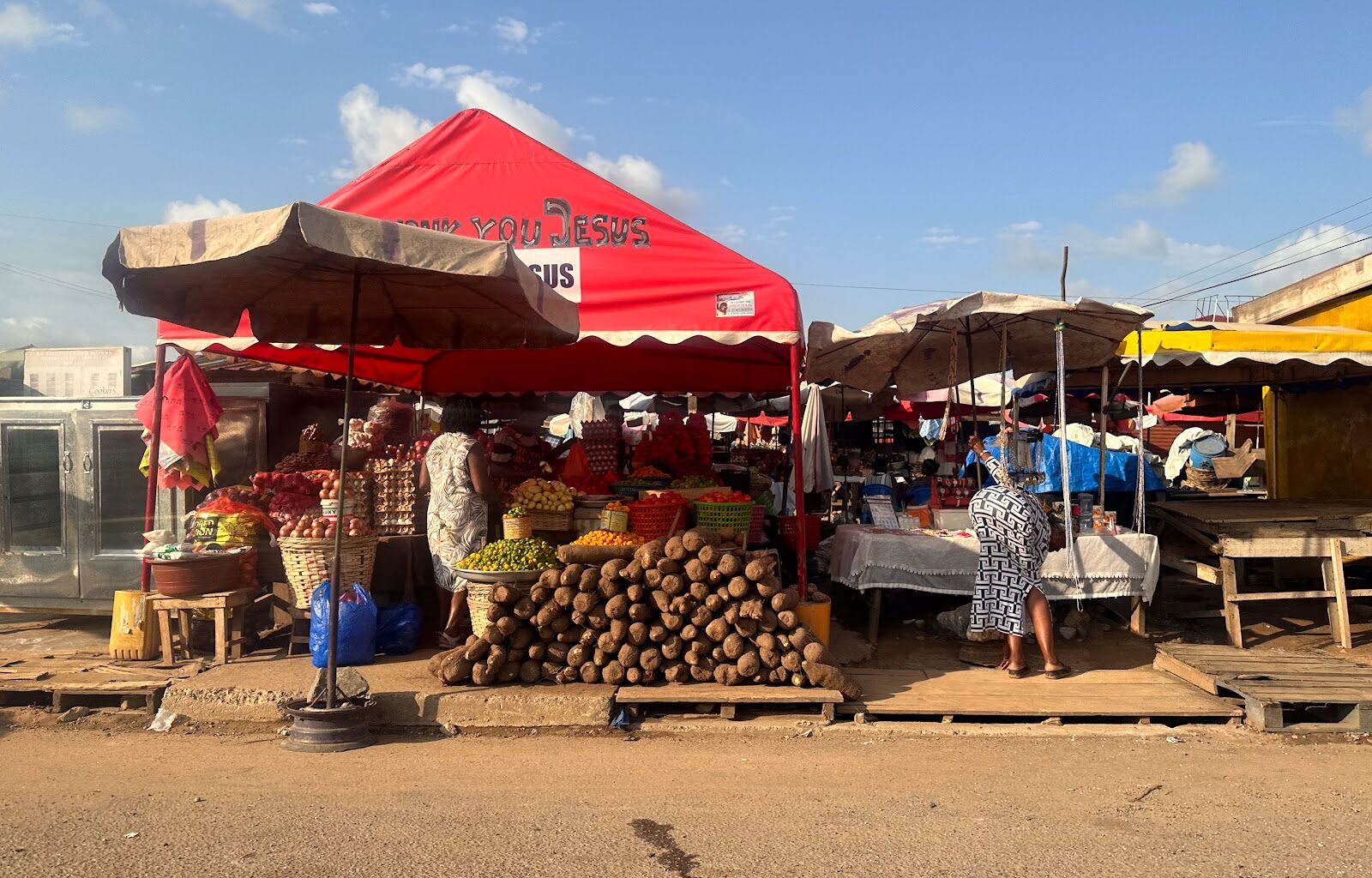
ACCRA, Ghana — Tourist buses packed with Black Americans and other travelers from the Black diaspora rolled through this vibrant bustling capital city when I visited in November.
At Vida e Caffe, my favorite cafe to get an espresso here, I encountered a couple in transit.
Sipping an espresso while waiting for the truck shuttling me around to be repaired, I saw two more visiting couples strolling by hand in hand. Many proudly said that they are here to stay.
I have heard of vast gated neighborhoods housing plenty of expats, while others live among locals. Although cost of living is a factor in one’s choice to move to West Africa, many sourced a call from the spirits to reconnect to roots and culture.
The desire for Black connectedness can be seen in every aspect of life, but there is a balance of adjusting to new norms and dismantling preconceived notions and embedded colonial duplicity.
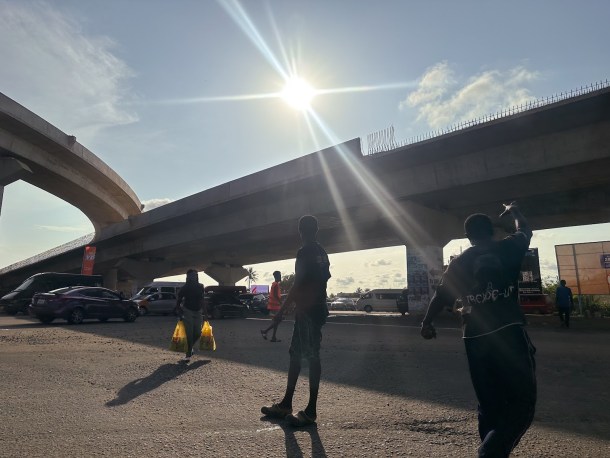 Accra-Tema Beach Road, Nungua Main Road and Nii Odai Ayiku Road converge at this often congested junction. Louis Bryant III OBSERVER
Throughout history, Black Americans and others from the diaspora have chosen to move back to Africa, as W.E.B. Du Bois did near the end of his life.
An estimated 1,500 Black Americans have relocated to Ghana since the government launched its “Year of Return” program in 2019. The number is higher when you factor in folks staying on extended tourist, student or business visas.
Rita Marley has a mansion in the mountains of Ghana that she has resided in for over two decades. Jeffrey Atkins, better known as Ja Rule, has tried to bring more education to the nation. Rashad McCrorey, an entrepreneur and travel expert, moved to Ghana during the pandemic and now serves as tourism chief in the country’s central region. R&B singer/songwriter Kelis documents and offers commentary on her experience living in Kenya.
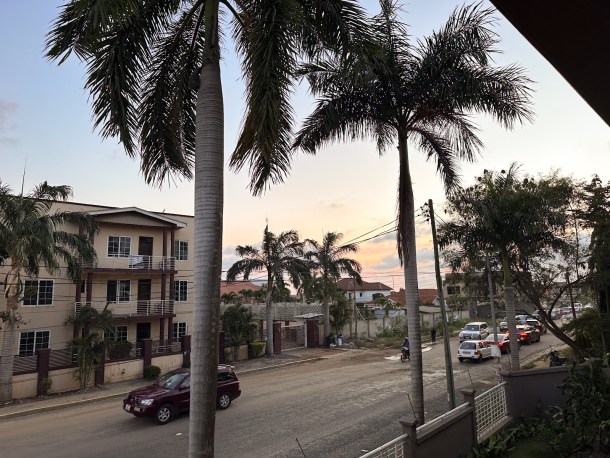 Sunset from an Airbnb in the Spintex Road area, a short distance from the international airport. Louis Bryant III OBSERVER
While in the Adenta area of Accra I visited the Gut Care restaurant, a location popular with expats that hosts events to build community and health awareness, with a friend of my father’s from their college days at the University of Washington. Johnny Arnold, 81, moved here a year ago from Seattle. Arnold also lived in Panama before coming here, and here is where he wants to invest his time and energy.
Over a gut-conscious dinner, we met two other individuals waiting for their meals to take home.
Metcher-Aa Ukhut moved to Accra three years ago from Washington D.C. and Errol Samuels, a four-year Ghana resident, grew up in Barbados and lived in the United Kingdom most of his adult life. “I came in 2020 to go on holiday for two weeks and decided to stay,” Samuels says. “I rented a house, went back to the U.K., sold my flat and came back.”
Ukhut’s response was spiritual: “Mother Africa has been calling me for a long, long time. When the door opened, I ran through.”
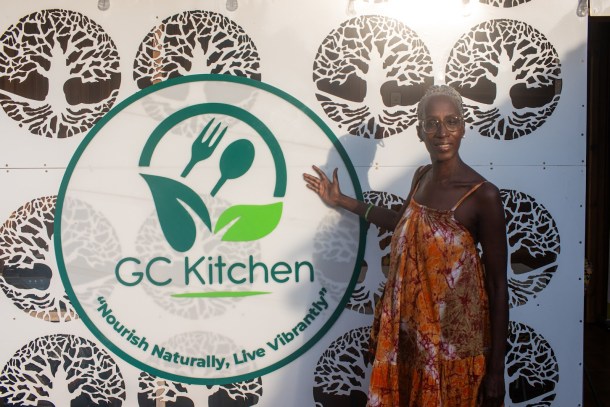 Metcher-Aa Ukhut, a former resident of Washington D.C., at the entrance to Gut-Care, a restaurant she and other expatriates frequent in Accra, Ghana. Ukhut has lived in Accra for three years. Louis Bryant III OBSERVER
The next question is rarely asked but often addressed by expats: how do you generate income living here?
Having that figured out before arriving could make life much easier.
Ukhut ran an Airbnb. “I didn’t lose any money,” she says. “It stayed booked.”
Arnold also is considering turning his newly built four-bedroom home into an Airbnb. The proximity to the airport and beach make it potentially good for bookings, but noise from the road and neighbors as well as an active church could affect his bottom line.
Samuels, too, is launching a business, having planned to open a day spa Dec. 1.
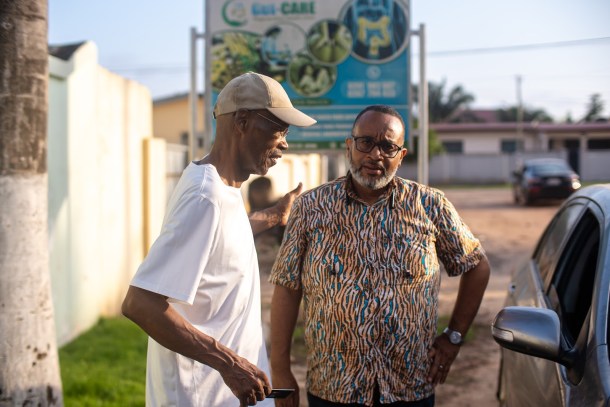 Former Seattle resident Johnny Arnold, left, and Barbados native Errol Samuels at Gut-Care. The two favor the restaurant for its carefully curated meal choices, which tend to be more sensitive to expatriates making the transition to West Africa. Louis Bryant III OBSERVER
Perusing the menu of vegetarian and vegan offerings, I discovered specially curated meals that offer healthy meal selections and ways to cleanse your gut. A number of expats frequently select Gut Care if they are choosing to eat out. Otherwise, fresh fruits and vegetables served with eggs, chicken, goat and beef allow residents to prepare simple, healthier dishes often accompanied with rice, lentils or stew.
“I eat far better here than I did at my old home,” Ukhut says.
“Same,” Samuels adds. “In the U.K. I ate microwave meals!” He ordered black mushroom soup with a fruit kombucha beverage.
The three expats exchanged information and vowed to connect in the near future to continue to build community. Arnold intends to work with the intention of offering collaborative opportunities for the Ghanaian public. He has a strong interest in investing back into the society that has welcomed him so graciously. Arnold prefers to live among locals and develop growth by integration instead of through establishing communities that separate and alienate expatriates.
Related