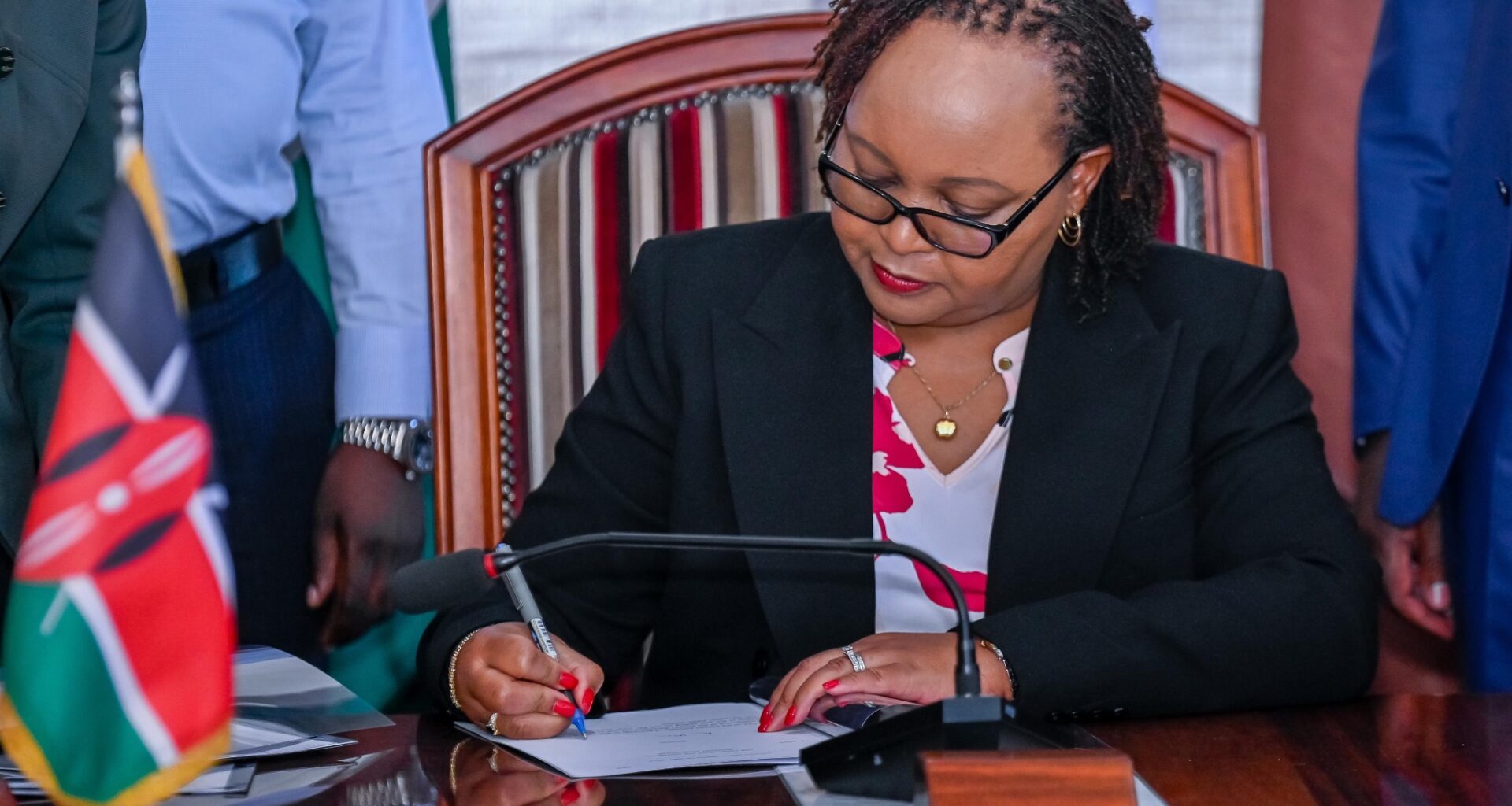
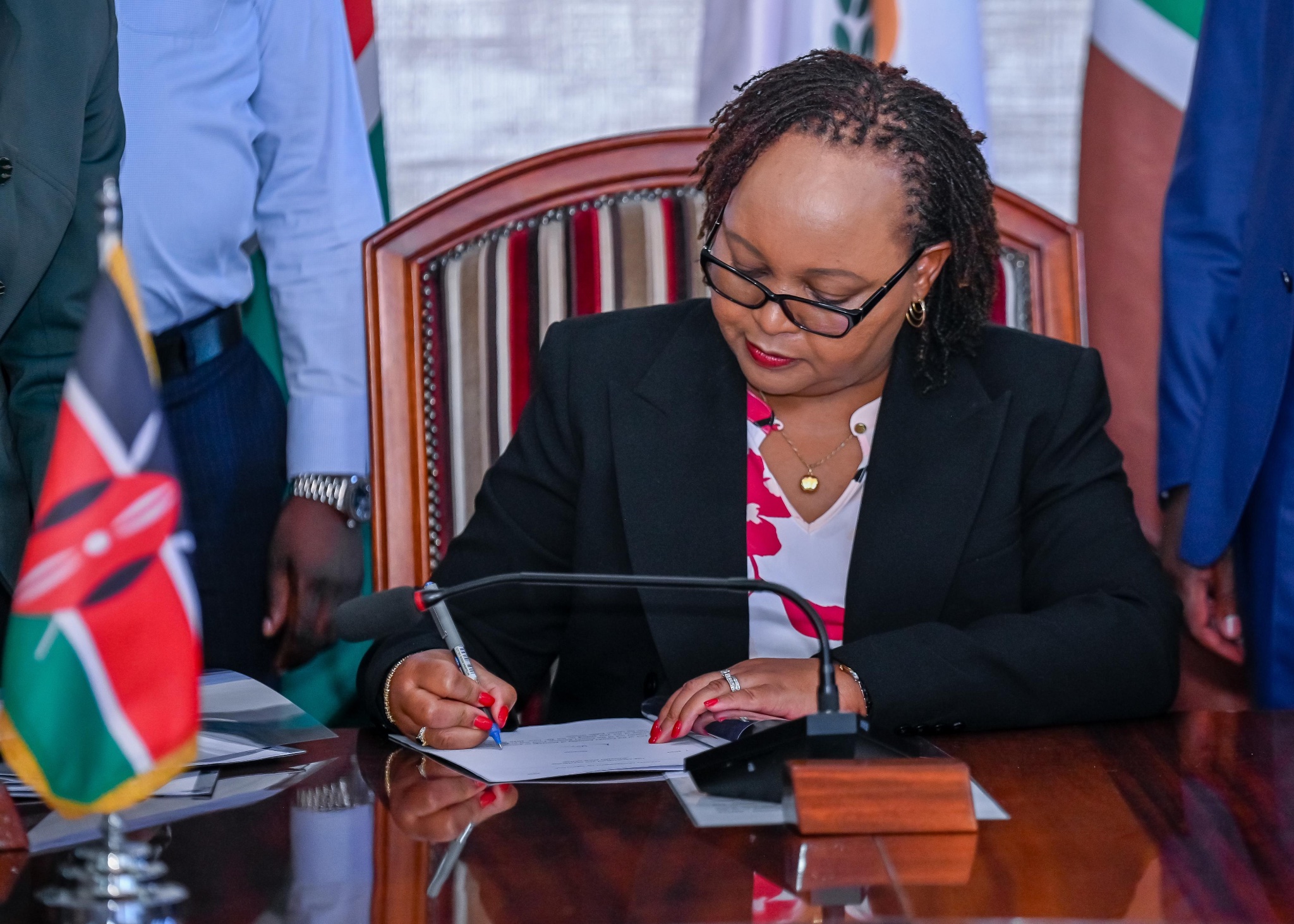
 Governor Anne Waiguru said the Intergovernmental Partnership Agreements have been cleared and forwarded to the Controller of Budget for final processing. /ANNE WAIGURU/X
Kirinyaga students and their families have received a major boost after the county government secured approval to resume the disbursement of bursaries and scholarships, ending months of uncertainty over the legality of county-funded education support.
Governor Anne Waiguru on Wednesday announced that the Intergovernmental Partnership Agreements (IPAs) required to allow the county to legally administer education bursaries have been cleared and forwarded to the Office of the Controller of Budget (OCOB) for final processing.
“We have good news. The bursary/scholarship IPAs have now been cleared. The documents have been forwarded to OCOB, which should clear the last hurdle and allow the County to access the funds. We thank all stakeholders for their participation and patience,” Waiguru said in a statement.
The clearance marks a critical step in unlocking funds that had been frozen following a standoff between county governments and the Controller of Budget over whether counties are legally allowed to fund secondary and tertiary education.
Under the constitution, funding education beyond early childhood development is primarily a function of the national government.
This constitutional provision prompted the CoB to block counties from directly spending public money on bursaries for secondary school, college and university students, arguing that such spending was outside county mandates.
In the letter dated January 14, 2025, Controller of Budget Margaret Nyakang’o outlined the division of functions between the county and national governments.
She said students joining universities and other tertiary institutions should not be getting bursaries from county governments as that is a reserve of the national government.
“Part 1 of the Fourth Schedule under Section 16 designates universities, tertiary educational institutions, primary schools, special education, secondary schools and special education institutions as functions of the national government,” the letter read in part.
Nyakang’o explained that the devolved units would only have full control in funding students in other levels of education, including pre-primary and village polytechnics, as stipulated by part 2 of the Fourth Schedule under Section 9.
She said due process would be required for any county government that wish to provide bursaries to students in levels designated for the national government.
“Therefore, any requisition for withdrawal of funds to perform functions categorised as national government functions under Part I of the Fourth Schedule must be accompanied by the requisite intergovernmental agreement as prescribed,” she directed.
The decision left thousands of needy students across the country in limbo, as counties had for years stepped in to support learners who could not fully rely on national programmes such as the Higher Education Loans Board (HELB) or national government bursaries.
To resolve the impasse, the national and county governments agreed on the use of Intergovernmental Partnership Agreements.
These agreements provide a legal framework through which counties can partner with the national Ministry of Education, formally granting them authority to administer bursary and scholarship programmes while remaining compliant with the constitution.
Through the IPA arrangement, counties are allowed to run education support schemes as delegated programmes, ensuring proper oversight, accountability and alignment with national education policy.
This involves the formulation of an intergovernmental agreement executed by an authorised person and published in the Kenya Gazette.
Kirinyaga’s successful clearance of its IPA means the county can now legally access and disburse funds for education support, providing relief to students who had been waiting for assistance to pay school fees and other education-related costs.
The move will especially benefit learners from vulnerable households who depend on county bursaries to remain in school, particularly at a time when the cost of living continues to strain family incomes.
The development also signals a broader shift towards cooperation between the two levels of government, ensuring that education support reaches more students without violating constitutional boundaries.
Once the Controller of Budget gives final approval, the Kirinyaga County Government is expected to proceed with the release of bursary and scholarship funds under the new legal framework.
For parents and students who have endured delays and uncertainty, the announcement offers renewed hope that education support will now flow without legal interruptions.