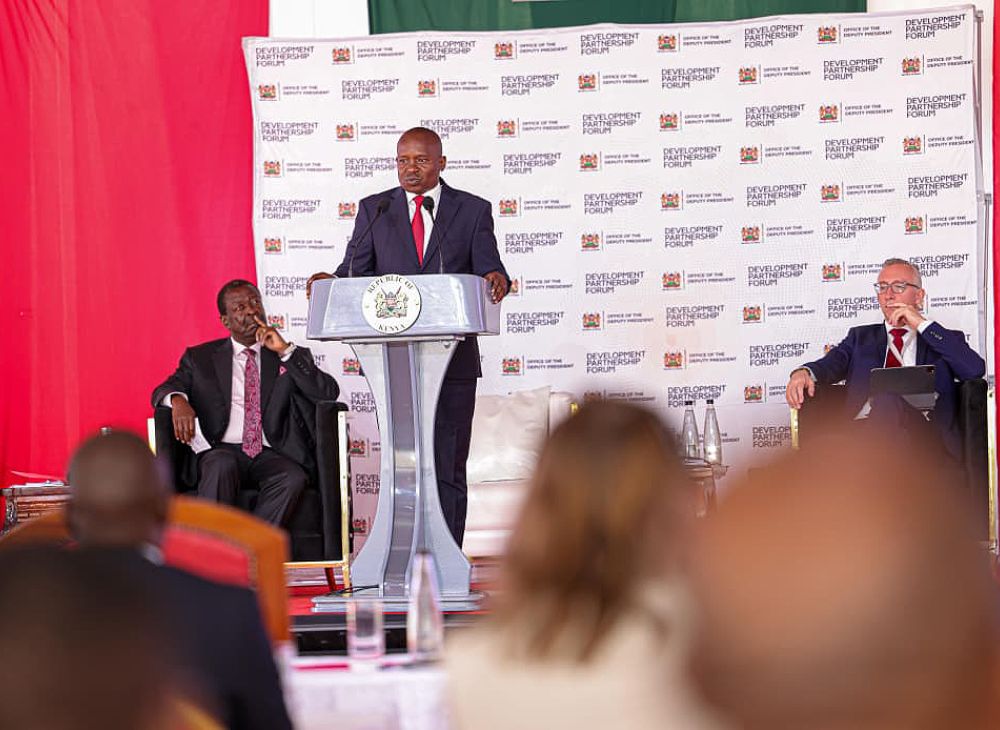
Kenya, 14 January 2026 – Deputy President Prof Kithure Kindiki has reiterated the government’s ambitious vision that Kenya can transform into a first-world nation within a generation, asserting that such a goal is neither unrealistic nor unheard of when measured against comparable success stories worldwide.
Speaking on January 14, 2026, at the 14th Development Partners Forum in Karen, Nairobi, Kindiki said Kenya’s development aspirations are grounded in practical policy pillars and reinforced by examples of nations that have made rapid leaps from developing to developed status over a few decades.
“Our next vision is clear: to transform Kenya into a first-world economy within a generation. There is absolutely no reason why Kenya cannot do it,” Kindiki said, describing the objective as achievable through concerted effort in people-centred development, technology adoption, and strategic partnerships.
Kindiki highlighted the experiences of South Korea, Malaysia and Singapore, countries that undertook decisive economic restructuring, strong human capital investment, and industrial growth to climb the development ladder in a generation or less.
He also noted that Kenya’s ambition isn’t modeled on a single case but a convergence of global lessons. Drawing from other statements he has made in recent months, Kindiki reminded critics that even large, populous countries like China transformed dramatically over roughly four decades, moving from low-income status to a major global economic force.
According to Deputy President Kithure Kindiki, the government’s development strategy is anchored on people-centred growth, with a strong emphasis on education, skills development and job creation.
He said sustained investment in human capital is essential to unlocking productivity, reducing unemployment and ensuring that economic growth directly improves the lives of ordinary Kenyans.
A second pillar of the strategy is technology and innovation, which Kindiki described as the engine of modern economic transformation. The government has increased research and development funding to 2 per cent of GDP, a move aimed at accelerating digital adoption, strengthening industrial capacity and positioning Kenya as a competitive player in the global knowledge economy.
The third component focuses on strategic partnerships, drawing on both public and private capital to finance large-scale development. Kindiki noted that instruments such as the Sovereign Wealth Fund and expanded infrastructure financing initiatives are designed to mobilise long-term investment, support industrial growth and reduce reliance on short-term external borrowing as Kenya pursues its first-world ambitions.
The Deputy President also emphasised that mega and medium dams, expanded irrigation systems covering millions of acres, and modern transport infrastructure are not just boosters of economic growth but job creators and drivers of industrialisation.