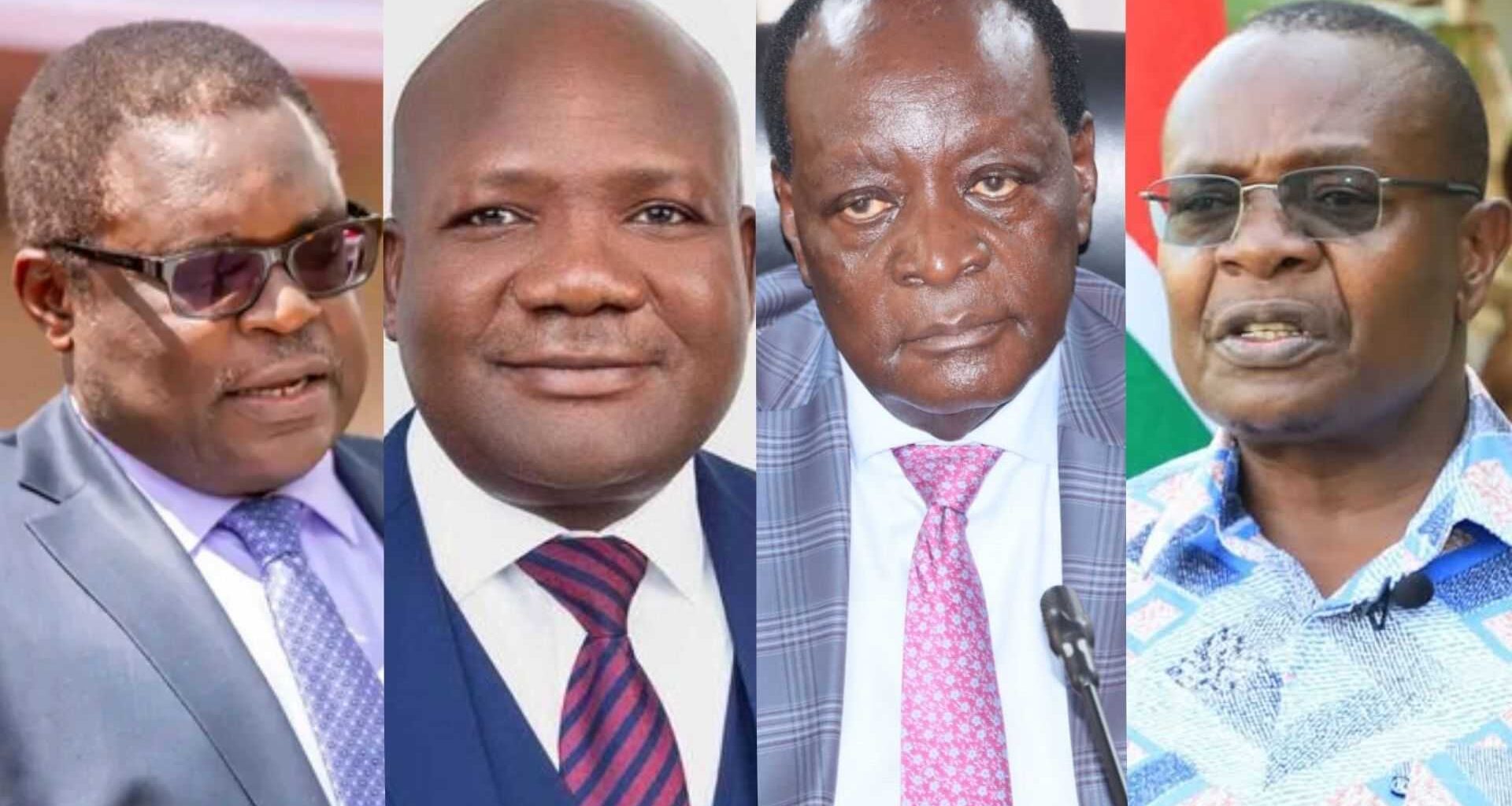
Kenya, 14 January 2026 – Four governors from Western Kenya have publicly endorsed the decision by ODM’s Central Management Committee (CMC) to initiate formal negotiations with the United Democratic Alliance (UDA), signaling a calculated push to position the region at the heart of Kenya’s 2027 political chessboard.
Speaking in Kakamega, the governors — Fernandes Barasa (Kakamega), Paul Otuoma (Busia), Wilbur Ottichilo (Vihiga), and Kenneth Lusaka (Bungoma) — described the move as both strategic and necessary for the region’s political unity and development agenda.
Governor Barasa, a key Western Kenya political figure, framed the negotiations as pragmatic politics rather than a departure from ODM’s core ideology.
“Politics is about outcomes for our people, not permanent hostility,” he said.
“Western Kenya must be at the table where decisions are made, not knocking from the outside.”
Barasa emphasised that formal engagement with UDA is essential for Western Kenya to strengthen its bargaining power, particularly in securing national projects, increased allocations, and improved delivery of critical services such as health, education, and infrastructure.
Busia Governor Paul Otuoma echoed these sentiments, pointing out that cross-party cooperation within the framework of a broad-based government has already delivered measurable benefits to counties in the region. “When leaders talk, wananchi benefit,” Otuoma said.
“ODM’s engagement with UDA is about ensuring stability and resources for our counties as we approach 2027.”
According to him, a united regional approach is not just political maneuvering—it is a practical strategy to safeguard economic interests and prevent Western Kenya from being sidelined in national decision-making.
Vihiga Governor Wilbur Ottichilo went further, framing the ODM–UDA negotiations as a defensive measure against political marginalisation.
“We cannot afford to be spectators while others negotiate power and development,” he said.
Ottichilo stressed that unity among Western leaders is essential to amplify the region’s voice in national politics, arguing that strategic alliances—while sometimes requiring compromise—can yield tangible benefits for ordinary citizens. He called for a united Western front that would ensure the region’s development priorities are represented, irrespective of shifting national alliances.
Governor Lusaka on his part described the talks as a necessary evolution of Kenyan politics.
“This is not about abandoning principles, but rather it is about advancing the interests of our people,” he said.
Lusaka noted that ODM’s willingness to engage UDA demonstrates a shift from protest politics to deal-making politics—a transformation he argued is critical for regional leaders seeking meaningful influence in government.
“Being in a coalition does not dilute our voice. It enhances our ability to negotiate for what Western Kenya deserves,” he added.