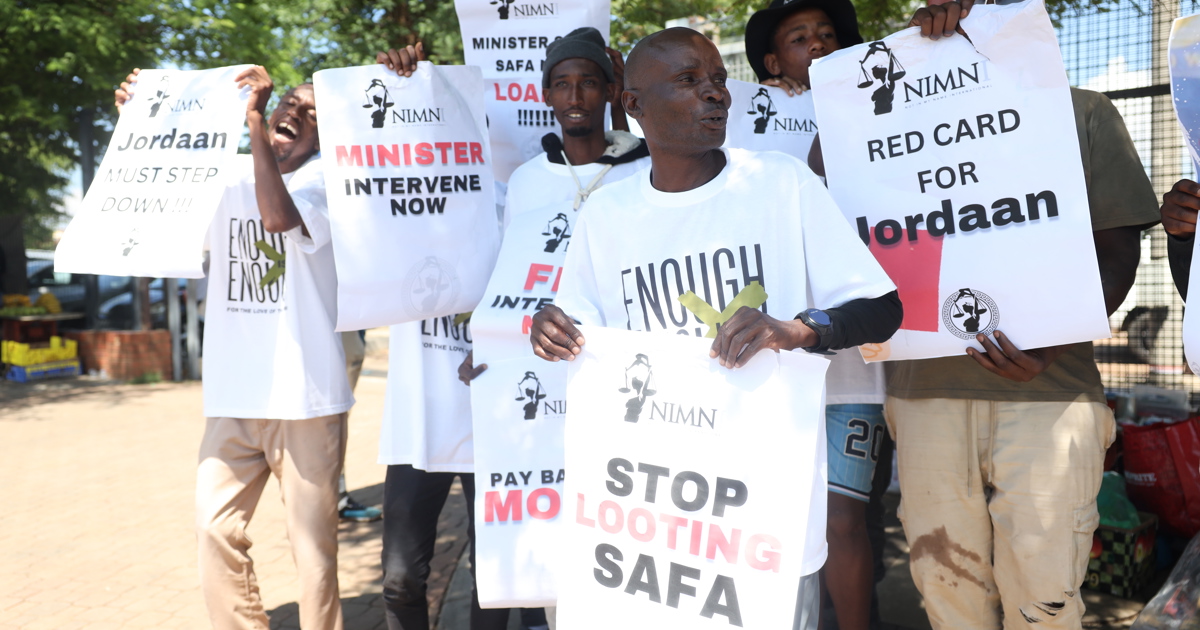
The case originated from a 2020 complaint by former SAFA National Executive Committee member Willie Mooka, who characterised the organisation as having become “a milk cow for personal gain.”
The investigation has been methodical but slow – procedural delays, recusal applications, and defence motions have postponed the trial multiple times. As of December 2025, proceedings are scheduled to begin in February 2026.
In March 2024, a Hawks raid on SAFA headquarters seized laptops and documents, uncovering additional irregularities. PwC, SAFA’s auditors, had resigned in 2019, citing reputational risk – an early warning signal that went unheeded by FIFA and other oversight bodies.
On December 5, 2025, Jordaan appeared at Palm Ridge Magistrate’s Court, flanked by lawyers, trailed by cameras. For nearly a decade, he had projected an image of untouchability – an administrator with liberation credentials, political connections, and the global prestige of having helped deliver the 2010 World Cup.
Inside the courtroom, packed with journalists and court officials shuffling files thick with bank records and forensic summaries, that authority appeared diminished. The symbolism was unavoidable: for the first time, the president of South African football was answering to a criminal court.
Jordaan pleaded not guilty. His supporters framed the case as political persecution. His lawyers challenged procedural details. SAFA issued statements affirming stability and continuity.
But proceedings were adjourned. Outside, Jordaan walked past reporters without comment.
SAFA routinely denies all allegations
SAFA’s response to the accumulated allegations has been consistent: deny, deflect, and characterise criticism as motivated by ulterior agendas.
The organisation insists the Legacy Trust was managed lawfully under FIFA oversight. It points to audit reports as evidence of compliance. It describes Henderson’s forensic investigation as “rubbish” and filed defamation charges against him – charges that have not prevented courts from ordering disclosure of records.
When confronted with unpaid staff and stalled programs, SAFA has blamed “cash-flow challenges,” citing the economic impact of COVID-19 and delayed sponsorship payments. Yet former employees note that even as operational budgets were described as constrained, executive travel and event hosting continued unabated.
SAFA’s official communications emphasise transformation, development programs, and the organisation’s role in post-apartheid nation-building. Criticism, in this framing, becomes an attack on these achievements rather than accountability for how resources meant to advance them were actually deployed.
But this narrative has worn thin under the weight of evidence. Court-ordered disclosures have revealed financial irregularities that SAFA’s public statements cannot explain away. The gap between official assurances and documented reality has become too wide to bridge with rhetoric.
The issue is bigger than one president
South African football stands at an inflexion point.
The immediate crisis is financial: mounting debts, unpaid staff, starved development programs, and an institutional reputation in tatters. Sponsors grow wary. FIFA’s continued silence raises questions about whether international oversight will ever meaningfully intervene.
But the deeper crisis is institutional. SAFA’s governance collapse did not happen overnight. It resulted from years of accumulated failures: weak oversight, compromised internal controls, political protection, and a culture that discouraged dissent and punished questions.
Even as criminal proceedings continue, fundamental questions remain unanswered:
Where, precisely, did the money go?
Who benefited from the systematic circumvention of governance procedures?
How many warnings, from auditors, from whistleblowers, from former executives, were ignored before law enforcement finally intervened?
For investigators like Henderson, the danger now is that accountability stops at individuals rather than systems. “You can arrest a president,” he notes during an interview with radio host Robert Marawa, “but if the structures that enabled him remain unchanged, you’ve only paused the problem, not solved it.”
For whistleblowers like Thandi, the outcome remains uncertain. Her career has stalled. Her anonymity remains her shield. She watches developments from a distance, hoping the truth she helped uncover will not be buried by legal technicalities or political pressure.
“I didn’t do this to destroy football,” she told Play the Game during an interview. “I did it because football matters. And because what was happening was wrong.”
For the young midfielder from Soweto who stopped answering his phone, for the youth league that closed in KwaZulu-Natal, for the referees working without stipends, for Banyana Banyana staging pay protests, the question is simpler but more urgent: Will South African football survive this crisis with its integrity—and its future, intact?
The answer depends not just on courtrooms, but on whether the systems that govern South African football can be rebuilt with transparency and accountability at their foundation. It depends on whether FIFA will finally move beyond audit checklists to address the governance vacuum it has, through inaction, helped perpetuate.
And it depends on whether enough people – within SAFA, within South African society, within the global football community – decide that the beautiful game deserves better than the institutional decay that has characterised its recent governance.
At Palm Ridge, proceedings were adjourned. The game, for now, continues.
But the era of unquestioned authority may finally be over. What comes next will determine not just who leads South African football, but whether it can be led at all.