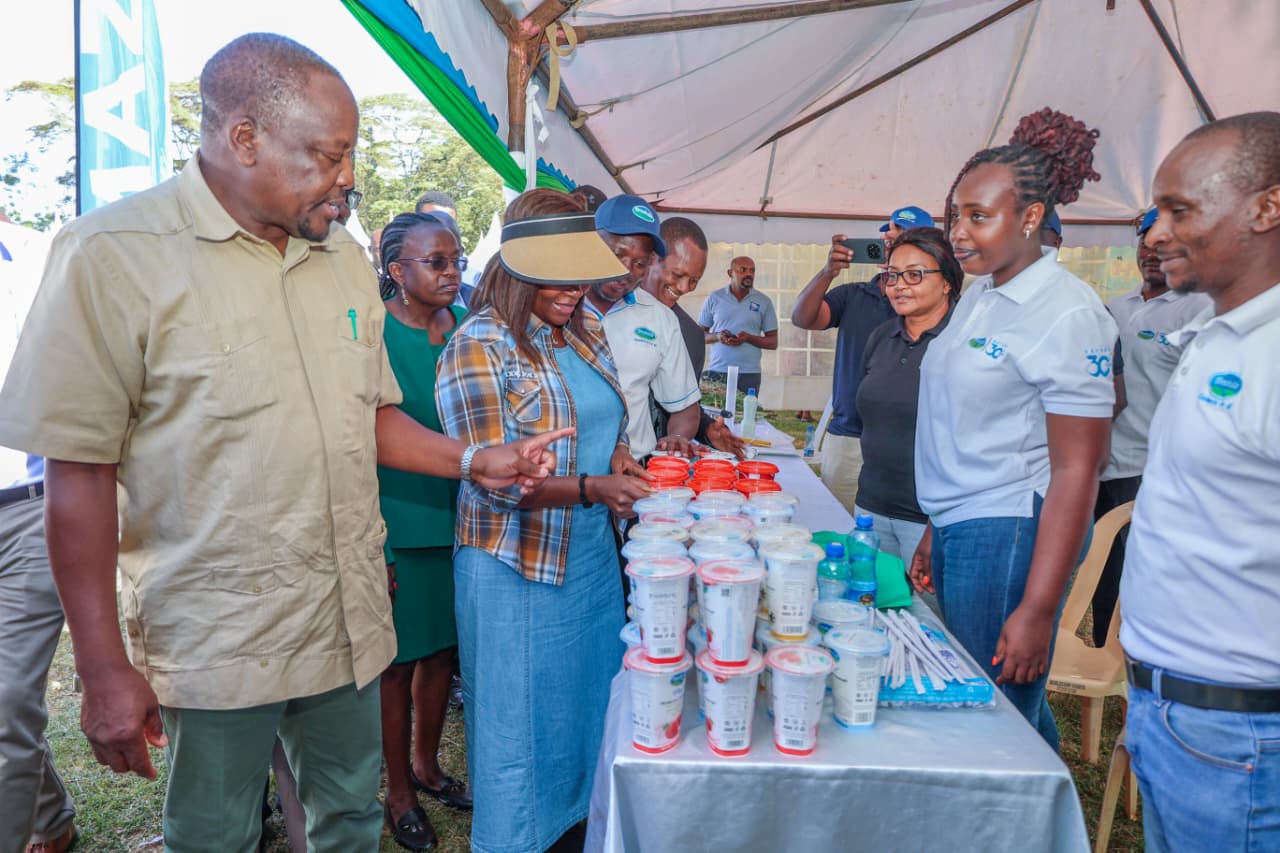
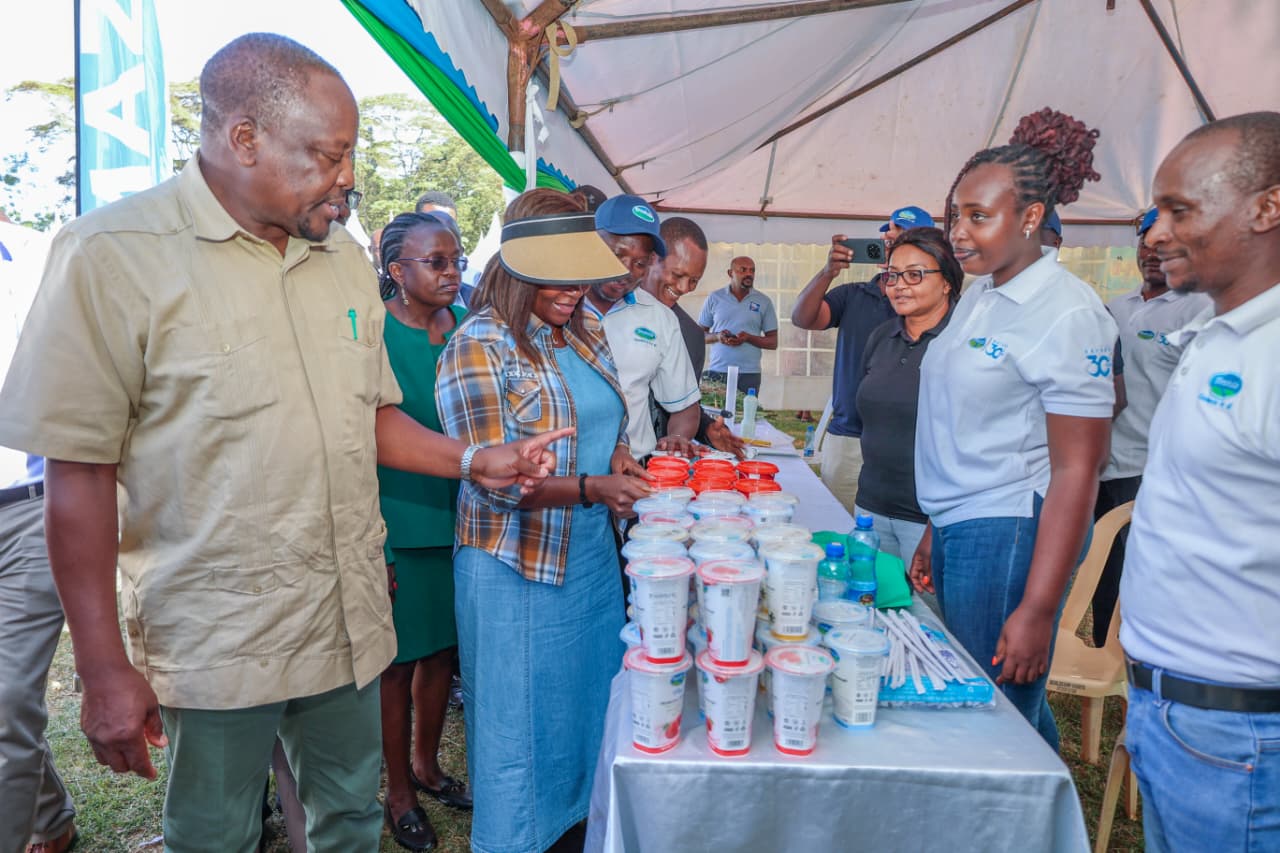
 Agriculture CS Mutahi Kagwe and governor Cecily Mbarire examine some of the dairy products produced by Emkitha Dairy Cooperative Union in Embu County on January 14, 2026. /ALICE WAITHERA
The government has announced plans to establish national animal feed reserves to protect livestock and pastoralist livelihoods from recurrent drought-related losses estimated at more than Sh50 billion.
Agriculture and Livestock Development Cabinet Secretary Mutahi Kagwe said the move is intended to prevent a repeat of past droughts that wiped out more than 2.5 million animals, devastating communities in Arid and Semi-Arid Lands (ASAL) counties.
Speaking during the launch of the Emkitha Dairy Cooperative Union in Embu County, Kagwe said drought should no longer be treated as an emergency but as a predictable phenomenon that requires advance planning.
“Drought is no longer an emergency. It is a recurring reality. We must act before losses occur,” he said, adding that the government is committed to safeguarding pastoralist assets through structured feed and water provision, animal off-take programmes and strengthened disease control.
Under the new policy, strategic animal feed reserves — including hay, silage and other drought-tolerant fodder — will be stockpiled during periods of surplus and released during dry spells.
County governments will lead the planning, stocking and distribution of the feed, while the national government will provide coordination, funding and technical support.
Livestock cooperatives will serve as delivery agents to ensure feed reaches farmers directly, while early warning systems will trigger timely deployment to prevent livestock deaths and distress sales.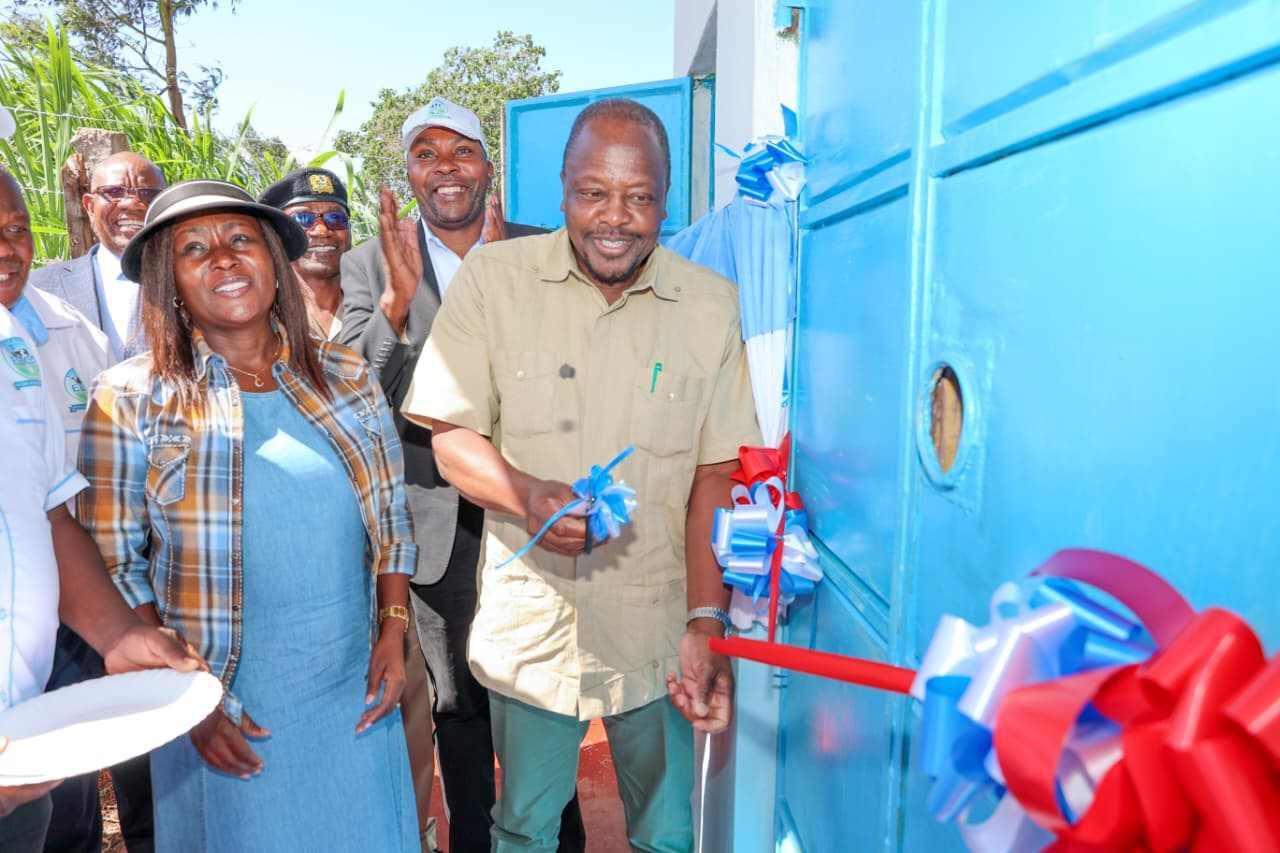 Agriculture CS Mutahi Kagwe launching Emkitha Dairy Cooperative Union in Embu County together with governor Cecily Mbarire on January 14, 2026. /ALICE WAITHERA
Kagwe also announced stricter controls on livestock movement from counties affected by Foot and Mouth Disease (FMD) and other outbreaks.
County commissioners and security agencies will enforce the restrictions alongside intensified vaccination campaigns against diseases such as anthrax and enhanced biosecurity at livestock checkpoints.
At the same event, the CS underscored the role of organised dairy cooperatives in improving productivity and building resilience among farmers.
He urged dairy farmers to focus on increasing milk yield per cow rather than expanding herd sizes. Embu County currently produces about 101.3 million litres of milk annually, valued at Sh5.2 billion, but average production remains low at around eight litres per cow per day.
Kagwe said improved feeding, nutrition and herd management could significantly raise output.
“With proper feeding and management, farmers can double milk production without adding a single cow,” he said, noting that the 19 cooperatives under Emkitha have the potential to increase daily milk output to more than 397,000 litres.
To further support livestock farmers, Kagwe said the government will expand its cooperative-based input delivery model.
Fertiliser subsidies will continue under the existing programme, with cooperatives handling last-mile distribution and offering credit to farmers.
He added that adjustments would be made to the Kenya Integrated Agricultural Management Information System (KIAMIS) to ensure registered farmers benefit directly, while cooperatives serve as distribution channels.
The government will also roll out structured animal off-take programmes to stabilise livestock prices and prevent distress sales during drought periods.
Kagwe confirmed that additional funding has been approved for the purchase of more milk coolers in Embu County, following the delivery of 13 coolers worth more than Sh70 million last year.
The expanded cold-chain infrastructure is expected to reduce post-harvest losses, improve milk quality and support quality-based payments to farmers.
He emphasised that county governments remain on the frontline of drought preparedness, livestock protection and disease control, with the national government providing oversight, funding and technical guidance.
“We cannot afford reactive responses. Preparedness, coordination and accountability are key,” Kagwe said.
The establishment of animal feed reserves, alongside improved disease control, cooperative-led subsidies and expanded cold-chain infrastructure, is expected to cushion farmers against future drought shocks, safeguard pastoralist livelihoods and strengthen Kenya’s livestock and dairy sectors as pillars of national food security.